Cotopaxi
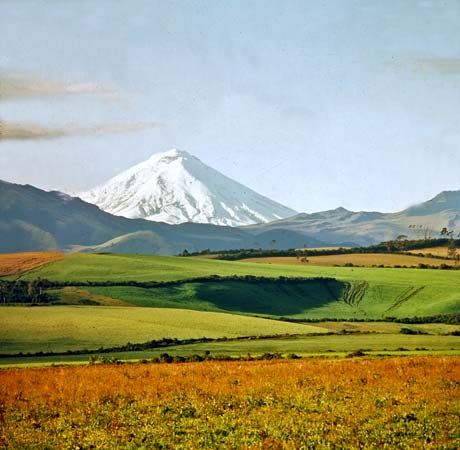
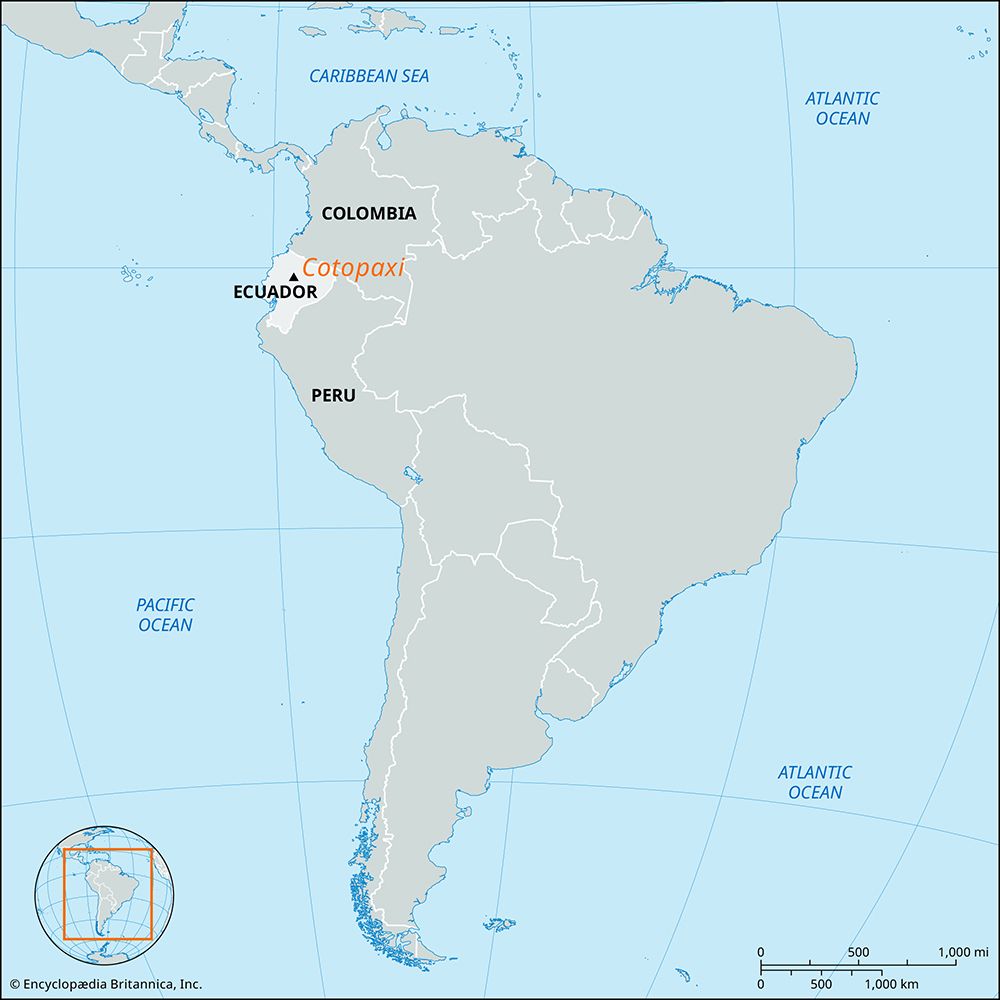
Cotopaxi is a prominent volcanic peak located in the Cordillera Central of the Andes in central Ecuador.
Where is Cotopaxi located and what makes it significant among Ecuador’s volcanoes?
Cotopaxi is a prominent volcanic peak located in the Cordillera Central of the Andes in central Ecuador.1
It is highly significant for several reasons:
- Physical Stature: Rising to 19,393 feet (5,911 meters), it is recognized as one of the world’s highest volcanoes.1
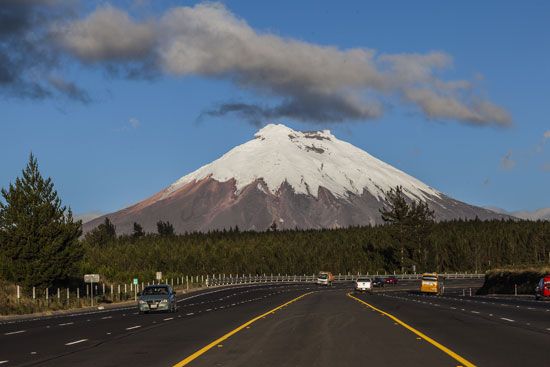
- Symmetry: The mountain is noted for its almost perfectly symmetrical cone, which is only slightly interrupted by a minor cone known as the Cabeza del Inca.1
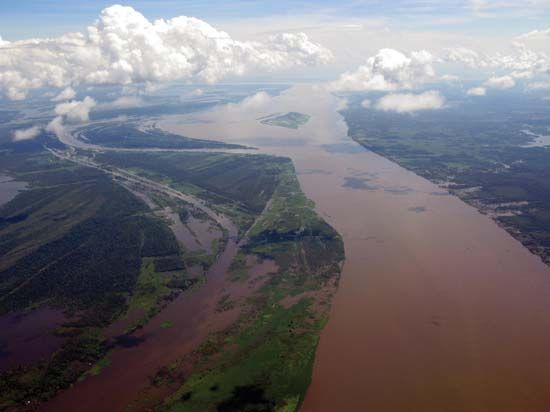
- Geological Activity: Cotopaxi has a long history of violent eruptions. Its 1877 eruption was particularly notable for producing lahars (volcanic mudflows) that traveled over 60 miles, reaching both the Pacific Ocean and the Amazon River basin.1
- Conservation: The volcano and its surrounding grasslands are protected within Cotopaxi National Park, which serves as a major tourist destination.1
What is the geological history of Cotopaxi, and how often has it erupted?
Cotopaxi is a stratovolcano built from alternating layers of dark-colored trachytic lava and deposits of lighter-colored ash. The mountain features a symmetrical cone, with a summit crater measuring approximately 2,300 feet (700 meters) by 1,650 feet (500 meters) and reaching a depth of 1,200 feet (366 meters). The base of the volcano rests on open mountain grassland, while its upper reaches are covered by permanent snow.1
Cotopaxi has a long, well-documented history of violent eruptions. While its first recorded eruption occurred in 1534, the most significant historical events took place in 1744, 1768, 1877, and 1904. The 1877 eruption was particularly destructive, producing lahars (volcanic mudflows) that traveled over 60 miles (100 km) to reach the Pacific Ocean and the Amazon River basin. Following the major 1904 eruption, the volcano experienced minor activity in 1940 and 2015.1
How does Cotopaxi’s height and structure compare to other volcanoes in the Andes?
Cotopaxi is a classic example of a stratovolcano, a type of volcanic landform characterized by a steep, conical shape built from alternating layers of lava and ash. While many Andean peaks reach higher elevations—such as Mount Aconcagua (22,211 feet) and Mount Huascarán (22,205 feet)—Cotopaxi’s height of 19,393 feet (5,911 meters) still ranks it among the world’s highest volcanoes.14
Compared to other volcanoes in the Andes, Cotopaxi is distinguished by its remarkable symmetry. While many stratovolcanoes develop complex, irregular structures due to multiple vents and shifting craters over time, Cotopaxi maintains a nearly perfect cone, interrupted only by a minor feature known as the Cabeza del Inca. Like other major stratovolcanoes in the region, its upper reaches are permanently snowcapped, which poses a significant hazard; eruptions can rapidly melt this ice, triggering destructive lahars that threaten surrounding areas, similar to the catastrophic events seen at other Andean volcanoes like Mount Ruiz.15
What role does Cotopaxi play in Ecuador’s tourism industry?
Cotopaxi serves as a cornerstone of Ecuador’s tourism industry, primarily through its designation as the centerpiece of Cotopaxi National Park. The park protects the volcano and its surrounding high-altitude grasslands, offering visitors a unique landscape that combines dramatic volcanic terrain with accessible natural beauty.1
The mountain’s status as one of the world’s highest and most symmetrical volcanoes makes it a significant destination for mountaineers and adventure travelers. While early explorers like Alexander von Humboldt famously deemed the peak unclimbable in 1802, successful ascents—first achieved by Wilhelm Reiss in 1872—have since established the mountain as a premier challenge for climbers. Today, the park remains a major tourist attraction, drawing those interested in both the geological history of the Andes and the experience of exploring a permanently snowcapped stratovolcano.1
Sources
- Cotopaxi — Encyclopædia Britannica
- Cotopaxi — Merriam-Webster
- world’s major volcanoes — Encyclopædia Britannica
- Andes Mountains - Physiography of the Central Andes — Encyclopædia Britannica
- volcano - Stratovolcanoes — Encyclopædia Britannica
- stratovolcano — Encyclopædia Britannica
Published on · 3 min read