Daxue Mountains
The provided information does not contain data regarding specific plant or animal species that are unique to the Daxue Mountains. While the region is noted…
Are there any unique plant or animal species found only in the Daxue Mountain range?
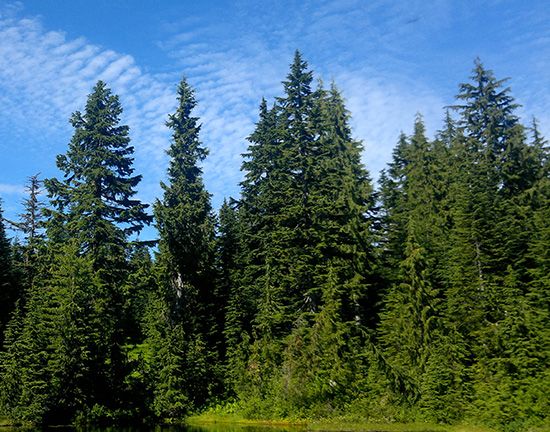
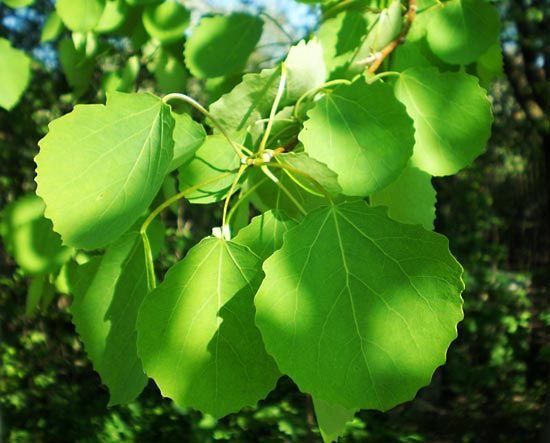
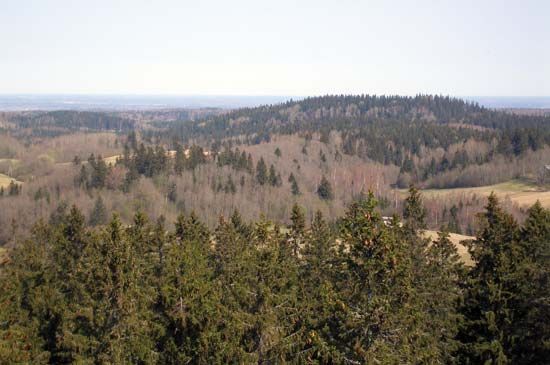
The provided information does not contain data regarding specific plant or animal species that are unique to the Daxue Mountains. While the region is noted for its diverse vegetation—ranging from mixed forests of birch, hemlock, and poplar at lower elevations to fir and spruce forests and alpine grasslands at higher altitudes—the available records do not identify any endemic species restricted solely to this range.
What is the cultural significance of the Daxue Mountains to local ethnic groups?
The provided search results do not contain information regarding the specific cultural significance of the Daxue Mountains to local ethnic groups. While the region is inhabited by Tibetans to the west and both Tibetans and Han Chinese to the east, the available documentation focuses on the range’s physical geography, geology, and vegetation rather than its cultural or religious role in local life.
What is the geological formation and history of the Daxue Mountains?
The Daxue Mountains are a rugged, high-altitude range located in western Sichuan province, China. Their formation is the result of a complex, multi-stage geological history.1
Geological Formation and History
The range formed along the eastern flank of the Plateau of Tibet through successive folding events. This mountain-building process, or orogeny, occurred in several distinct phases:1
- Jurassic and Cretaceous Periods: Initial folding took place between approximately 200 and 65 million years ago.1
- Himalayan Orogenies: Subsequent tectonic activity further shaped the range.1
- Quaternary Period: The region underwent significant additional uplift during the last 2.6 million years.1
The mountains are composed primarily of metamorphic rocks, including schists, quartzites, and metamorphic limestones, alongside massive granite intrusions. Geologically, the range is part of a vast folding belt that extends southward into Southeast Asia. Today, the system consists of a series of north-south ridges, with Mount Gongga serving as the highest peak at 24,790 feet (7,556 metres).1
How do the Daxue Mountains compare in height and scale to other mountain ranges in China?
The Daxue Mountains are characterized by their immense scale, which is often described as nearly Himalayan in nature. While they do not reach the extreme elevations of the world’s highest peaks, such as Mount Everest (29,035 feet), they are a significant component of China’s high-altitude southwestern zone.14
In terms of height and scale, the range features many peaks exceeding 20,000 feet (6,100 metres). The highest point, Mount Gongga, reaches 24,790 feet (7,556 metres), placing it among the most prominent elevations in China outside of the primary Plateau of Tibet core.15
Compared to other Chinese mountain systems, the Daxue Mountains represent a rugged, high-relief barrier that separates the high plateaus of the west from the lower-lying Sichuan Basin to the east. While the first step of China’s relief—the Plateau of Tibet—maintains an average elevation of over 13,000 feet, the Daxue Mountains serve as a dramatic, folded edge to this highland, exhibiting a vertical complexity and glacial development that distinguishes them from the lower, more eroded ranges found further east.14
Sources
- Daxue Mountains — Encyclopædia Britannica
- Inner Mongolia - Cultural life — Encyclopædia Britannica
- Shaanxi - Cultural life — Encyclopædia Britannica
- China - Relief of China — Encyclopædia Britannica
- Mount Gongga — Encyclopædia Britannica
Published on · 2 min read