Dipluran
Diplurans reproduce through a sexual process in which females collect male spermatophores—packets of sperm—that have been deposited on the ground. The female…
How do diplurans reproduce and what is their life cycle like?
Diplurans reproduce through a sexual process in which females collect male spermatophores—packets of sperm—that have been deposited on the ground. The female takes these packets up through her genital opening to fertilize her eggs, which are subsequently laid on the ground. In diplurans, external genitalia are either absent or vestigial.12
Regarding their life cycle, little is known about the postembryonic development of these organisms. However, it is established that young diplurans emerge as smaller versions of the adults. Like other apterygotes, they undergo slight metamorphosis, meaning the young resemble the adults and change little as they grow. While some related groups exhibit complex molting patterns throughout their lives, specific details on the number of instars or the duration of the life cycle for diplurans remain limited in current scientific literature.21
What is the typical habitat and distribution of diplurans?
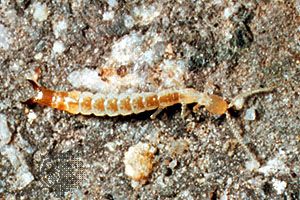
Diplurans are widely distributed across the globe, though they are rarely seen due to their secretive nature. They are primarily soil-dwelling organisms, typically found in moist, dark environments such as deep within soil, under stones, in leaf litter, or within decaying logs and vegetation.1
Because they are blind and pale, these small, primitive insects thrive in these protected, subterranean habitats where they feed on decaying plant tissues or prey on other small soil-dwelling organisms. While most species are small, measuring between 2 and 5 mm, some tropical varieties can reach larger sizes.1
What are the key characteristics that define diplurans as an arthropod order?
Diplurans are defined as members of the phylum Arthropoda by their segmented bodies, which are organized into a head with one pair of antennae, a thorax bearing three pairs of legs, and a segmented abdomen. While historically grouped within the class Insecta, modern classification often treats them as a distinct class of hexapods.12
Key characteristics that define diplurans include:
- Entognathous Mouthparts: Unlike insects with exposed (ectognathous) mouthparts, diplurans possess mouthparts that are retracted into a pouch within the head.7
- Wingless State: They are primitively wingless, belonging to a group of hexapods often referred to as apterygotes.21
- Abdominal Appendages: They are named for the two cerci extending from the end of the abdomen, which vary from sensitive, slender filaments to hardened, pincerlike structures used for capturing prey.2
- Sensory Adaptations: Diplurans are typically blind and pale, reflecting their specialized, secretive life in dark, moist environments like soil or leaf litter.2
- Reproduction: They lack functional external genitalia and reproduce via the indirect transfer of spermatophores collected by the female from the substrate.28
How do scientists study diplurans, and what recent discoveries have been made about them?
Scientists study diplurans primarily through field collection and morphological analysis, as these elusive creatures are rarely seen due to their subterranean lifestyle. Because they inhabit soil, leaf litter, and decaying logs, researchers typically employ soil-sampling techniques to extract them from their hidden environments. Once collected, scientists examine their physical features—such as their characteristic cerci, which range from sensitive filaments to hardened pincers—to classify them into their respective families, such as Japygidae or Campodeidae.1
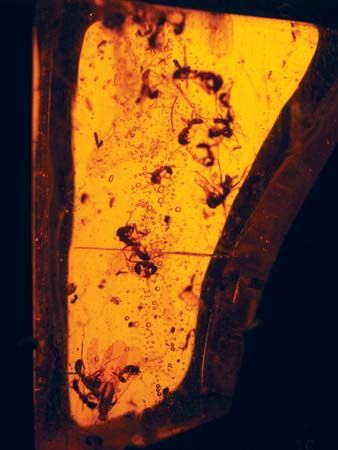
Regarding recent discoveries, the study of diplurans is largely focused on refining their evolutionary placement. While older classification systems grouped them within the class Insecta, modern research has led to their reclassification as a distinct class of hexapods, separate from insects and parallel to groups like proturans and springtails. Additionally, paleontological research continues to provide insights into their ancient history, with rare specimens preserved in amber helping scientists piece together the evolutionary timeline of these primitive, wingless hexapods.19
Sources
- dipluran — Encyclopædia Britannica
- apterygote - Life cycle — Encyclopædia Britannica
- Odonata - The larval stage — Encyclopædia Britannica
- Animal development - The larval phase and metamorphosis — Encyclopædia Britannica
- Animal reproductive system - Provisions for the developing embryo — Encyclopædia Britannica
- frog and toad - Direct development from egg to froglet — Encyclopædia Britannica
- apterygote - Distinguishing taxonomic features — Encyclopædia Britannica
- insect - Origin of insects — Encyclopædia Britannica
- apterygote - Evolution and paleontology — Encyclopædia Britannica
Published on · 3 min read