Discus Fish
Discus fish, members of the cichlid family, exhibit a unique and highly specialized form of parental care. Unlike many other fish species that simply guard…
How do discus fish reproduce and care for their young?
Discus fish, members of the cichlid family, exhibit a unique and highly specialized form of parental care. Unlike many other fish species that simply guard their eggs or young, discus fish actively nourish their offspring through their own bodies.12
After the eggs hatch, the parents secrete a specialized, mucus-like substance onto their skin. The young fry feed on this secretion, which provides them with essential nourishment during their early development. Both the male and female parents are typically involved in this process, often taking turns “nursing” the babies to ensure they receive adequate care.12
This behavior is a remarkable adaptation within the order Perciformes, distinguishing the discus from many other fish that provide little to no parental support. Because of these complex requirements and their specific environmental needs, they are often considered challenging to maintain in aquarium settings.21
How many different species of discus fish exist?
There are two recognized species of discus fish within the genus Symphysodon: S. discus and S. aequifasciata.1
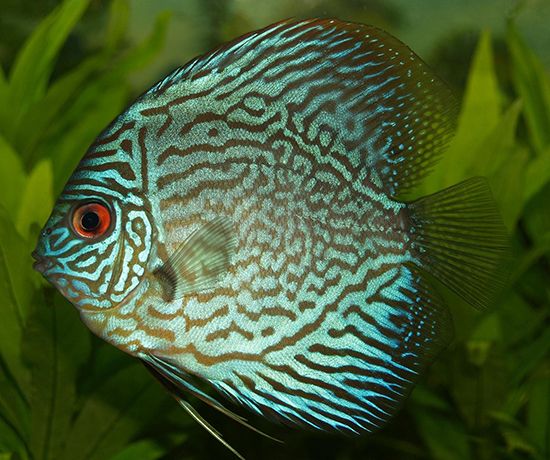
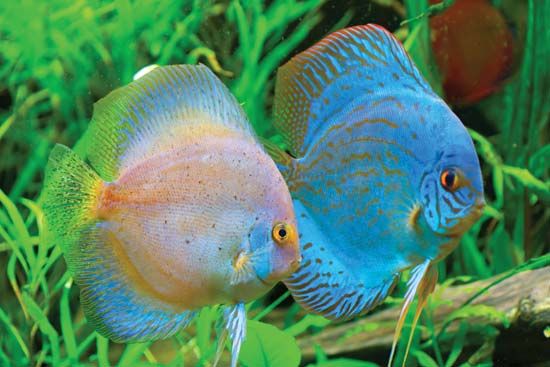
These fish are native to the tributaries of the Amazon River in South America and are well-known for their distinct, disk-shaped bodies and vibrant, wavy markings.1
Where are discus fish naturally found in the wild?
Discus fish are naturally found in the tributaries of the Amazon River in South America.1
These fish thrive in the warm, humid, and rainy environment characteristic of the Amazon Basin, where they inhabit the river’s complex system of waterways.15
What makes discus fish popular among aquarium enthusiasts?
Discus fish are highly sought after by aquarium enthusiasts primarily for their aesthetic appeal and unique biological behaviors. Their popularity is driven by their spectacular, vibrant markings, which feature intricate patterns of blue and green streaks across their deep, disk-shaped bodies.16
Beyond their appearance, these cichlids are prized for their fascinating parental care. They exhibit a remarkable method of feeding their young by secreting a nutrient-rich, mucuslike substance onto their skin, which the offspring consume directly from the parents. This behavior, often described as “nursing,” makes them a compelling subject for hobbyists interested in breeding and observing complex fish behaviors. While they are considered challenging to maintain due to their strict water quality requirements, their beauty and unique life history ensure that enthusiasts persist in their efforts to raise them.17
Sources
- discus fish — Encyclopædia Britannica
- How do fish reproduce? — Encyclopædia Britannica
- fish - Reproduction — Encyclopædia Britannica
- perciform - Life history — Encyclopædia Britannica
- Amazon River - Climate — Encyclopædia Britannica
- cichlid — Encyclopædia Britannica
- perciform - Aquarium fishes — Encyclopædia Britannica
Published on · 2 min read