Cichlid
Cichlids exhibit a remarkable diversity of feeding adaptations, reflecting their wide range of diets from vegetarian to carnivorous. These adaptations are…
What are some unique feeding adaptations found in different cichlid species?
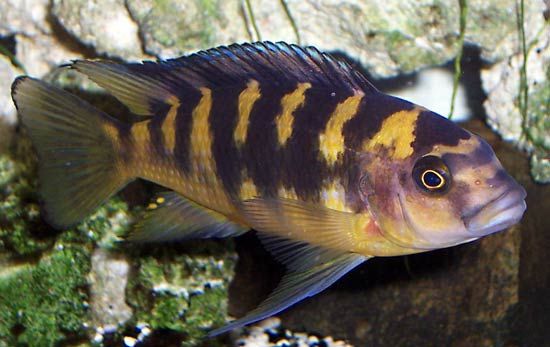
Cichlids exhibit a remarkable diversity of feeding adaptations, reflecting their wide range of diets from vegetarian to carnivorous. These adaptations are primarily centered on modifications to their mouth and jaw structures, which allow them to exploit specific ecological niches.12
Key feeding adaptations include:
- Lepidophagy: Certain African cichlids practice this specialized behavior, which involves plucking and eating the scales of other fishes.3
- Jaw and Tooth Specialization: Herbivorous species have evolved chisel-like teeth to graze on plants and algae, while piscivorous (fish-eating) species possess strong, pointed teeth for capturing prey.2
- Mouth Distensibility: Cichlids that feed on the eggs or young of other species have developed highly distensible mouths with reduced teeth embedded in the gums, facilitating their specialized diet.2
- Fleshy Projections: Some African cichlid species possess fleshy projections on their jaws, which are associated with their specific feeding behaviors.2
These structural variations demonstrate how cichlids have evolved to thrive in diverse environments, particularly within the major African lakes where they display significant evolutionary radiation.12
What makes cichlids popular in the aquarium trade?
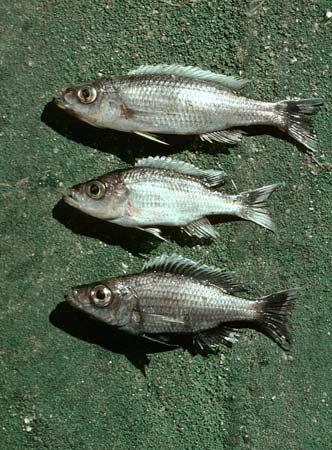
Cichlids are highly popular in the aquarium trade primarily due to their aesthetic appeal and their fascinating, complex behaviors. Aquarists are often drawn to their diverse and vibrant color patterns, which make them visually striking additions to home tanks.15
Beyond their appearance, cichlids are prized for their intricate mating and breeding rituals, which provide an engaging experience for hobbyists. These behaviors include elaborate courtship displays, the diligent maintenance and defense of nests, and the active protection of their young. Some species are particularly noted for being “mouthbreeders,” a unique reproductive strategy where parents carry their eggs in their mouths until they hatch. Additionally, certain species, such as the freshwater angelfish and the discus, are especially favored for breeding because they exhibit the remarkable behavior of feeding their young with specialized mucous secretions from their own bodies.15
What are some of the most interesting color patterns and body shapes found in cichlid species?
Cichlids are renowned for their diverse body shapes and striking color patterns, which often serve functional roles in their environment, such as territorial defense or camouflage.18
Body Shapes
Cichlids are typically deep-bodied fish, though their specific forms vary to suit their lifestyles.1
- Deep-bodied forms: Many species, such as the discus, possess a very deep, compressed body shape. This structure is often associated with vertical banding, which helps break up the fish’s outline in its habitat.19
- Fin structure: A common characteristic among many species is the presence of pointed rear edges on the dorsal and anal fins, often accompanied by elongated pelvic fins, which contribute to their distinct silhouette.1
Color Patterns
Coloration in cichlids is frequently linked to social behavior and survival.8
- Territorial Advertising: Many cichlids exhibit strong sexual dimorphism, where the dominant sex displays vibrant, intense colors to intimidate intruders or attract mates.8
- Camouflage and Signaling: Patterns such as spots and streaks are common. For example, the Jack Dempsey is a dark fish spotted with blue-green, while the oscar features a distinctive orange-ringed black spot on its tail base. Other species, like the firemouth, display bright red coloration on the throat and chest.1
What are the unique characteristics that define cichlid fish?
Cichlids, belonging to the family Cichlidae, are a diverse group of over 1,300 species primarily found in freshwater environments across tropical America, Africa, Madagascar, and southern Asia. They are defined by several distinct anatomical and behavioral characteristics:1
Anatomical Features
- Physical Structure: Cichlids are generally deep-bodied fish with rounded tails. A key diagnostic feature is the presence of only one nostril on each side of the head, rather than the two found in most other fish.1
- Fins and Lateral Line: They typically possess a discontinuous lateral line. Their dorsal and anal fins often feature three or more spines, and in many species, the rear edges of these fins are pointed, with elongated pelvic fins.1
- Jaw and Teeth: As members of the order Perciformes, they exhibit diverse jaw structures adapted to their specific diets. Their teeth are highly specialized; for instance, herbivorous cichlids possess chisel-like teeth for grazing on algae, while piscivorous species have strong, pointed teeth for capturing prey. Some species have evolved highly distensible mouths to feed on the eggs or young of other fish.11
Behavioral Traits
- Complex Breeding: Cichlids are widely noted for their sophisticated mating and parental care behaviors, which include elaborate courtship, nest preparation, and the active defense of their young.1
- Mouthbreeding: A unique reproductive strategy found in many species, particularly in the genus Tilapia and other Old World groups, is mouthbreeding, where parents carry their eggs in their mouths until they hatch to ensure protection.1
Sources
- cichlid — Encyclopædia Britannica
- perciform - Feeding behaviour — Encyclopædia Britannica
- protacanthopterygian - Digestive system — Encyclopædia Britannica
- perciform - Form and function — Encyclopædia Britannica
- perciform - Aquarium fishes — Encyclopædia Britannica
- aquarium - Maintenance problems — Encyclopædia Britannica
- corydoras — Encyclopædia Britannica
- coloration - Territorial advertising — Encyclopædia Britannica
- coloration - The role of shape in relation to coloration — Encyclopædia Britannica
- coloration - Background matching — Encyclopædia Britannica
- lateral line system — Encyclopædia Britannica
- Mechanoreception - Mechanoreceptor function — Encyclopædia Britannica
- ostariophysan - Teeth — Encyclopædia Britannica
Published on · 4 min read