Holostean
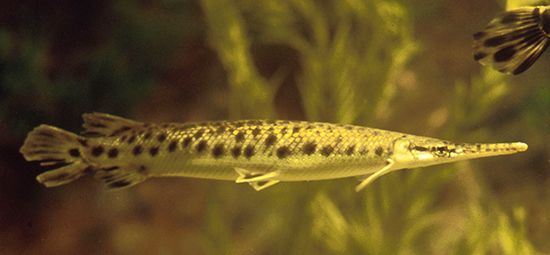
Holosteans are a group of primitive bony fishes represented today only by bowfins and gars. While the query implies a broad historical and current…
How are holostean fish important to humans, both historically and currently?
Holosteans are a group of primitive bony fishes represented today only by bowfins and gars. While the query implies a broad historical and current significance, these fish have limited direct utility to humans.12
Historically and currently, their importance is primarily ecological and localized:
- Food Source: Bowfins are seldom consumed as food. However, the alligator gar, one of the largest freshwater fishes, is caught locally for food in regions such as the Everglades in southern Florida.2
- Ecological Impact: Bowfins are sometimes considered destructive to game fish populations, which can impact recreational fishing interests.2
- Taxonomic Confusion: The term “gar” is sometimes applied to needlefishes in Europe, though these are not related to the Holostei, which can lead to historical misidentification in literature.2
Beyond these specific instances, holosteans are primarily studied for their evolutionary history, as they were highly abundant during the Mesozoic Era but have since dwindled to only three living genera.1
How have holostean fish evolved over time, and what is their significance in fish evolution?
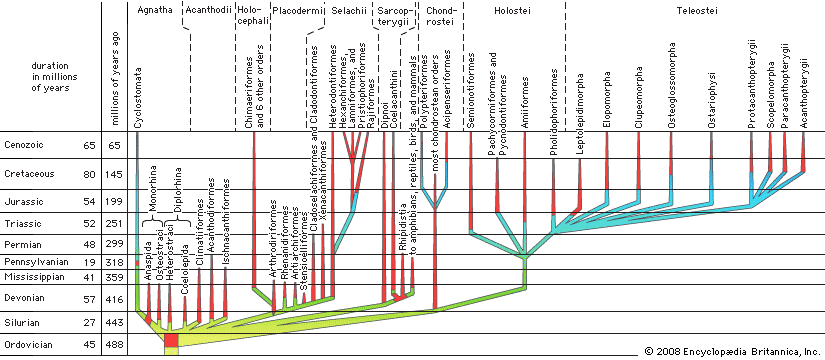
Holostean fish represent a critical evolutionary bridge between primitive chondrosteans and modern teleosts. Emerging from Palaeonisciformes ancestors during the Permian Period, holosteans underwent significant anatomical “experiments” that increased their swimming and feeding efficiency.156
Evolutionary Significance
Holosteans are defined by several key structural advancements that distinguish them from their predecessors:
- Jaw Mechanics: Unlike primitive fish where the upper jaw was bound to the cheek, holosteans freed the maxilla from the cheek elements. This allowed for greater movement of the gill chamber and more powerful jaw muscles.75
- Swimming Efficiency: Holosteans developed a more homocercal tail and an equal number of fin rays to basal supports, enhancing maneuverability. Additionally, their scales transitioned from thick, rhomboidal ganoid scales toward thinner, more flexible forms.75
- Evolutionary Link: The order Amiiformes is recognized as the closest living relative to the teleosts, which eventually replaced most holostean groups during the Mesozoic Era.15
Evolutionary History
Holosteans reached their peak radiation during the Triassic, Jurassic, and Cretaceous periods. While they were once a dominant group, only three living genera remain today: the bowfin (Amia) and gars (Lepisosteus and Atractosteus). These survivors have retained versatile adaptations, such as swim bladders that function as lungs, allowing them to thrive in low-oxygen environments.5189
What are the two living groups of holostean fish, and where are they found?
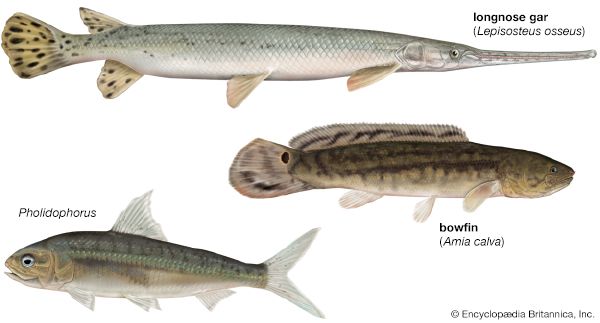
The two living groups of holostean fish are the bowfins (order Amiiformes) and the gars (order Semionotiformes).10
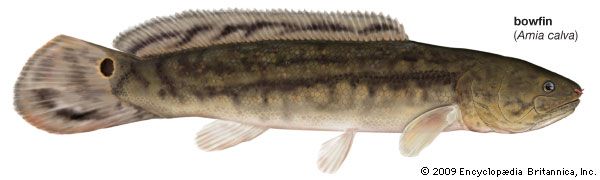
- Bowfins: The single extant species, Amia calva, is found in the sluggish, fresh waters of eastern North America, ranging from the Great Lakes and the Mississippi River basin down to the Gulf of Mexico.10111
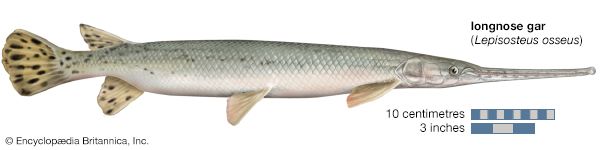
- Gars: These fish are found in North America, Central America, and Cuba, spanning from southeastern Canada to Panama. While they are primarily freshwater inhabitants, some species occasionally venture into brackish or salt water.101211
What are the main characteristics that define holostean fish?
Holostean fish (infraclass Holostei) are a group of primitive bony fishes that serve as an evolutionary bridge between chondrosteans and modern teleosts. Their defining characteristics include several anatomical advancements that improved their swimming and feeding efficiency:1510
Key Anatomical Characteristics
- Jaw Mechanics: A primary advancement is the freeing of the maxilla (upper jaw) from the cheek elements. This separation allows for greater movement of the gill chamber and supports more powerful development of the adductor mandibulae muscle, which closes the jaws.510
- Skeletal Structure: The braincase is composed of separate ossifications that resemble those found in teleosts. While primitive holosteans lacked a centrum surrounding the notochord, most later orders developed this structure independently.56
- Swimming Efficiency: Holosteans exhibit a tail that approaches the homocercal (symmetrical) condition, and the number of fin rays is equal to their basal supports. These features, combined with a general trend toward thinner, more flexible scales, make them more efficient swimmers than their chondrostean ancestors.510
- Scales: Primitively, holosteans possess rhomboidal, enamel-covered scales, though many groups evolved thinner, cycloidal scales over time.56
Sources
- holostean — Encyclopædia Britannica
- holostean — Merriam-Webster
- holostean - General features — Encyclopædia Britannica
- holostean - Reproduction — Encyclopædia Britannica
- holostean - Skeletal features — Encyclopædia Britannica
- fish - Actinopterygii: ray-finned fishes — Encyclopædia Britannica
- holostean - Evolution — Encyclopædia Britannica
- holostean - Ecology — Encyclopædia Britannica
- chondrostean - Evolution — Encyclopædia Britannica
- holostean - Extant groups — Encyclopædia Britannica
- bowfin — Encyclopædia Britannica
- gar — Encyclopædia Britannica
- ganoid scale — Merriam-Webster
- chondrostean - Form and function — Encyclopædia Britannica
- Holostei — Merriam-Webster
Published on · 3 min read