Do Blow Flies Spread Disease?
Yes, blow flies are capable of spreading disease, primarily through mechanical transmission. Because they frequently land on feces, decaying matter, and…
Do blow flies spread disease?
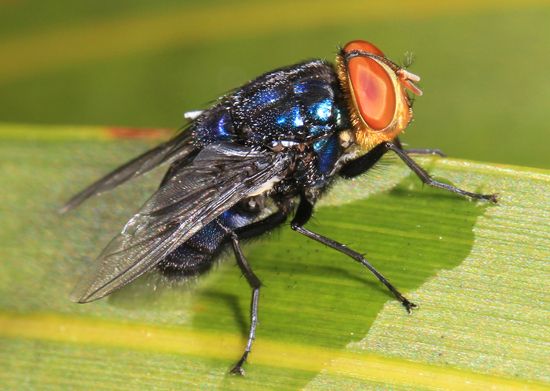
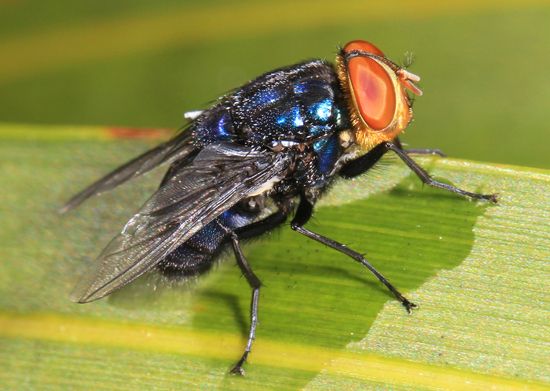
Yes, blow flies are capable of spreading disease, primarily through mechanical transmission. Because they frequently land on feces, decaying matter, and animal carcasses, they can pick up bacteria, viruses, and parasites on their bodies. When these flies subsequently land on food or surfaces, they may deposit pathogens such as E. coli, Salmonella, and Shigella, which can cause gastrointestinal illness in humans.1
Furthermore, some species can cause myiasis, an infestation where fly larvae develop within living tissue. This includes species like the New World screwworm fly, which requires a live host, and the greenbottle fly, which may infest living or dead hosts. Maintaining proper waste disposal and sanitation is essential to mitigating these health risks.1
What is myiasis and how does it affect humans?
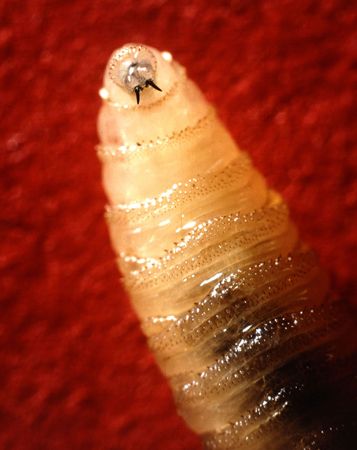
Myiasis is the infestation of human or animal bodies by the larvae (maggots) of certain fly species. It is most common in tropical regions where these insects are abundant and can be categorized as either intestinal or superficial.2
Types of Infestation
- Intestinal Myiasis: This occurs when food contaminated with fly eggs or larvae is ingested. Symptoms include nausea, vomiting, diarrhea, and abdominal cramps. Typically, these organisms are destroyed by gastrointestinal juices and passed through feces.2
- Superficial Myiasis: Flies are attracted to open wounds or odoriferous discharges from body orifices, where they lay eggs. The hatching larvae feed on host tissue, potentially causing severe or fatal damage. Some species, such as the mango fly, can penetrate unbroken skin, creating boil-like lesions.2
Clinical Context
While some species like the New World screwworm require a live host for development, others—such as the greenbottle fly—can develop in either living or dead tissue. Treatment involves mechanical extraction and irrigation of the larvae.12
How do scientists use sterile flies to control populations?
Scientists control insect populations, such as the screwworm and the tsetse fly, using a method known as the Sterile Insect Technique (SIT). This pesticide-free approach was pioneered in the mid-1900s by entomologists Edward Fred Knipling and Raymond Bushland.34
The process functions through the following steps:
- Sterilization: Large numbers of male flies are reared in laboratory facilities and exposed to gamma radiation or X-rays. This process renders the males sterile without impairing their ability to mate.34
- Release: These sterile males are released into the wild in massive quantities.34
- Mating and Population Decline: Because female flies of these species typically mate only once in their lifetime, their union with a sterile male results in no offspring. Over successive generations, this prevents the production of fertilized eggs, causing the overall population to drop dramatically or disappear entirely.34
This technique has been highly effective in eradicating pests from specific regions, such as the successful elimination of screwworms from the United States, Mexico, and parts of Central America, as well as controlling tsetse fly populations in Africa.34
What is the difference between mechanical and biological disease transmission?
In vector-borne transmission, the distinction between biological and mechanical transmission lies in whether the pathogen undergoes development or replication within the vector.
- Biological Transmission: The infectious agent undergoes a necessary phase of change or development within the vector before it can be transmitted to a new host. For example, in Lyme disease, the bacterium changes its antigen expression while inside the deer tick, and in malaria, the Plasmodium parasite must complete part of its developmental cycle within an Anopheles mosquito.67
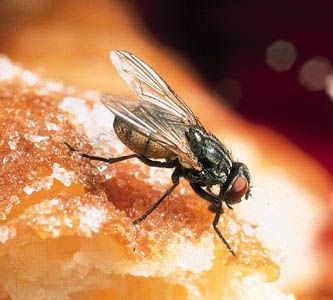
- Mechanical Transmission: The vector acts as a passive carrier, transporting the pathogen from one host or surface to another without the agent developing or replicating inside the vector. A common example is the housefly, which may pick up bacteria like E. coli or Salmonella from waste and deposit them onto food, leading to human infection upon consumption.67
Sources
- Do blow flies spread disease? — Encyclopædia Britannica
- myiasis — Encyclopædia Britannica
- screwworm — Encyclopædia Britannica
- tsetse fly — Encyclopædia Britannica
- blow fly — Encyclopædia Britannica
- What are the five ways infectious diseases can be spread? — Encyclopædia Britannica
- insect - Medical significance — Encyclopædia Britannica
Published on · 3 min read