Screwworm
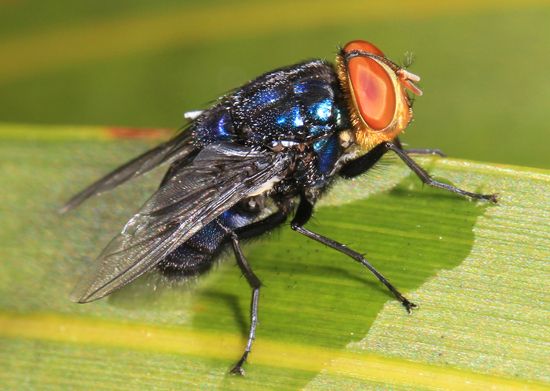
A screwworm is any of four species of blow fly (genus Cochliomyia) native to the Americas, named for the screwlike appearance of their larvae, which are…
What is screwworm?
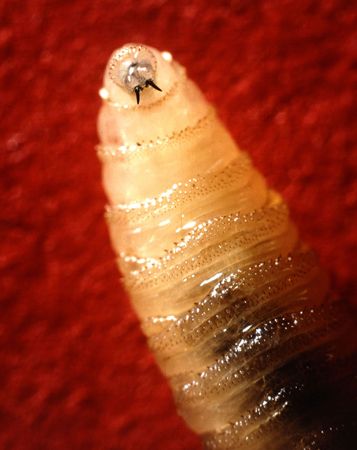
A screwworm is any of four species of blow fly (genus Cochliomyia) native to the Americas, named for the screwlike appearance of their larvae, which are ringed with small spines.1
These insects are serious pests that parasitize livestock, wildlife, and occasionally humans. A female fly deposits 200–400 eggs near an open wound or mucous membrane1. Upon hatching, the maggots burrow into the host’s tissue. This condition, known as myiasis, can be fatal to the host within one or two weeks if left untreated.12
To combat these pests, scientists developed the Sterile Insect Technique, which involves releasing large numbers of sterilized male flies to prevent successful reproduction. While this method successfully eradicated the parasite from much of North and Central America, outbreaks continue to occur, necessitating ongoing monitoring and control efforts by agricultural authorities.1

What is the Sterile Insect Technique and how does it work?
The Sterile Insect Technique (SIT) is a pesticide-free method of biological pest control developed in the mid-1900s by entomologists Edward Fred Knipling and Raymond Bushland. It is designed to reduce or eradicate populations of specific insect pests by disrupting their reproductive cycle.34
How It Works
The technique relies on the mass-rearing and sterilization of male insects, which are then released into the wild to mate with fertile females. The process typically follows these steps:35
- Sterilization: Laboratory-reared male insects are sterilized, often using gamma radiation.4
- Release: Large numbers of these sterile males are released into an area with a wild population of the same species.34
- Mating Disruption: Because females of many species mate only once, their encounter with a sterile male prevents them from producing viable offspring.36
- Population Decline: As the ratio of sterile to fertile males increases, the number of fertilized eggs in each successive generation drops, leading to a dramatic decline in the total insect population.36
SIT has been highly effective in controlling pests like the screwworm and fruit flies, often serving as a more environmentally friendly alternative to chemical insecticides.45
What is myiasis and how does it affect the body?
Myiasis is the infestation of human or animal tissue by the larvae (maggots) of certain fly species. The condition manifests in two primary ways depending on how the larvae enter the body:7
Types of Infestation
- Intestinal Myiasis: This occurs when food contaminated with fly eggs or larvae is ingested. It typically results in symptoms such as nausea, vomiting, diarrhea, and abdominal cramps. Generally, the larvae are destroyed by gastrointestinal juices and passed through the feces.7
- Superficial Myiasis: This occurs when flies lay eggs in open wounds or near mucous membranes. The hatching larvae feed on the host’s tissue, which can cause extensive or fatal damage if left untreated. Some species, such as the mango fly, can even penetrate unbroken skin, creating boil-like lesions.73
Treatment
Treatment for superficial myiasis involves the mechanical extraction of the larvae and irrigation of the affected area. Historically, because certain larvae feed specifically on dead tissue, they were sometimes used to assist in cleaning wounds and preventing infection.7
How do scientists distinguish between different species of blow flies?
Scientists distinguish between different species of blow flies by examining specific physical characteristics of both the adults and the larvae.
Adult Identification
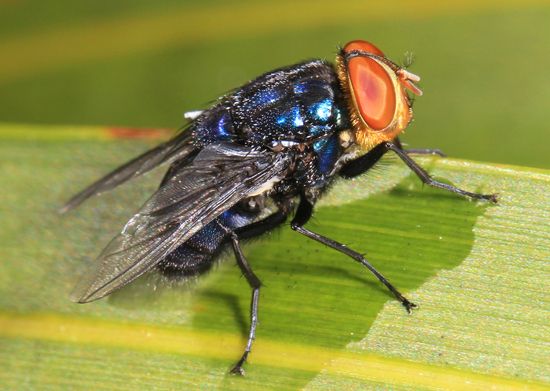
For adult blow flies, identification often relies on chaetotaxy, a method based on the precise arrangement and location of bristles on the insect’s body, particularly on the thorax. Other diagnostic features include their distinctive metallic coloration—typically blue, green, or black—and their overall size.8
Larval Identification
Because blow fly larvae (maggots) lack the complex head capsules found in more primitive flies, they are identified primarily through microscopic examination of their posterior spiracles (external airholes). While these spiracles may appear as simple black spots to the naked eye, under a microscope they reveal complex patterns of slits or pores that are unique to different species.9
These identification methods are essential for forensic entomologists, who use the presence and life stage of specific blow fly species to estimate the time of death or the duration of decomposition of a body.8
Sources
- screwworm: Top Questions — Encyclopædia Britannica
- screwworm — Merriam-Webster
- screwworm — Encyclopædia Britannica
- chemosterilant — Encyclopædia Britannica
- Agricultural technology - Biological controls — Encyclopædia Britannica
- insect - Control of insect damage — Encyclopædia Britannica
- myiasis — Encyclopædia Britannica
- blow fly — Encyclopædia Britannica
- caddisfly - Distinguishing taxonomic features — Encyclopædia Britannica
- Diptera - Larvae — Encyclopædia Britannica
- caddisfly - Annotated classification — Encyclopædia Britannica
Published on · 3 min read