Do Lobsters Mate for Life?
Contrary to the popular belief popularized by the sitcom Friends, lobsters do not mate for life. This notion is a pop-cultural myth rather than a biological…

Do lobsters mate for life?
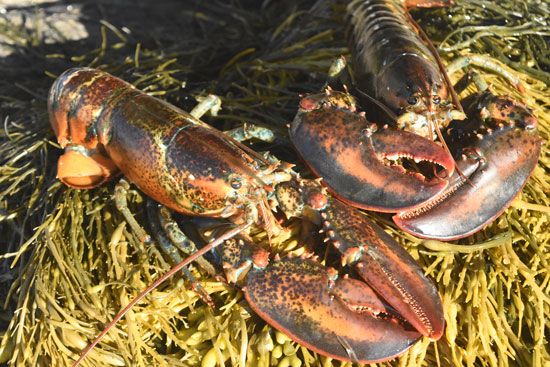
Contrary to the popular belief popularized by the sitcom Friends, lobsters do not mate for life. This notion is a pop-cultural myth rather than a biological reality.1
In reality, lobsters are not monogamous. Instead, they exhibit a pattern known as serial monogamy, where they form short-term, exclusive partnerships that last only for a brief period during the mating process. When a female is ready to mate, she seeks out a dominant male, and the pair may spend several days together in his den. While the male guards the female while her exoskeleton is soft after molting, this behavior is driven by reproductive strategy rather than long-term fidelity. A dominant male may mate with multiple females in succession, and females may also seek out other partners if necessary.1
Why do female lobsters need to molt before they can mate?
Female lobsters must molt—or shed their rigid exoskeleton—before they can mate because their hard outer shell acts as a physical barrier to reproduction.21
Because a lobster’s body is encased in a protective, calcified shell that prevents growth and movement, the female must undergo ecdysis to become soft-shelled. Mating occurs within approximately 30 minutes of this molting process while the female is still soft, allowing the male to successfully transfer his sperm to her body.231
The female stores this sperm internally to fertilize her eggs at a later time when environmental conditions are optimal for larval development. During the period immediately following the molt, the female remains in the male’s den for about a week until her new exoskeleton hardens, providing her with protection while she is vulnerable.14
What are some examples of animals that actually mate for life?
While lifelong monogamy is relatively rare in the animal kingdom, several species are known to form stable, long-term pair bonds. It is important to note that even among these species, social monogamy does not always equate to exclusive genetic fidelity, as extra-pair matings can occur.56
Here are some examples of animals that exhibit lifelong pair bonding:
- Beavers: These rodents are known to remain faithful to their partners once a relationship is established, though the biological mechanisms driving this behavior remain a subject of study.5
- Gray wolves: Within their strict social hierarchies, the alpha male and his mate typically remain together for life.5
- Gibbons: These tree-dwelling apes form devoted couples that exhibit affection through mutual grooming and co-parenting, though they have been observed to occasionally break their bonds or mate with others.5
- Macaroni penguins: Most breeding pairs are monogamous and engage in elaborate “ecstatic displays” upon reuniting. They share parental duties, with the male often guarding the chicks while the female hunts.5
- Sandhill cranes: This species is well-known for the strong bonds between couples, which they often reinforce through “unison calling”.5
- Bald eagles: These birds are committed co-parents, with males actively participating in keeping eggs warm and feeding the chicks.5
How do pheromones help lobsters find mates in the ocean?
In the ocean, lobsters utilize pheromones—chemical signals secreted by an organism to elicit a specific reaction from others of the same species—to facilitate reproduction.78
When a female lobster is ready to mate, she actively seeks out the den of a dominant male. To advertise her presence and sexual receptivity, she squirts urine laced with her scent into the male’s den. This chemical signal acts as a powerful attractant, drawing the male to the den entrance and initiating the courtship process.8
While the female is inside the den, the male may continue to generate water currents with his abdominal limbs, known as pleopods. Experts believe this behavior serves a dual purpose: it helps the male gather information about other lobsters in the vicinity and advertises his own mating status and location to other potential mates. Through these chemical cues, lobsters are able to navigate the challenges of finding partners in their marine environment.8
Sources
- Do lobsters mate for life? — Encyclopædia Britannica
- crustacean - Exoskeleton — Encyclopædia Britannica
- lobster — Encyclopædia Britannica
- arthropod - The exoskeleton and molting — Encyclopædia Britannica
- 6 Animal Species that Mate for Life — Encyclopædia Britannica
- Animal social behavior - Social interactions involving sex — Encyclopædia Britannica
- Hormone - Hormones of crustaceans — Encyclopædia Britannica
- pheromone — Encyclopædia Britannica
- Reproductive behaviour - Olfactory clues — Encyclopædia Britannica
- Chemoreception - Aphrodisiac pheromones — Encyclopædia Britannica
Published on · 3 min read