Dorado
The term "dorado," which is Spanish for "golden," refers to several distinct entities:
What is dorado?
The term “dorado,” which is Spanish for “golden,” refers to several distinct entities:
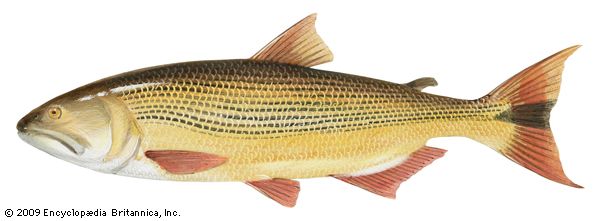
- Freshwater Fish: The name applies to powerful game fish of the genus Salminus (family Characidae), found in South American rivers. These fish are known for their golden color, red fins, and resemblance to salmon.12
- Oceanic Fish: It is a common name for the dolphinfish (Coryphaena hippurus), also widely known as mahimahi. Despite the name “dolphinfish,” it is not related to marine mammals.12
- Constellation: Dorado is a constellation in the southern sky. It contains a significant portion of the Large Magellanic Cloud and was named after the dolphinfish by navigator Pieter Dircksz Keyser.3
It is important to distinguish between these species, as the freshwater Salminus and the oceanic mahimahi are biologically unrelated despite sharing the same common name.2
What is the Large Magellanic Cloud located in the Dorado constellation?
The Large Magellanic Cloud (LMC) is not located inside the Dorado constellation in a physical sense; rather, it is a satellite galaxy of the Milky Way that appears to overlap with the constellation from our perspective on Earth. More than half of the LMC lies within the boundaries of the Dorado constellation in the southern sky.4
The LMC is an irregular galaxy situated approximately 160,000 light-years away60,000 light-years away. It serves as a vital laboratory for astronomers, housing significant celestial features such as:4
- Tarantula Nebula: An immense region of ionized gas and active star formation.5
- Supernova 1987A: The closest supernova observed from Earth in over 350 years.4
- Luminous Stars: Including S Doradus and the massive star R136a1.54
Because the LMC is a separate, distant system, its presence in the same field of view as the stars of Dorado is merely a result of our line of sight from the solar system.54
How does the freshwater dorado differ from the saltwater mahimahi?
While the names are often used interchangeably, the freshwater dorado and the saltwater mahimahi are entirely different species.
The freshwater dorado (Salminus genus) belongs to the characin family (Characidae) and is native to South American rivers. It is characterized by its golden scales, red fins, and rows of dots, bearing a superficial resemblance to a salmon.6
In contrast, the mahimahi (Coryphaena hippurus), also known as the dolphinfish, is an open-ocean species found in tropical and subtropical ocean waters. It is a member of the family Coryphaenidae and is unrelated to the freshwater dorado. The mahimahi is recognized for its iridescent blue, green, and gold coloration, a long dorsal fin, and a forked tail. Unlike the freshwater variety, the mahimahi is a highly migratory, fast-swimming predator often targeted in commercial and sport fishing3.31
It is important to note that while both fish share the name “dorado”—Spanish for “golden”—they are biologically distinct and inhabit completely different environments.16
Why are some fish species commonly confused with marine mammals?
Some fish species are commonly confused with marine mammals primarily due to their common names, which often reference terrestrial or aquatic animals despite the fish having no biological relation to them.
A prominent example is the mahimahi (Coryphaena hippurus), which is frequently called a “dolphinfish” or simply a “dolphin.” While it shares this name with the marine mammal, the two are entirely unrelated; the reason for this shared nomenclature remains unclear. Similarly, historical naming conventions often drew comparisons between fish and land creatures based on superficial physical similarities. For instance, catfish, dogfish, wolffish, and frogfish were named by early observers who noted resemblances to animals like cats, dogs, wolves, and frogs, respectively.367
These naming practices can lead to significant public confusion, as the common names imply a biological connection that does not exist. In reality, these fish have evolved unique physiological and morphological features to thrive in their specific aquatic environments, distinct from the evolutionary paths of marine mammals.89
Sources
- dorado — Encyclopædia Britannica
- Dorado — Encyclopædia Britannica
- mahimahi — Encyclopædia Britannica
- Magellanic Cloud — Encyclopædia Britannica
- Large Magellanic Cloud — Merriam-Webster
- dolphin — Encyclopædia Britannica
- 9 Fish Named After Other Animals — Encyclopædia Britannica
- Marine ecosystem - Physical and chemical properties of seawater — Encyclopædia Britannica
- fish - Structural diversity — Encyclopædia Britannica
Published on · 3 min read