Dolphin
The term "dolphin" refers to two distinct types of animals, which often leads to confusion.
What is dolphin?
The term “dolphin” refers to two distinct types of animals, which often leads to confusion.
Mammalian Dolphins
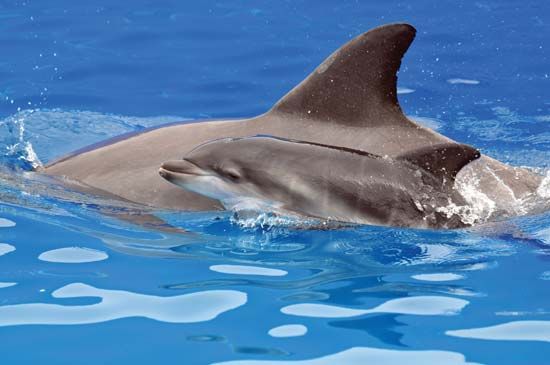
Most commonly, the name refers to approximately 50 species of toothed whales that are mammals. These belong to the family Delphinidae (oceanic dolphins) or the families Platanistidae and Iniidae (river dolphins). These cetaceans are known for their intelligence, social complexity, and use of echolocation to navigate and hunt. They typically have spindle-shaped bodies, beaklike snouts, and simple teeth.123
Fish
The name “dolphin” is also applied to a fish genus, Coryphaena (family Coryphaenidae). The most well-known species, C. hippurus, is widely recognized by its Hawaiian name, mahimahi. Unlike their mammalian namesakes, these are colorful, carnivorous game fish found in tropical and warm temperate waters.14
How does echolocation help dolphins navigate and hunt?
Dolphins utilize echolocation as a sophisticated physiological process to navigate their environment and procure food, particularly in conditions where visibility is limited, such as at night or in murky water.56
How the Process Works
- Sound Production: Dolphins produce sound primarily through a complex system of passages connected to their blowhole and their larynx. These sounds consist of a rapid series of clicks.5
- High-Frequency Pulses: These clicks contain high-frequency components, ranging from 50,000 to 200,000 hertz. Because the velocity of sound is higher in water than in air, dolphins must use these extremely high frequencies to achieve the same level of object discrimination as land-based echolocators like bats.5
- Echo Reception: As these sound waves strike objects, they reflect back to the dolphin. Dolphins possess a specialized protein called prestin, which enhances their sensitivity to these high-frequency return echoes, allowing them to detect and interpret the reflected sound waves.6
This ability allows dolphins to perform complex tasks, such as catching fish or navigating around obstacles, even when their vision is completely excluded.5
What are the main differences between oceanic and river dolphins?
Oceanic and river dolphins belong to different families and exhibit distinct physical and behavioral characteristics adapted to their respective environments.
Key Differences
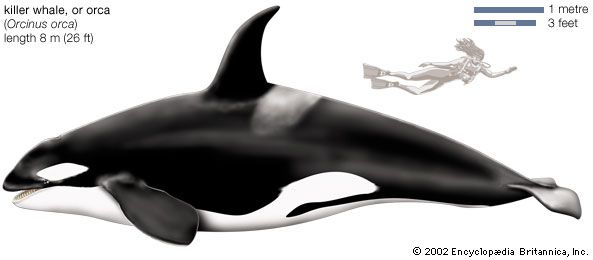
- Classification: Oceanic dolphins belong to the family Delphinidae, which includes nearly 40 species such as the bottlenose dolphin and the killer whale2. River dolphins are categorized into the families Platanistidae and Iniidae.82
- Physical Appearance: Oceanic dolphins are generally streamlined, athletic swimmers with prominent foreheads (melons) and beaklike snouts. In contrast, river dolphins often have longer, narrower beaks and more rounded foreheads. Some river species, such as those in the Ganges and Indus rivers, have very small eyes that lack a lens, as they rely heavily on their highly developed sonar.28
- Habitat and Behavior: Oceanic dolphins are primarily marine, though some species venture into fresh water. They are known for being swift, agile swimmers that often leap and ride bow waves. River dolphins are less athletic and do not perform the same sensational leaps; they spend much of their time probing river bottoms for food.28
- Conservation: Many river dolphin species are critically endangered due to habitat fragmentation from dams, pollution, and industrial river traffic.8
Why are some dolphin species currently at risk of extinction?
Several dolphin species are currently at risk of extinction due to a combination of human-driven environmental pressures and direct interactions with industrial activities.
Primary Threats to Dolphin Populations
- Habitat Degradation and Loss: Many river dolphins are endangered by the construction of dams, which restrict migration and fragment their habitats. Additionally, increasing water pollution from industrial, agricultural, and urban sources creates hazardous environments that threaten their survival.810
- Bycatch: A significant factor in the decline of many cetaceans is bycatch, where dolphins are unintentionally captured in commercial fishing gear, such as gill nets and trawls. This often results in fatal injuries or drowning.11
- Noise Pollution: Because dolphins rely on echolocation to navigate and hunt, noise pollution from shipping, seismic testing, and naval sonar interferes with their ability to communicate and find food. This disruption is linked to mass strandings and can be an existential threat to vulnerable populations.112
- Plastic Pollution: Dolphins may ingest plastic debris, mistaking it for food, or become entangled in discarded fishing gear, which can lead to mortality.13
- Direct Exploitation: Some species have faced threats from hunting for meat and oil, as well as illegal poaching.814
The baiji, or Chinese river dolphin, is now widely believed to be functionally extinct due to these cumulative pressures.814
Sources
- dolphin: Top Questions — Encyclopædia Britannica
- dolphin — Encyclopædia Britannica
- How intelligent are dolphins? — Encyclopædia Britannica
- dolphin — Encyclopædia Britannica
- sound reception - Echolocation in other mammals — Encyclopædia Britannica
- Echolocation — Encyclopædia Britannica
- Movement perception - Auditory — Encyclopædia Britannica
- river dolphin — Encyclopædia Britannica
- A Dose of Dolphin-Induced Dopamine: 8 Species of Adorable Cetacean — Encyclopædia Britannica
- water pollution: Top Questions — Encyclopædia Britannica
- noise pollution - Effects on humans and wildlife — Encyclopædia Britannica
- bycatch — Encyclopædia Britannica
- cetacean - Abundance — Encyclopædia Britannica
- plastic pollution - Plastic pollution in oceans and on land — Encyclopædia Britannica
- seawater - Acoustic properties — Encyclopædia Britannica
Published on · 3 min read