Characin
Characins belong to the order Characiformes, a group of freshwater bony fishes that first appeared in the fossil record during the Cretaceous period…
How have characin fish evolved over time, and what are their closest relatives?
Characins belong to the order Characiformes, a group of freshwater bony fishes that first appeared in the fossil record during the Cretaceous period, approximately 112 million years ago. As members of the superorder Ostariophysi, they are characterized by the possession of a Weberian apparatus, a specialized structure of four movable bones that connects the swim bladder to the internal ear, enhancing their hearing.1
Regarding their evolutionary relationships, characins are part of the series Otophysi within the Ostariophysi. Their closest relatives within this series include:
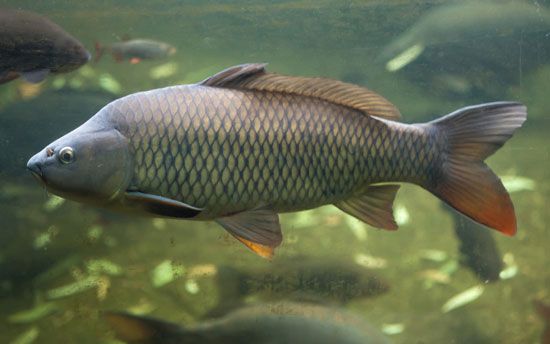
- Cypriniformes: A diverse group including carps and minnows.1
- Siluriformes: Commonly known as catfishes.1
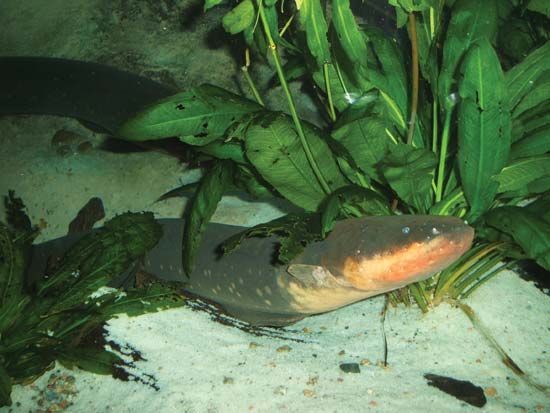
- Gymnotiformes: A group that includes knifefishes and electric eels.1
While characins are distinguished by their non-protractile mouths and toothed jaws, they share a common evolutionary lineage with these other ostariophysan groups, which together comprise the majority of known freshwater fish species.1
How do characin fish reproduce and care for their young?
Characin fish exhibit diverse reproductive strategies, often involving elaborate courtship displays by males, who may display brilliant nuptial coloration. Their eggs are typically demersal (heavier than water), sticky, and are deposited among aquatic plants, under logs, or in shallow pits in sand and gravel.6
Parental care varies significantly among species:
- Egg Guarding: In many characin species, the male is responsible for guarding the eggs.7
- Unique Spawning: A notable exception is the spraying characin (Copeina arnoldi). The female leaps out of the water to deposit her eggs on the undersides of overhanging leaves, to which she and the male cling during the process. Following deposition, the parents actively splash water onto the eggs to keep them moist during development.6
While many ostariophysans—the broader group to which characins belong—do not provide parental care, nest building and egg guarding are relatively widespread behaviors within the order.7
How do characin fish differ from other freshwater fish families?
Characin fish, belonging to the family Characidae and the order Characiformes, are distinguished from other freshwater fish families by several key anatomical and biological features:
- Jaw Structure: Unlike the Cypriniformes (carps and minnows), which have toothless, protractile mouths, characins possess non-protractile mouths with toothed jaws.19
- Adipose Fin: Most characins possess an adipose fin—a small, fleshy second dorsal fin located on the back—which is rarely found in cypriniforms.219
- Weberian Apparatus: As members of the superorder Ostariophysi, characins share a specialized chain of bones called the Weberian apparatus. This structure connects the swim bladder to the inner ear, significantly enhancing their hearing capabilities compared to non-ostariophysan fishes.1019
- Ecological Niche: While many other freshwater groups like suckers, loaches, and most catfishes are primarily benthic (bottom-dwelling), most characins typically inhabit and feed in the middle and upper layers of the water column.11
These traits, combined with their diverse range of forms—from small, blind cave fish to large, predatory piranhas—set them apart within the broader classification of bony fishes.2111
Where are characin fish primarily found in the world?
Characin fish are primarily found in the tropical regions of the world, with the vast majority of their hundreds of species inhabiting Central and South America. A smaller number of species are native to tropical Africa.1
Within these regions, they occupy a wide variety of freshwater environments, including ponds, lakes, and river systems where they typically inhabit the middle and upper layers of the water column. Their distribution also extends to specialized environments, such as subterranean caves, where species like the blind cave fish (Astyanax jordani) have evolved in locations including Mexico.111
Sources
- characin — Encyclopædia Britannica
- fish - Annotated classification — Encyclopædia Britannica
- Characidae — Merriam-Webster
- characin — Merriam-Webster
- fish - Actinopterygii: ray-finned fishes — Encyclopædia Britannica
- ostariophysan - Parental care — Encyclopædia Britannica
- ostariophysan - Breeding — Encyclopædia Britannica
- osteoglossomorph - Life cycle and reproduction — Encyclopædia Britannica
- Weberian apparatus — Encyclopædia Britannica
- ostariophysan - Annotated classification — Encyclopædia Britannica
- ostariophysan - Habitat and distribution — Encyclopædia Britannica
Published on · 3 min read