Driver Ant
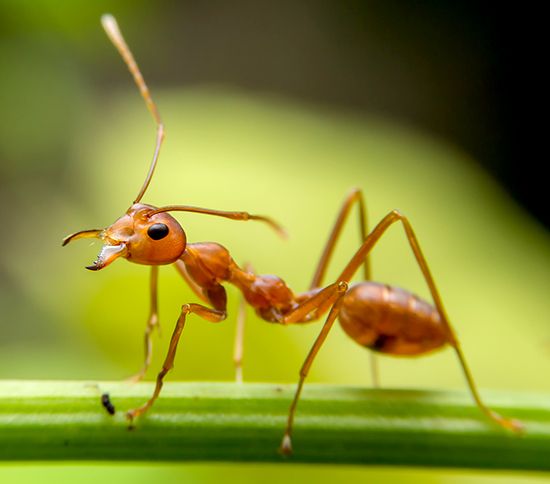
A driver ant refers to any species within the genus Dorylus, a group of predominantly African ants known for their nomadic lifestyle. These colonies…
What is driver ant?
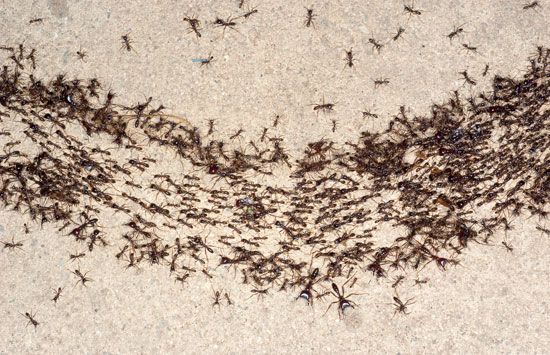
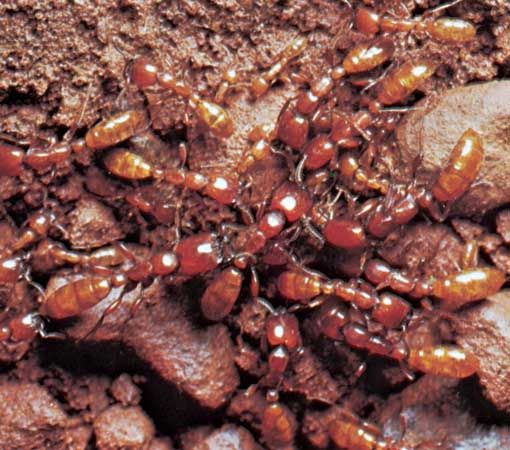
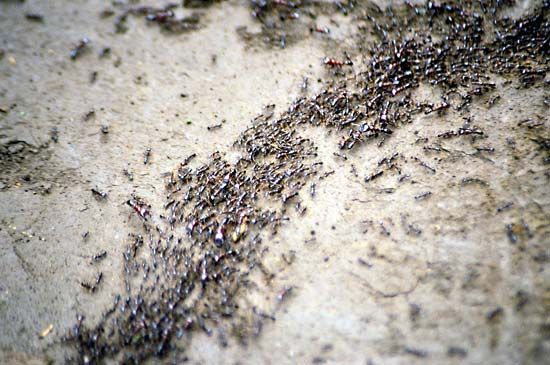
A driver ant refers to any species within the genus Dorylus, a group of predominantly African ants known for their nomadic lifestyle. These colonies alternate between periods of quiet egg-laying and nomadic phases, during which they relocate to a new spot each day.12
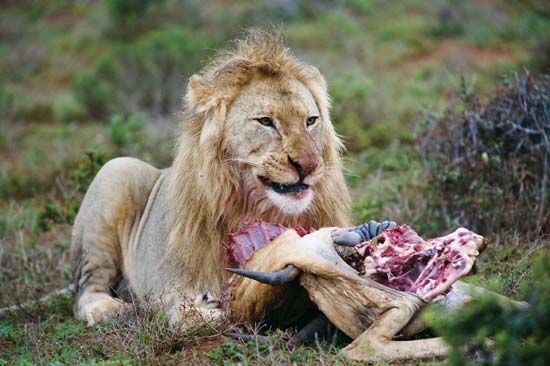
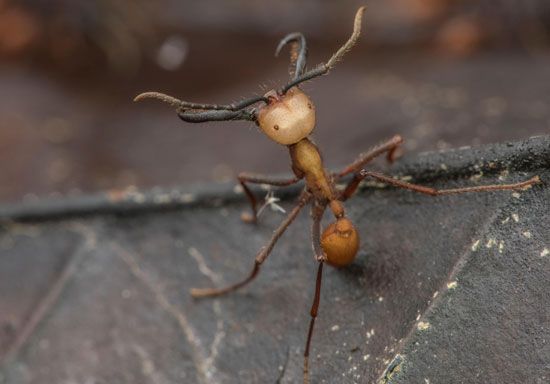
Driver ants are ferocious carnivorous hunters that move in vast numbers to overwhelm their prey. Using powerful cutting jaws, they systematically search for food, climbing into trees and shrubs to attack various animals, including insects, spiders, frogs, snakes, birds, and mammals. Their aggressive behavior and mass movements are similar to those of the New World army ant (Eciton).13
How do driver ants communicate while moving in large groups?
While the provided search results confirm that driver ants (Dorylus) travel in large, nomadic columns to hunt and overwhelm prey, they do not explicitly detail the specific communication mechanisms used by this genus while moving in these groups.
In many other ant species, communication during foraging and movement is typically facilitated by pheromones, which are chemical signals used to mark trails and recruit nestmates. However, because the provided information does not contain specific data on the communication methods of Dorylus during their mass movements, I cannot definitively describe their signaling process.
What are the differences between African driver ants and New World army ants?
While African driver ants and New World army ants share many behavioral similarities, they are distinguished primarily by their geographic distribution and specific taxonomic classification.
Key Similarities
Both groups are members of the subfamily Dorylinae and are characterized by a nomadic lifestyle. They are notorious for their aggressive foraging habits, traveling in large columns to systematically consume insects and other invertebrates in their path. Both types of colonies alternate between nomadic phases—where they relocate frequently—and stationary periods during which the queen lays eggs.16
Primary Differences
- Geographic Range: The term “driver ant” specifically refers to the genus Dorylus, which is predominantly found in Africa. In contrast, “army ant” is a broader term often associated with the genus Eciton, which is native to the tropical regions of the Americas (the New World).16
- Behavioral Nuance: While both are highly destructive to life in their path, the African driver ant is noted for its particularly ferocious nature, with its systematic hunting extending into trees and shrubs to attack a wide range of prey, including birds and mammals.1
How do other ant species protect themselves from predators?
Ants employ a variety of strategies to protect themselves and their colonies from predators, relying on both physical adaptations and complex social behaviors.
Physical and Defensive Adaptations
- Specialized Castes: Many ant species exhibit polymorphism, where specific workers, such as soldier ants, are physically adapted for defense with large mandibles or powerful stings.28
- Structural Barriers: Some species, such as Cryptocercus ants, use specialized guards whose heads are modified into pluglike structures to seal and protect the nest entrance.8
- Chemical Defenses: Certain insects, including some ants, utilize chemical defenses to deter predators. Additionally, ants use alarm pheromones to signal danger; these chemicals are released when an ant is injured, alerting other workers to the threat and mobilizing the colony for defense.29
- Bivouac Formation: Army ants protect their queen and immature brood by forming a living, cylindrical structure called a bivouac, created by workers linking their bodies together.2
Social and Behavioral Strategies
- Mutualism: Some ants engage in protective relationships with other organisms. For example, acacia ants protect their host trees from herbivores in exchange for food and shelter.10
- Colony Coordination: Because ants are social insects, they rely on the collective strength of the colony to survive. Communication via pheromones allows them to coordinate defensive efforts effectively.298
Sources
- driver ant — Encyclopædia Britannica
- What do ants eat? — Encyclopædia Britannica
- driver ant — Merriam-Webster
- termite - Communication — Encyclopædia Britannica
- Eciton army ant: Top Questions — Encyclopædia Britannica
- ant - Notable ant behaviors — Encyclopædia Britannica
- Sahara desert ant — Encyclopædia Britannica
- Eciton army ant — Encyclopædia Britannica
- pheromone — Encyclopædia Britannica
- ant - Physical description — Encyclopædia Britannica
- community ecology - Specialization in predation — Encyclopædia Britannica
- ant - Natural history — Encyclopædia Britannica
- colony — Encyclopædia Britannica
Published on · 3 min read