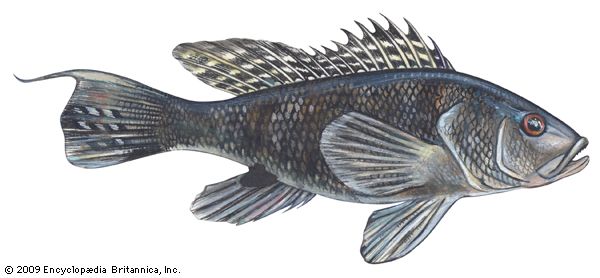
Drum
The term "drum" refers to any of approximately 275 species of fish belonging to the family Sciaenidae. These carnivorous, generally bottom-dwelling fish are…
What species of fish are classified as drum fish?
The term “drum” refers to any of approximately 275 species of fish belonging to the family Sciaenidae. These carnivorous, generally bottom-dwelling fish are named for their ability to produce sound by vibrating muscles against their air bladder, which functions as a resonating chamber.1
While the family is collectively known as drums or croakers, individual species are often referred to by specific common names. Notable examples include:
- Red drum (Sciaenops ocellatus): Also known as channel bass, this is a large, reddish species found in the western Atlantic.1
- Freshwater drum (Aplodinotus grunniens): A silvery species inhabiting lakes and rivers across the Americas.1
- Black drum (Pogonias cromis): A gray or coppery red fish of the western Atlantic, also called the sea drum.1
- Totuava (Totoaba macdonaldi): The largest member of the family, reaching weights of up to 100 kg.1
- White seabass (Atractoscion nobilis): Found in the eastern Pacific.1
- Kingfish (Menticirrhus saxatilis): Also known as whiting, this species is unique for lacking an air bladder.1
- Weakfish (Cynoscion): A group that includes seatrouts and squeteagues.1
Where are drum fish typically found in the world?
Drum fish, belonging to the family Sciaenidae, are widely distributed across the globe. While they are primarily marine, they are most commonly found along the sandy shores of warm and tropical seas.12
Their specific habitats include:
- Marine Environments: Most species inhabit warm temperate and tropical coastal waters. For example, the red drum and black drum are found in the western Atlantic Ocean, while the white seabass is native to the eastern Pacific. The yellowfin croaker is a common species found along the southern California coast.123
- Freshwater and Temperate Waters: A number of species have adapted to temperate or freshwater environments. A notable example is the freshwater drum, which inhabits lakes and rivers throughout the Americas.1
- Specific Regions: The family is globally diverse, with unique species like the totuava, which is found in the Gulf of California.1
How did drum fish get their name?
Drum fish, which belong to the family Sciaenidae, earned their name due to their unique ability to produce audible sounds that resemble the beating of a drum.
These fish are capable of “vocalizing” by using strong muscles attached to their air bladder—also known as a swim bladder—which acts as a resonating chamber to amplify the vibrations. Because of this distinct noise-making behavior, members of this family are frequently referred to as “drums” or “croakers” in reference to the drumming or croaking sounds they generate.14
How do drum fish use their air bladders to make sound?
Drum fish (family Sciaenidae) produce their characteristic sounds through a specialized biological mechanism involving their air bladder, also known as a swim bladder.
The process functions as follows:
- Muscle Vibration: These fish possess strong muscles located in the abdomen that are attached to the sides of the air bladder.17
- Resonance: When these muscles vibrate, they create sound waves. The air bladder acts as a resonating chamber, which significantly amplifies these vibrations, allowing the fish to produce audible “drumming,” “croaking,” or “grunting” noises.17
- Behavioral Context: This acoustic activity is most pronounced during spawning seasons and often varies between day and night, likely linked to the fish’s feeding and reproductive behaviors.7
It is worth noting that this system is highly effective for communication, particularly in the murky waters where many of these species reside. Interestingly, not all members of the family possess this capability; for instance, the kingfish (or whiting) lacks an air bladder entirely.17
Sources
- drum — Encyclopædia Britannica
- Sciaenidae — Merriam-Webster
- yellowfin croaker — Merriam-Webster
- air bladder — Merriam-Webster
- fish - The respiratory system — Encyclopædia Britannica
- drum — Merriam-Webster
- ostariophysan - Sound — Encyclopædia Britannica
- perciform - Sound production — Encyclopædia Britannica
- croaker — Merriam-Webster
Published on · 3 min read