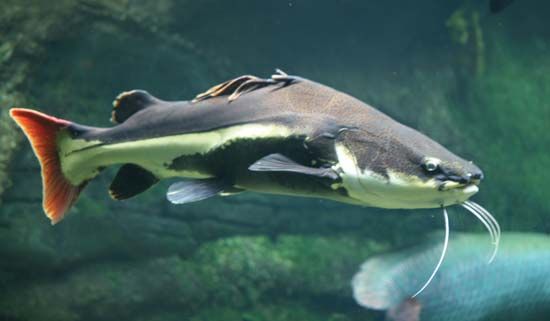
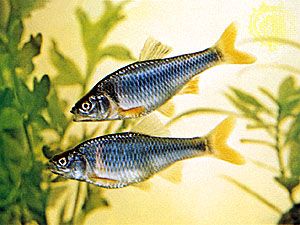
Ostariophysan
Ostariophysan fish are oviparous, meaning they all lay eggs rather than giving birth to live young. Fertilization is typically external, though some catfish…
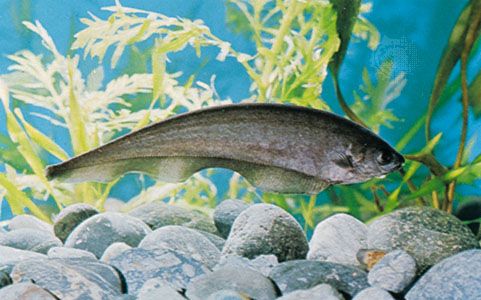
How do ostariophysan fish reproduce and care for their young?
Ostariophysan fish are oviparous, meaning they all lay eggs rather than giving birth to live young. Fertilization is typically external, though some catfish and characins practice internal insemination. Development is direct, with hatchlings emerging as miniature replicas of their parents.1
While many species provide no care, parental investment is widespread. Strategies include:2
- Nest Building: Many cyprinids, such as chubs, construct massive stone nests. Catfish may create simple depressions or tunnel-like nests in stream banks.23
- Egg Guarding: Males often guard eggs, cleaning and fanning them to ensure development.23
- Oral Incubation: Some sea catfish carry eggs and even hatchlings in their mouth cavities.2
- Unique Methods: Some species deposit eggs in mussel gill cavities, while certain catfish carry eggs on their abdomens or under their lower lips. The spraying characin (Copeina arnoldi) lays eggs on overhanging leaves and splashes them with water to keep them moist.23
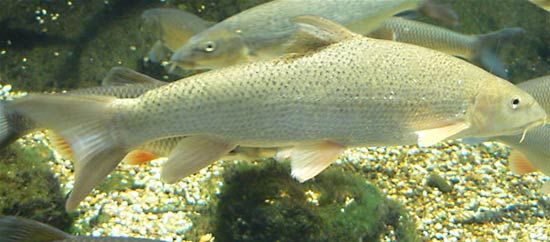
How have ostariophysan fish been impacted by climate change and habitat loss?
While the provided search results do not explicitly detail the specific impacts of climate change on ostariophysan fish, they provide clear evidence regarding the severe consequences of habitat loss for these species.
Because ostariophysans are the dominant fish group in nearly all freshwater habitats globally, they are disproportionately affected by the extensive modification of riverine ecosystems. Freshwater habitats have been significantly altered through:67
- Damming: Many large rivers, such as the Tennessee River, have been converted into series of artificial lakes, destroying the natural flow regimes required by many species.8
- Channelization: The practice of straightening rivers into predetermined channels removes the diverse microhabitats—such as riffles and quiet pools—that support the high diversity of characins, cyprinids, and catfish.68
- Water Diversion: Excessive use of water for agriculture and evaporation from dams has caused some rivers, like the Colorado River, to barely reach their natural destinations, leading to the collapse of downstream ecosystems.8
These massive environmental changes are primary drivers behind the high rates of extinction among freshwater fish.8
How does the Weberian apparatus benefit ostariophysan fish?
The Weberian apparatus is a specialized chain of four pairs of small bones, or ossicles, derived from the vertebrae immediately following the skull. This structure creates a functional link between the swim bladder and the inner ear, serving as a sophisticated hearing organ.910
The apparatus significantly enhances the auditory sensitivity of ostariophysan fish by acting as a biological hydrophone. When underwater sound waves strike the fish, they cause the walls of the swim bladder to vibrate. The Weberian ossicles then amplify these vibrations and transmit the pressure changes directly to the inner ear.310
This adaptation provides several critical benefits:
- Acute Hearing: It grants these fish a remarkable frequency detection range, typically between 16 and 7,000 hertz, with some species reaching up to 10,000 hertz.3
- Communication: The ability to produce and hear sounds is vital for social interaction, particularly in murky waters where visibility is limited.3
- Reproductive Success: Sound serves as a mechanism for sexual recognition, allowing individuals to identify mates of their own species and maintain genetic integrity.3
How do ostariophysan fish differ from other types of fish in terms of their sensory abilities?
Ostariophysan fish possess sensory abilities that distinguish them from other fish groups, contributing significantly to their biological success and dominance in freshwater environments. Their unique sensory profile is defined by two primary features:10
Enhanced Auditory Perception
The most notable sensory advantage of the series Otophysi is the Weberian apparatus, a chain of four pairs of bones (ossicles) that connects the swim bladder to the inner ear.9118
- Mechanism: This structure functions like a biological hydrophone, where the swim bladder acts as a receiver for underwater sound waves, and the ossicles amplify these vibrations for the inner ear.9
- Sensitivity: This adaptation grants these fish a hearing range of 16 to 7,000 hertz (up to 10,000 hertz in some characins), which is more highly developed than in any other group of fish.910
Chemical Communication
Ostariophysans utilize a unique chemical warning system absent in other fish.10
- Alarm Substances: When the skin of an ostariophysan is injured, it releases a specialized chemical substance from epidermal cells. This substance triggers a fright reaction in other members of the school, serving as an effective defense against predation.6
- Chemosensory Acuity: Many species, particularly those in murky waters, rely heavily on taste and smell. They use pheromones for complex social communication, including individual recognition, territorial behavior, and sexual signaling.12
Sources
- ostariophysan - Reproductive cycle — Encyclopædia Britannica
- ostariophysan - Parental care — Encyclopædia Britannica
- ostariophysan - Weberian apparatus and swim bladder — Encyclopædia Britannica
- ostariophysan — Encyclopædia Britannica
- ostariophysan - Breeding — Encyclopædia Britannica
- ostariophysan - Habitat and distribution — Encyclopædia Britannica
- conservation - In fresh water — Encyclopædia Britannica
- ostariophysan - Size range and diversity of structure — Encyclopædia Britannica
- Weberian apparatus — Encyclopædia Britannica
- ostariophysan - Sound — Encyclopædia Britannica
- ostariophysan - Alarm substances — Encyclopædia Britannica
- Weberian apparatus — Merriam-Webster
- lateral line system — Encyclopædia Britannica
- Mechanoreception - Mechanoreceptor function — Encyclopædia Britannica
- ostariophysan - Taste and smell — Encyclopædia Britannica
Published on · 4 min read