Durian
The durian (Durio zibethinus) is a large, edible fruit produced by a tree in the Malvaceae family. Cultivated primarily in Indonesia, the Philippines…
What is durian?
The durian (Durio zibethinus) is a large, edible fruit produced by a tree in the Malvaceae family. Cultivated primarily in Indonesia, the Philippines, Malaysia, and southern Thailand, it is known for its polarizing characteristics.1
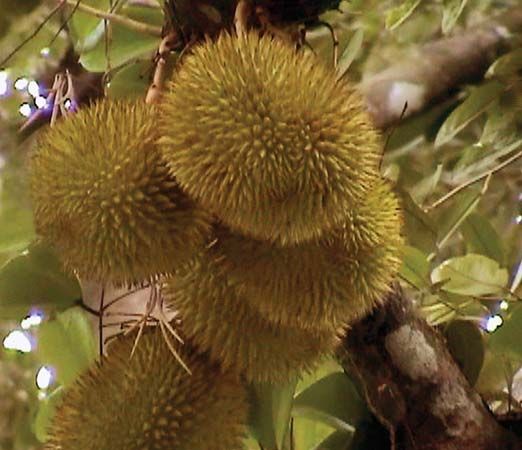
The fruit is spherical, measuring 15 to 20 cm in diameter, and features a hard, spiny husk. Inside, it contains a custard-like pulp that is often described as having a mild, sweet flavor—reminiscent of banana-lemon custard—contrasted by a notoriously pungent odor compared to Limburger cheese. Due to this intense smell, the fruit is frequently banned from public transportation, hotels, and airplanes in parts of Southeast Asia.12
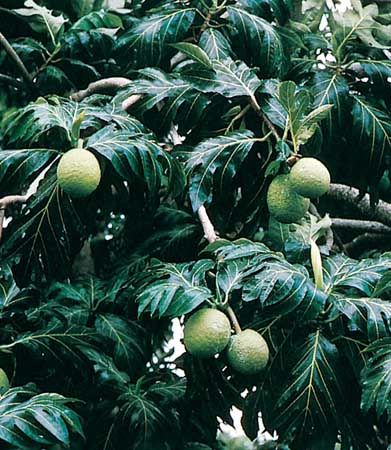
The pulp is used in various sweet and savory dishes, and the seeds can be eaten if roasted. The durian is related to other tropical fruits such as breadfruit and jackfruit.1
How is the durian fruit harvested from the tree?
Sorry, the Britannica knowledge base does not contain this information.
What are some other tropical fruits with unique flavors or textures?
Tropical regions offer a diverse array of fruits with unique flavor profiles and textures. Here are several notable examples:
- Cupuaçu: Native to the Amazon, this “superfruit” is related to cacao. It features a creamy white pulp with a flavor profile often described as a blend of chocolate and pineapple, while its juice tastes of pear and banana.2
- Ice Cream Bean: This South American fruit grows in giant pods up to one meter long. It is prized for its juicy, white pulp, which has a texture and taste remarkably similar to vanilla ice cream.2
- Mangosteen: Valued for its delicate, citrus-like white segments, this fruit offers a perfect balance of sweet and tangy flavors. Its texture is often described as melting in the mouth.23
- Salak: Also known as “snake fruit” due to its scaly, reddish-brown skin, this fruit contains lobes that resemble peeled garlic cloves. It provides a sweet and acidic flavor reminiscent of pineapple.2
- Dragon Fruit: Produced by various cacti, this fruit is known for its vibrant skin and speckled flesh. Its flavor is often compared to a refreshing mix of watermelon and strawberry.4
- Rambutan: Recognizable by its bright red skin covered in soft, hair-like spines, this fruit contains a sweet, acidic pulp similar to that of a grape.5
Why do some animals enjoy eating durian?
The durian fruit is a significant component of local ecosystems, serving as a food source for many animals. While the fruit is well-known for its pungent odor—often compared to Limburger cheese—and its custard-like, mildly sweet pulp, these characteristics are highly attractive to various wildlife species in its native tropical regions.1
Animals are drawn to the fruit’s rich, nutrient-dense pulp, which is encased within a hard, spiny husk. By consuming the fruit, these animals play a vital role in the natural dispersal of the seeds found within the five oval compartments of the fruit. This interaction highlights the durian’s importance in supporting biodiversity within its habitat.1
Sources
- durian — Encyclopædia Britannica
- 8 Fruits to Try Before You Die — Encyclopædia Britannica
- dragon fruit — Merriam-Webster
- rambutan — Encyclopædia Britannica
- mangosteen — Encyclopædia Britannica
- Did you know? — Merriam-Webster
Published on · 2 min read