Earwig
Yes, earwigs do have wings. They are characterized by a pair of large, membranous hindwings that are typically folded and hidden beneath a pair of short…
Do earwigs have wings, and can they fly?
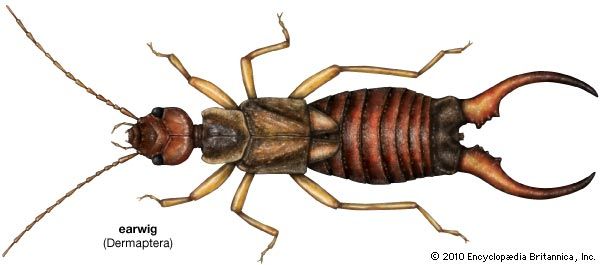
Yes, earwigs do have wings. They are characterized by a pair of large, membranous hindwings that are typically folded and hidden beneath a pair of short, leathery forewings.1
While they possess these wings, earwigs are not commonly observed flying. Their hindwings are complex structures that require a precise folding process to fit beneath the forewings, a task in which their cerci (pincers) may assist. Although they are winged insects, their flight capabilities are not their primary mode of movement, and they are often found in dark, moist environments where they remain largely nocturnal.1
What are some common species of earwigs found around the world?
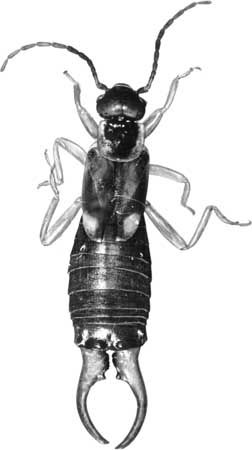
There are approximately 1,800 species of earwigs within the order Dermaptera found globally. While many species exist, they are generally characterized by their flat, slender bodies, biting mouthparts, and the distinctive forceps-like pincers known as cerci located at the end of the abdomen.13
One of the most widely recognized species is the European earwig (Forficula auricularia). Originally native to Europe, this species has become a common pest in various regions across the world.4
Most earwigs are nocturnal and typically herbivorous, though they are known for their unique defensive behaviors, such as the ability to spray a foul-smelling liquid from abdominal glands when threatened. Additionally, some species are noted for their maternal care, with females actively defending and feeding their newly hatched young.1
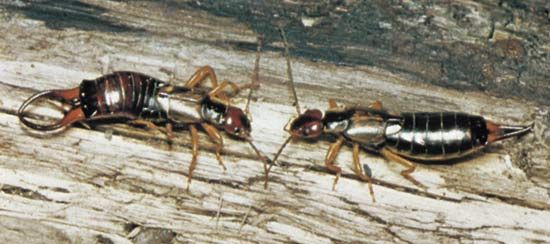
What are the distinctive physical characteristics of earwigs?
Earwigs (order Dermaptera) are characterized by several distinct physical features:
- Body Shape and Size: They are elongated, slender, and flat insects, typically ranging from 5 to 50 mm (0.2 to 2 inches) in length. They possess a shiny outer covering and are generally dark-colored.1
- Mouthparts: They have simple, chewing mouthparts.15
- Wings: Many species are winged, featuring large, membranous hindwings that are folded fanwise and then transversely to fit beneath short, leathery forewings (tegmina). However, many species are also wingless.15
- Cerci (Pincers): A defining characteristic is the pair of unjointed, heavily sclerotized, forceps-like pincers at the end of the abdomen. These vary in shape and size between males and females and are used for defense, capturing prey, folding wings, or during courtship.15
- Defensive Glands: Some species possess abdominal glands capable of firing a foul-smelling liquid as a protective mechanism.1
How did earwigs get their name, and what is the myth associated with it?
The name “earwig” is derived from the Old English or Anglo-Saxon term ēarwicga, which translates to “ear insect” or “ear creature.”641
This name stems from a widespread ancient superstition that these insects crawl into the ears of sleeping people to burrow into their brains. This belief is entirely unfounded; in reality, earwigs prefer to inhabit moist, dark environments, such as the spaces beneath rocks or decaying leaves, and have no biological inclination to enter human ears.61
Interestingly, the association between the insect and the human ear influenced the English language beyond entomology. Historically, the term “earwig” was used to describe a “whispering busybody” or a meddler, and the verb “earwig” evolved to mean eavesdropping, a usage that remains more common in British English today.6
Sources
- earwig — Encyclopædia Britannica
- heteropteran - Wings — Encyclopædia Britannica
- European earwig — Merriam-Webster
- earwig — Merriam-Webster
- insect - Annotated classification — Encyclopædia Britannica
- Did you know? — Merriam-Webster
Published on · 2 min read