Australopithecus
The genus Australopithecus lived approximately 4.4 million to 1.4 million years ago (mya) during the Pliocene and Pleistocene epochs.
How long ago did Australopithecus live, and in which regions were their fossils found?
The genus Australopithecus lived approximately 4.4 million to 1.4 million years ago (mya) during the Pliocene and Pleistocene epochs.1
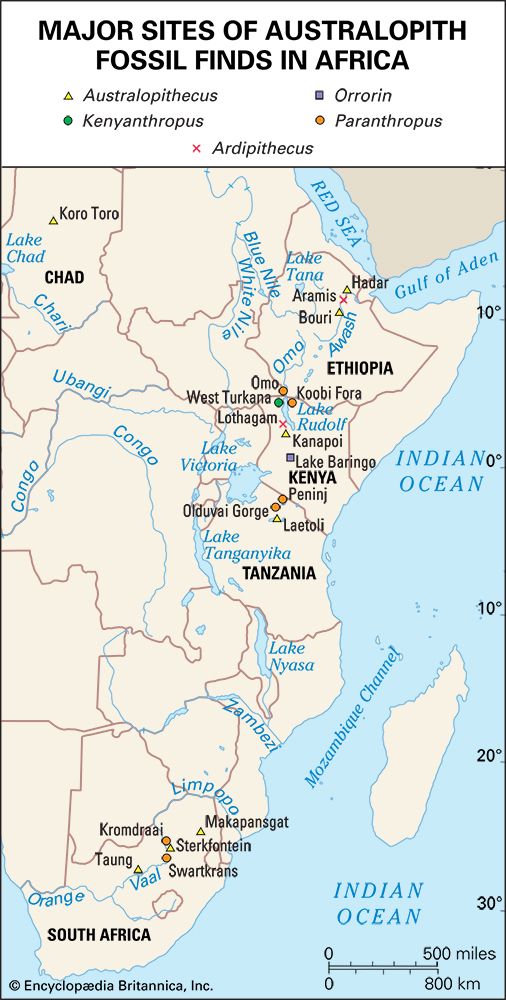
Fossils of these extinct primates have been discovered across several regions in Africa, specifically:
- Eastern Africa: Significant fossil fields have been found in Ethiopia (such as Hadar, Gona, and the Middle Awash region) and Tanzania (notably at Laetoli), as well as in northern Kenya near Lake Turkana.123
- Southern Africa: The genus was first identified here, with major sites including Taung, Sterkfontein, and Makapansgat in South Africa.124
- North-central Africa: Fossils have also been recovered from sites in this region.1
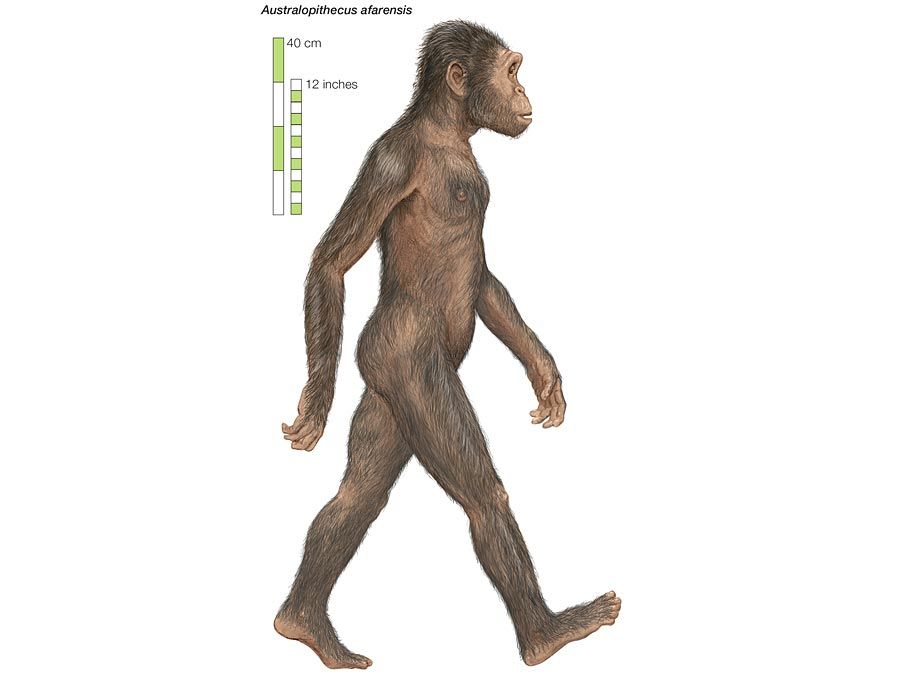
These findings have been instrumental in understanding human evolution, revealing that while Australopithecus possessed small brains like apes, they were bipedal, walking on two legs like modern humans.14
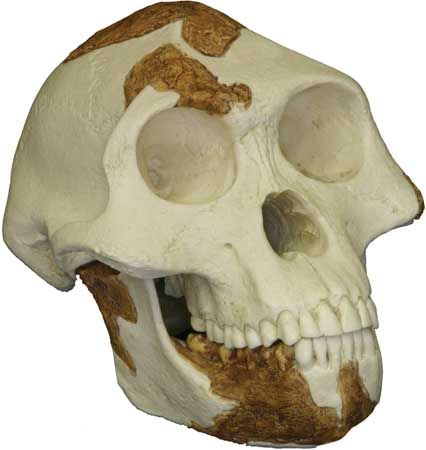
How did the discovery of ‘Lucy’ contribute to our understanding of Australopithecus?
The discovery of the “Lucy” fossil, a 40-percent-complete skeleton of Australopithecus afarensis found in Hadar, Ethiopia, in 1974, was a landmark event in paleoanthropology. Dated to approximately 3.2 million years ago, Lucy provided critical evidence that fundamentally reshaped our understanding of human evolution.562
Key Contributions to Science
- Bipedalism Before Brain Growth: The most significant insight from Lucy’s skeleton is that upright, two-legged locomotion (bipedalism) evolved well before the development of a large, human-like brain. While her pelvis and knee joints indicate she walked upright in a manner similar to modern humans, her skull retained a small, ape-sized cranial capacity.562
- Anatomical Mosaic: Lucy’s remains revealed a “mosaic” of features. Alongside her human-like pelvis, she possessed long arms, short legs, and an apelike chest and jaw. This combination of traits suggests that while A. afarensis was a proficient biped on the ground, the species also retained physical adaptations for climbing and navigating trees.52
- Species Understanding: As one of the most complete early hominin skeletons, Lucy helped researchers characterize A. afarensis as a highly variable species. Her discovery, alongside other finds at Hadar and Laetoli, established A. afarensis as a central figure in the hominin family tree, likely serving as an ancestor to later Australopithecus species and the genus Homo.67
What evidence suggests that Australopithecus was bipedal, and why is this important?
Evidence for bipedalism in Australopithecus is derived from distinct anatomical features found in their fossils, as well as direct trace evidence of their movement.
Anatomical Evidence
Paleoanthropologists identify bipedalism by examining the pelvis and lower limbs, which show clear adaptations for upright walking compared to great apes:
- Pelvic Structure: Australopithecus fossils, such as those of A. afarensis, exhibit short, broad ilia and a wide, stout sacrum. These features allowed for the attachment of muscles that stabilize the pelvis during a stride, preventing the side-to-side wobbling seen in quadrupedal primates.89
- Femoral Angling: The femurs of Australopithecus slant toward the midline, placing the knees closer together under the body’s center of mass. This diagnostic angle is a hallmark of bipedal locomotion.89
Trace Evidence
Beyond skeletal anatomy, the Laetoli trackway in Tanzania provides direct evidence of bipedalism. These 3.5-million-year-old footprints show a walking pattern and foot shape “astonishingly similar” to those of modern, habitually barefoot humans, confirming that these hominins were adept walkers.8
Importance of Bipedalism
Bipedalism is a defining transition in human evolution. It represents a fundamental shift in the primate body plan, moving away from arboreal-dominated locomotion toward a specialized, energy-efficient terrestrial gait. While these early hominins remained capable of climbing trees, their obligate bipedalism on the ground set the stage for the anatomical and behavioral developments that eventually characterized the genus Homo.89
How do scientists determine the age and species of Australopithecus fossils?
Scientists determine the age and species of Australopithecus fossils through a combination of geological dating techniques and detailed morphological analysis.
Determining the Age of Fossils
To establish the age of a specimen, researchers use several methods depending on the site’s geological context:
- Radiometric Dating: In regions like eastern Africa, volcanic sediments allow for potassium-argon dating, which measures the radioactive decay of isotopes to provide precise ages.13
- Stratigraphy and Correlation: When radiometric methods are unavailable—such as in many South African limestone caves—scientists rely on stratigraphy. By applying the law of superposition, which states that older layers are typically found beneath younger ones, researchers can determine relative ages. They also correlate these layers with other sites by comparing the presence of time-diagnostic animal species.1113
Identifying the Species
Species identification is based on the study of morphology, or the physical form of the remains:
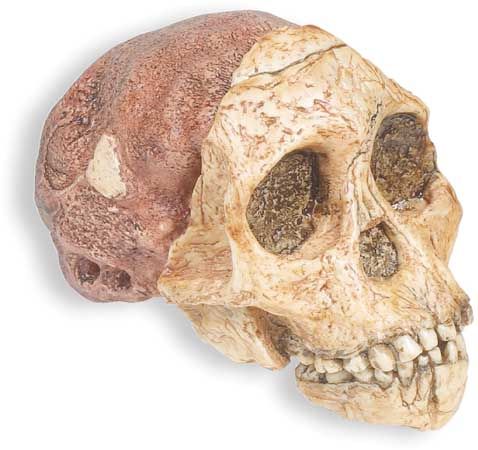
- Anatomical Comparison: Scientists analyze skeletal fragments, particularly the skull, jaw, and teeth. For example, Australopithecus is distinguished by a mosaic of traits, such as a small, apelike brain combined with humanlike bipedal adaptations.1213
- Diagnostic Features: Specific features, such as the size and shape of cheek teeth, the structure of the dental arch, and the presence of features like a sagittal crest, help researchers differentiate between species like A. afarensis, A. africanus, and A. garhi.113
Sources
- Australopithecus — Encyclopædia Britannica
- Ardipithecus - Developments in Australopithecus research — Encyclopædia Britannica
- Australopithecus - Australopithecus africanus — Encyclopædia Britannica
- Australopithecus - Australopithecus anamensis — Encyclopædia Britannica
- Homo sapiens - Origin — Encyclopædia Britannica
- Lucy — Encyclopædia Britannica
- Hadar — Encyclopædia Britannica
- human evolution - The fossil evidence — Encyclopædia Britannica
- bipedalism — Encyclopædia Britannica
- human evolution - The anatomy of bipedalism — Encyclopædia Britannica
- stratigraphy — Encyclopædia Britannica
- Australopithecus - Australopithecus afarensis and Au. garhi — Encyclopædia Britannica
- Homo erectus - Dating the fossils — Encyclopædia Britannica
Published on · 4 min read