Homo
The timeline of the genus Homo is characterized by complex, overlapping species and fragmentary fossil evidence. While the exact origins remain debated, the…
What is the timeline of human evolution within the Homo genus?
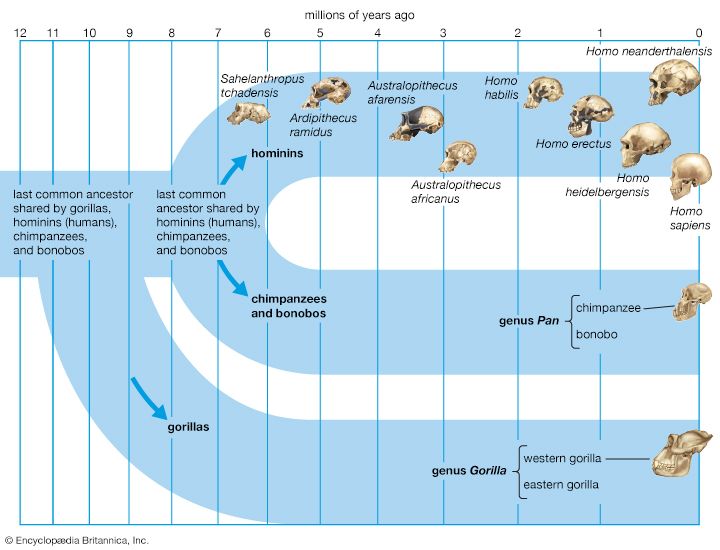
The timeline of the genus Homo is characterized by complex, overlapping species and fragmentary fossil evidence. While the exact origins remain debated, the following milestones frame our current understanding:
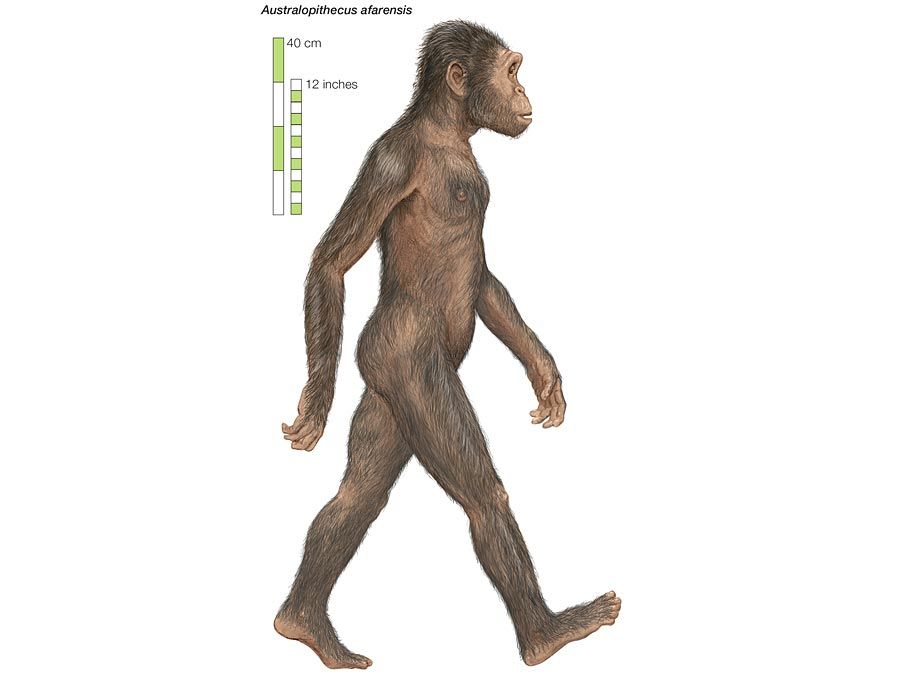
- Early Origins (c. 2.8–2.5 mya): The genus Homo likely emerged around 2.8 million years ago (mya), with early specimens showing a modest increase in brain size compared to Australopithecus.12
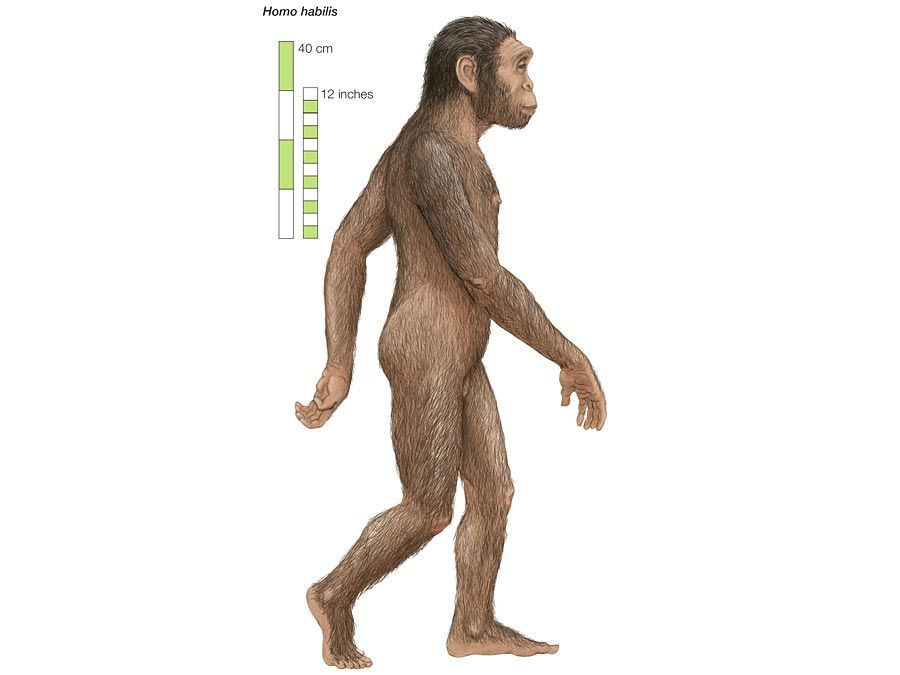
- Early Homo (c. 2.5–1.5 mya): Species such as H. habilis and H. ergaster appeared in Africa. H. ergaster (1.9–1.5 mya) is notable for body proportions resembling modern humans.13
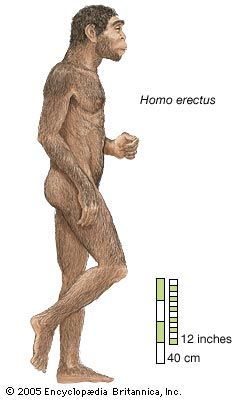
- Expansion (c. 1.8 mya): With modern body proportions, species like H. erectus migrated out of Africa, reaching China and Indonesia.1
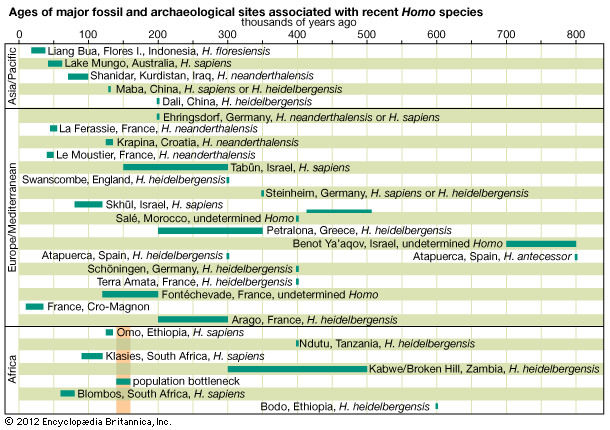
- Diversification (c. 800–30 kya): Various species emerged, including H. heidelbergensis (c. 600 kya) and the Neanderthals (c. 200–30 kya) in Europe and western Asia.1
- Emergence of H. sapiens (c. 315 kya): The oldest known remains of our species date to approximately 315,000 years ago in Morocco.12
Recent findings, such as the redating of H. naledi to 300,000 years ago, indicate that multiple Homo species coexisted, though many did not contribute to modern human ancestry.3
What are the defining characteristics of the Homo genus?
The genus Homo is a group within the family Hominidae defined by a specific suite of anatomical and behavioral characteristics that distinguish its members from other hominins, such as Australopithecus.5
Defining Characteristics
- Cranial Capacity: Members of the genus are characterized by a relatively large cranial capacity, which generally increased over time, facilitating higher cognitive functions.65
- Locomotion: The limb structure of Homo is adapted for a habitual erect posture and a bipedal gait.5
- Manual Dexterity: The hands of Homo species feature well-developed and fully opposable thumbs, allowing for both power and precision grips. opposable thumbs, allowing for both power and precision grips.7
- Tool Use: A hallmark of the genus is the ability to make standardized precision tools, including the sophisticated practice of using one tool to create another.5
Evolutionary Context
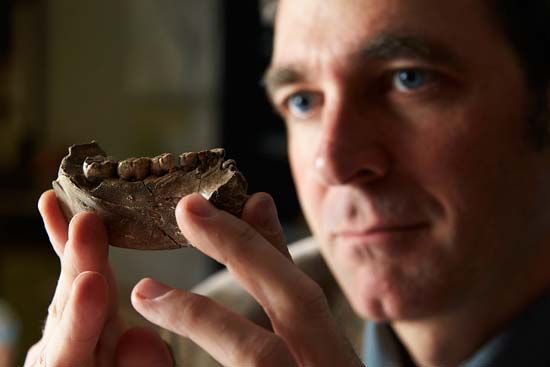
While these traits are typical of the genus, the fossil record reveals significant diversity. Early Homo specimens, such as those dating to approximately 2.8 million years ago, often exhibit a mix of primitive traits reminiscent of Australopithecus alongside derived features like smaller teeth and a reduced chin. Because the fossil record is fragmentary, paleoanthropologists continue to debate the precise boundaries of the genus, particularly as discoveries like H. naledi and H. floresiensis demonstrate that brain size and skeletal morphology can vary widely within the lineage.562
What role did tool use and cognitive development play in the evolution of the Homo genus?
The evolution of the Homo genus is deeply intertwined with the development of tool use and cognitive complexity, though the precise relationship between these factors remains a subject of intense scientific debate.
Tool Use as a Catalyst
The creation and use of stone tools marked a significant behavioral shift, allowing early Homo to process food—such as extracting marrow from bones and cutting hides—more efficiently than relying on teeth and jaws alone. While simple stone artifacts date back to 3.3 million years ago, the emergence of Homo saw a transition toward more standardized production. The development of the human hand, featuring a unique thumb structure and refined motor control, was likely driven by a long history of producing increasingly complex tool kits.10115
Cognitive Development and Symbolism
While brain size increased significantly throughout the evolution of Homo, scholars caution against directly linking cranial capacity to cognitive competence. Instead, researchers look to the archaeological record for evidence of “mental templates” and symbolic thought:12
- Technological Innovation: The Acheulean industry, characterized by symmetrical hand axes, suggests the existence of a mental template in the toolmaker’s mind.11
- Symbolic Behavior: Evidence of abstract thought, such as etched shells, cave art, and personal adornments, indicates that early humans were capable of complex conceptualization long before the emergence of behaviorally modern H. sapiens.1113
- Language: Whether language was a prerequisite for these innovations is debated. While some argue that language was the “cultural release mechanism” that unleashed modern human behavior, others note that complex toolmaking skills can be transmitted without verbal communication.141113
Ultimately, the archaeological record suggests that anatomical modernity and behavioral modernity did not necessarily develop in tandem, with a time lag existing between the two.11
What environmental factors influenced the evolution of the Homo genus?
The evolution of the Homo genus was profoundly shaped by significant climatic and environmental shifts, particularly during the Pliocene Epoch (5.3–2.6 mya) and the subsequent Pleistocene Epoch.1516
Climatic Drivers
Global climatic changes beginning in the Miocene Epoch led to the reduction of dense forests and the expansion of more open terrestrial biomes, such as savannas, grasslands, and mosaic woodlands. This environmental transition acted as a “midwife” to humanity, forcing early hominins to adapt to diverse, shifting landscapes.151716
Key Evolutionary Responses
- Locomotion: The shift toward more open environments favored the development of bipedalism. This energy-efficient mode of movement allowed hominins to traverse varied habitats and eventually facilitated the migration of Homo out of Africa into Eurasia.151718
- Dietary Adaptation: As forests receded, hominins encountered new food sources and increased competition from predators. This necessitated behavioral changes, including scavenging and the use of stone tools to process food, which in turn contributed to the reduction of jaw and tooth size.1517
- Cognitive and Physical Growth: The challenges of surviving in fluctuating, often arid environments are associated with the expansion of brain size and the elaboration of cultural tool kits, which allowed Homo to thrive across different climatic zones.1516
Sources
- Homo sapiens - The genus Homo — Encyclopædia Britannica
- Australopithecus - Transition to Homo — Encyclopædia Britannica
- human evolution: Top Questions — Encyclopædia Britannica
- Homo sapiens - Evolution — Encyclopædia Britannica
- human evolution - Increasing brain size — Encyclopædia Britannica
- Australopithecus - Quality of the fossil record — Encyclopædia Britannica
- Homo — Encyclopædia Britannica
- Homo heidelbergensis — Encyclopædia Britannica
- Homo sapiens - Bodily structure — Encyclopædia Britannica
- Homo habilis - Behavioral inferences — Encyclopædia Britannica
- human evolution - Refinements in hand structure — Encyclopædia Britannica
- Homo sapiens - Behavioral influences — Encyclopædia Britannica
- Stone Age — Encyclopædia Britannica
- human evolution - Speech and symbolic intelligence — Encyclopædia Britannica
- human evolution - Hominin habitats — Encyclopædia Britannica
- Climate change - Climate change since the advent of humans — Encyclopædia Britannica
- human evolution - Background and beginnings in the Miocene — Encyclopædia Britannica
- Australopithecus - Bipedalism — Encyclopædia Britannica
Published on · 5 min read