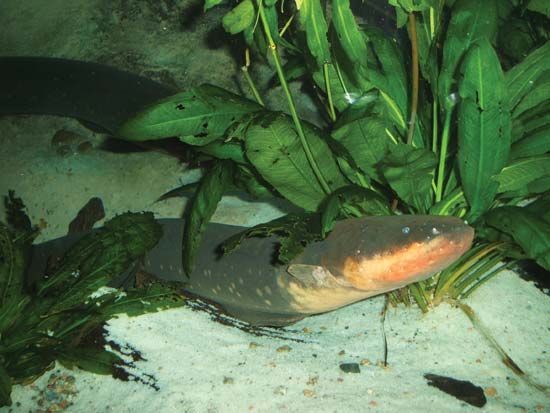
Electric Ray
Humans have interacted with and studied electric rays for centuries, primarily due to their unique ability to generate electricity.

How have humans interacted with or studied electric rays throughout history?
Humans have interacted with and studied electric rays for centuries, primarily due to their unique ability to generate electricity.
In ancient Greece and Rome, the shocks produced by the species Torpedo nobiliana were utilized as a medical treatment for various maladies, including gout and headache. Beyond these historical applications, the study of electric fish—including rays and electric eels—played a foundational role in the development of bioelectricity as a scientific field. Eighteenth-century experiments by Luigi Galvani and Alessandro Volta regarding the relationship between electricity and muscle contraction were pivotal in advancing both physics and physiology pivotal in advancing both physics and physiology.13
Biologically, electric rays use their specialized, kidney-shaped organs to generate shocks of up to 220 volts, which they employ for defense, capturing prey, and communication. These organs consist of modified muscle tissue arranged in arrays that function similarly to a battery.123
How do electric rays use their electric organs for communication and mating?
Electric rays possess two large, kidney-shaped electric organs, one on each side of their body, which function similarly to a battery. While these organs are primarily recognized for their ability to generate powerful shocks—up to 220 volts in some species—to stun prey and deter predators, they also serve as a means of communication between individuals.437
Although the specific mechanisms of how electric rays utilize these discharges for mating are less documented than those of other specialized electric fish, such as the Mormyriformes and Gymnotiformes, it is established that electric rays use their electric organs to communicate with one another. In other groups of electric fish, social interactions like courtship, territorial defense, and conflict resolution are mediated by modulating the frequency and pattern of their electrical discharges, which are then detected by specialized electroreceptors in the skin.48910
What are the unique physical features of electric rays that distinguish them from other ray species?
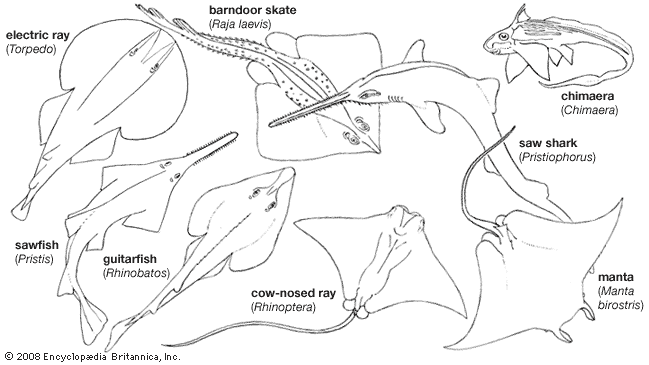
Electric rays are distinguished from other ray species by several unique physical characteristics, most notably their specialized ability to generate electricity.111
- Electric Organs: The most defining feature of electric rays is the presence of two large, kidney-shaped or disk-shaped electric organs located on either side of the head within the body disk. These organs are composed of modified muscle tissue arranged in arrays of cells called electroplaques, which function similarly to a battery to produce powerful shocks.13
- Body Shape and Skin: Unlike many other rays that often possess rough skin or sharp, venomous spines, electric rays have a smooth, naked skin. Their body is formed into a circular or nearly circular disk by the head and pectoral fins, and they are characterized by a short, stout tail.111
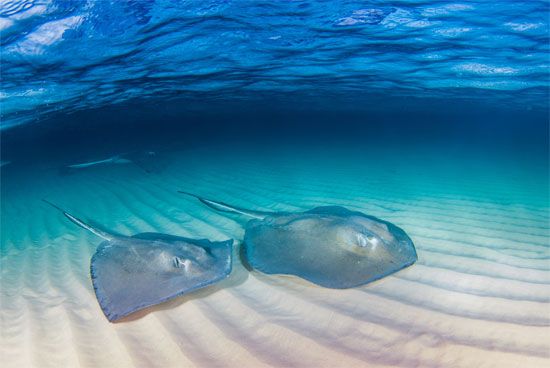
- Lack of Defensive Spines: While many other ray species—such as stingrays and whip-tailed rays—are equipped with long, slender tails bearing sharp, barbed, and venomous spines, electric rays lack these defensive structures, relying instead on their electrical discharges for protection and hunting.111
What are the potential medical applications of studying electric rays?
The study of electric rays and other bioelectric organisms provides significant insights into the fundamental principles of bioelectricity, which are essential to modern medicine. While electric rays are primarily studied for their specialized electric organs and electroplaques, the broader scientific investigation into how these organisms generate and regulate electrical currents has profound implications for understanding human physiology and pathology.36
Key areas of medical relevance include:
- Diagnostic Monitoring: The study of bioelectric potentials—the same currents that allow electric rays to stun prey—is foundational to clinical diagnostics. Techniques such as the electrocardiogram (ECG) and electroencephalogram (EEG) rely on measuring the electrical activity of the heart and brain, respectively, to identify irregularities.38
- Ion Channel Research: Electric organs function through the precise control of ion channels, which regulate the flow of charged particles across cell membranes. Research into these channels is critical for developing treatments for conditions like epilepsy, diabetes mellitus, and cardiac arrhythmias, which are often linked to ion channel mutations.12
- Drug Development: Understanding the molecular mechanisms of ion channels, including how they are gated and regulated, aids in the discovery of new therapeutic compounds for managing pain and cardiovascular disease.12
Sources
- electric ray — Encyclopædia Britannica
- Wilhelm Conrad Röntgen — Encyclopædia Britannica
- bioelectricity — Encyclopædia Britannica
- 14 Questions About Aquatic Animals Answered - Which undersea creatures are known for making electricity? — Encyclopædia Britannica
- electric ray — Merriam-Webster
- electricity - Bioelectric effects — Encyclopædia Britannica
- Animal communication - Signal production — Encyclopædia Britannica
- bioelectric organ — Encyclopædia Britannica
- ostariophysan - Electric organs — Encyclopædia Britannica
- Animal communication - Signal reception — Encyclopædia Britannica
- ray — Encyclopædia Britannica
- ion channel — Encyclopædia Britannica
Published on · 3 min read