Electric Catfish
The electric catfish (Malapterurus electricus) functions within its freshwater ecosystem primarily as a predator and a self-defending organism. By utilizing…
What role do electric catfish play in their ecosystem?
The electric catfish (Malapterurus electricus) functions within its freshwater ecosystem primarily as a predator and a self-defending organism. By utilizing a specialized bioelectric organ composed of modified muscle tissue, the fish can generate and control discharges of up to 450 volts.1
This electrical capability serves two critical roles in its natural history:
- Predation: The fish uses its high-voltage discharge to stun prey, facilitating capture.1
- Defense: Along with the electric eel, the electric catfish is one of the few freshwater species capable of producing sufficient voltage to stun other animals, providing a potent mechanism for protection against potential threats.2
While these fish are known to be pugnacious, they are also recognized for their historical significance, having been depicted on ancient Egyptian tombs.1
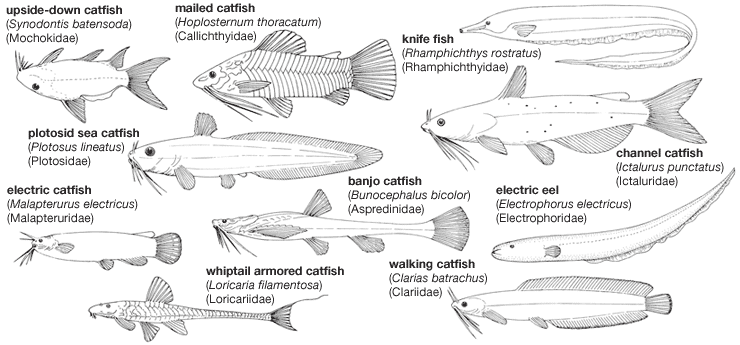
Are there different species of electric catfish, and how do they differ?
There are approximately 18 species of electric catfish, all of which are native to tropical Africa and belong to the family Malapteruridae. These species are categorized into two distinct genera: Malapterurus and Paradoxoglanis.1
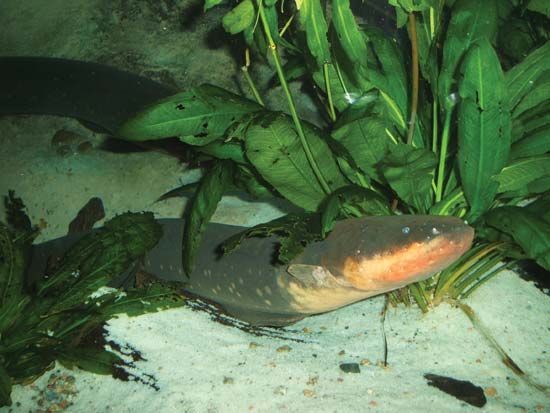
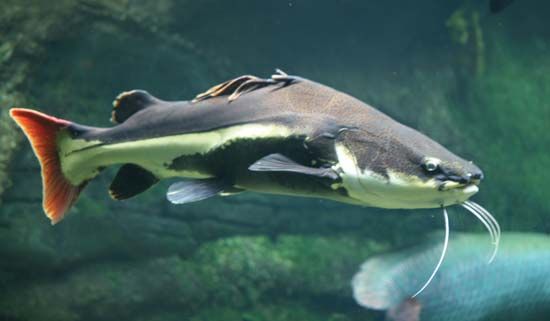
The best-known member of this group is Malapterurus electricus, a thickset fish that can grow up to 1.2 meters (4 feet) in length and weigh as much as 23 kilograms (51 pounds). It is characterized by its brownish or grayish coloration with irregular black spots, six mouth barbels, and a single adipose fin located just before its rounded tail fin. This species is famous for its ability to generate and control electrical discharges of up to 450 volts using a specialized organ composed of modified muscle tissue.1
While M. electricus is the most widely recognized, the family Malapteruridae encompasses a variety of species within its two genera, all sharing the unique evolutionary trait of bioelectricity.1
How do electric catfish communicate with each other?
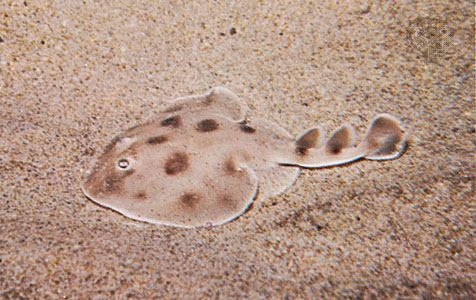
While some fish species, such as electric rays, are known to use their bioelectric organs for communication, the primary function of the electric discharge in electric catfish is for self-defense and the capture of prey.178
Unlike certain other electric fishes—such as mormyrids or knifefishes, which emit continuous, low-voltage pulses to create an electric field for navigation, object detection, and social interaction—electric catfish are primarily noted for their ability to deliver powerful, high-voltage shocks of up to 450 volts. While some research suggests that electric catfish may use their bioelectric organs as sense organs to detect other fishes in their environment, there is no evidence that they utilize these discharges as a formal method of communication with one another.2789
What do electric catfish typically eat, and how do they hunt their prey?
Electric catfish are predatory fish that utilize their specialized electric organ to capture prey. This organ, which consists of modified muscle tissue located beneath the skin, allows the fish to generate and control electrical discharges of up to 450 volts.110
When hunting, the electric catfish uses these powerful electrical shocks to stun its prey. While the specific dietary preferences of all 18 species are not detailed in the available data, the broader catfish order is known for being largely carnivorous or scavenging, feeding on a variety of animal and vegetable matter. By delivering a high-voltage jolt, the electric catfish effectively incapacitates its target, making it easier to consume. In addition to its role in hunting, this electrical capability serves as a vital mechanism for self-defense against potential threats.1104
Sources
- electric catfish — Encyclopædia Britannica
- ostariophysan - Defense — Encyclopædia Britannica
- electric catfish — Merriam-Webster
- catfish — Encyclopædia Britannica
- scorpion - Distinguishing taxonomic features — Encyclopædia Britannica
- flea - Annotated classification — Encyclopædia Britannica
- bioelectricity — Encyclopædia Britannica
- Mechanoreception - Ampullary lateral-line organs ( electroreceptors ) — Encyclopædia Britannica
- ostariophysan - Electric organs — Encyclopædia Britannica
- 14 Questions About Aquatic Animals Answered - Which undersea creatures are known for making electricity? — Encyclopædia Britannica
Published on · 3 min read