Emperor Penguin
The emperor penguin (Aptenodytes forsteri) is the largest member of the penguin order, standing out significantly from other species in both size and…
How do emperor penguins compare to other penguin species in terms of size and adaptations?
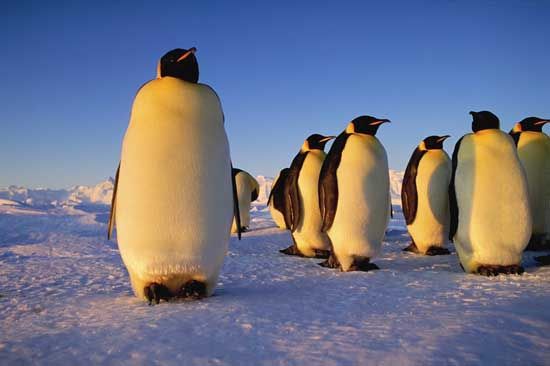
The emperor penguin (Aptenodytes forsteri) is the largest member of the penguin order, standing out significantly from other species in both size and specialized adaptations.
Size Comparison
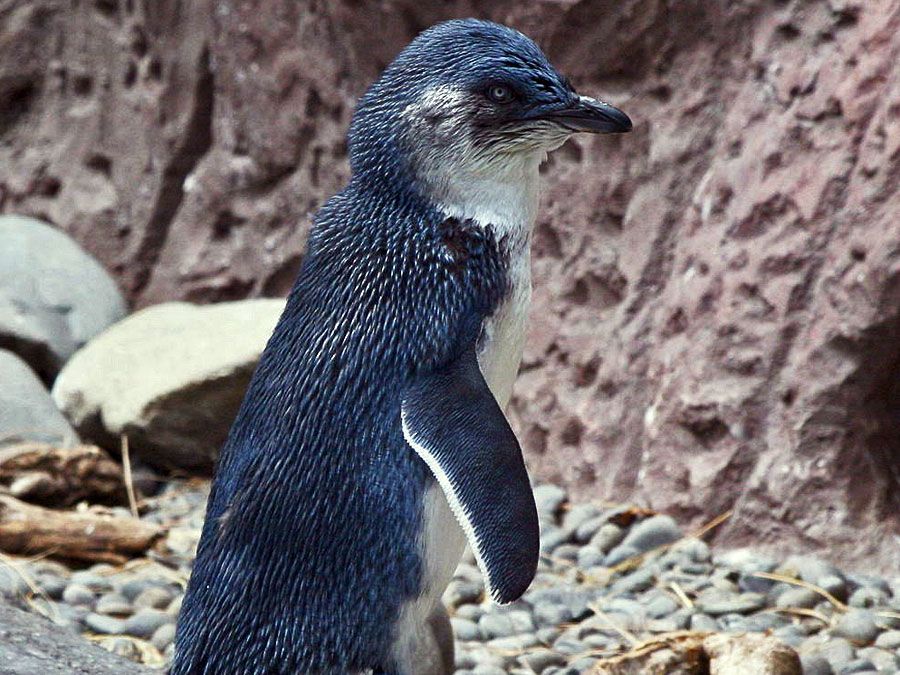
While smaller species like the blue penguin weigh only about 1 kg (2 pounds) and stand 35 cm (14 inches) tall, emperor penguins can reach heights of 1.3 meters (4.3 feet) and weigh up to 45 kg (100 pounds). They are often compared to king penguins, which are of smaller stature and inhabit different geographic regions.123
Key Adaptations
Emperor penguins possess unique physiological and behavioral traits to survive the harsh Antarctic environment:
- Diving Ability: They are the world’s deepest-diving birds, capable of reaching depths of approximately 550 meters (1,800 feet) and remaining submerged for nearly 22 minutes.2
- Thermal Regulation: To survive extreme cold, they utilize a heat-exchange system in their lower limbs where arteries and veins are closely adjacent, allowing blood to retain heat. On land, they form huddles for mutual protection against wind and freezing temperatures.452
- Reproduction: Unlike other species where both parents incubate the egg, the male emperor penguin incubates the egg exclusively on his feet for 60–68 days during the Antarctic winter, relying entirely on stored fat reserves.42
What are the main threats to emperor penguin populations in the wild?
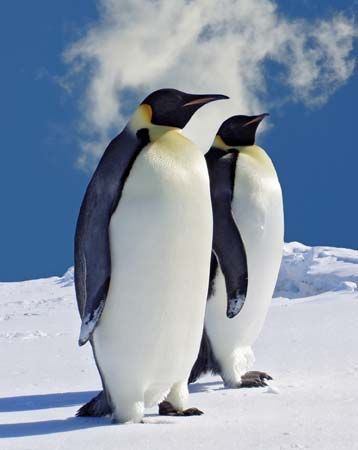
Emperor penguin populations face several significant threats in the wild, primarily driven by environmental instability and biological factors.
Environmental and Climatic Threats
The most critical threat to the species is global warming, which has led to a decline in sea ice coverage. Emperor penguins rely on stable ice for breeding, as nurseries, and as a refuge during their annual molting period. The breakup of ice shelves—such as the Larsen Ice Shelf—has resulted in habitat loss, reduced reproductive success, and higher rates of chick mortality. Furthermore, penguins are highly sensitive to changes in ocean temperatures and the potential depletion of local fish populations, which impacts their food supply.415
Biological and Social Threats
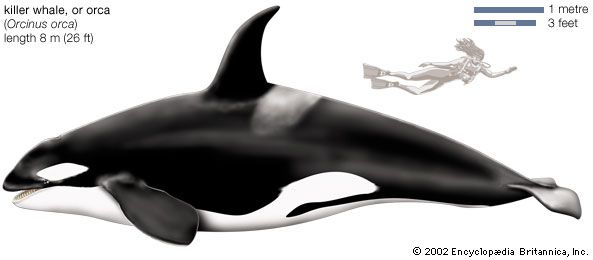
- Predation: Emperor penguins are preyed upon by killer whales, leopard seals, and giant fulmars.4
- Colony Interference: Within colonies, “unemployed” adults—those that have lost their own eggs or chicks—may interfere with successful parents, which can lead to increased chick mortality.4
Due to these mounting pressures, the International Union for Conservation of Nature officially listed the emperor penguin as an endangered species in 2026.41
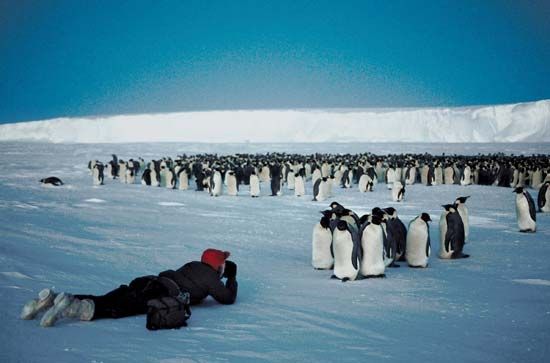
How do emperor penguins communicate with each other?
Emperor penguins communicate primarily through specialized vocalizations, a necessity given that they do not build nests and must navigate dense, noisy colonies to locate their mates and chicks.
The Two-Voiced Call
Emperor penguins utilize a unique “two-voiced” call for individual recognition. Because a bird’s vocal organ, the syrinx, splits into two branches, these penguins can produce two different frequencies simultaneously. This creates a beating amplitude pattern that is distinct enough for individuals to recognize one another amidst the background noise of the colony. This complex vocalization also allows the sound to travel more effectively through the densely packed crowds of penguins.
Vocal Recognition
Research indicates that emperor penguins rely heavily on these vocal cues, as visual identification alone is often insufficient in a large, uniform colony. This system is particularly vital for parents returning from the sea to locate their specific chick within a crèche. Additionally, there are marked vocal differences between the sexes, which assist in pair bonding and coordination during the breeding season.
How do emperor penguins survive in the harsh Antarctic environment?
Emperor penguins have evolved remarkable physiological and behavioral adaptations to survive the extreme cold of the Antarctic.
Physiological Adaptations
- Insulation: Their bodies are covered in dense, short, stiff feathers that trap a layer of air against the skin, providing highly effective insulation. This is complemented by a thick layer of fat that protects them from freezing temperatures8.8
- Thermal Regulation: To prevent heat loss through their feet, which are in constant contact with ice, they utilize a countercurrent heat-exchange system. Closely aligned arteries and veins in their lower limbs allow warm blood flowing from the body’s core to pre-warm the cooler blood returning from the feet, maintaining a stable body temperature.38
Behavioral Strategies
- Huddling: During violent winter storms, penguins gather in tightly packed crowds called huddles. This communal behavior allows them to share body heat and shield one another from harsh winds.34
- Incubation: Males incubate the single egg by balancing it on their feet and covering it with a specialized fold of skin, protecting it from the elements while they rely on fat reserves for energy.4
Sources
- Emperor penguin: Top Questions — Encyclopædia Britannica
- penguin - Reproduction — Encyclopædia Britannica
- penguin - Form and function — Encyclopædia Britannica
- Emperor penguin — Encyclopædia Britannica
- penguin - General features — Encyclopædia Britannica
- African penguin: Top Questions — Encyclopædia Britannica
- How Do Penguins Tell Each Other Apart? — Encyclopædia Britannica
- How do penguins stay warm? — Encyclopædia Britannica
Published on · 4 min read