ʿEn Gedi
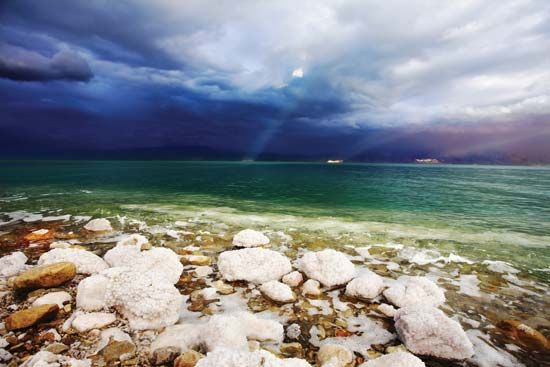
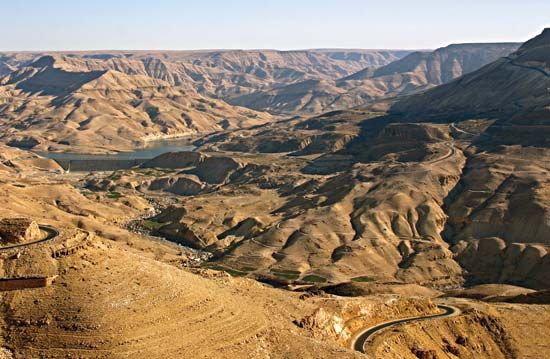
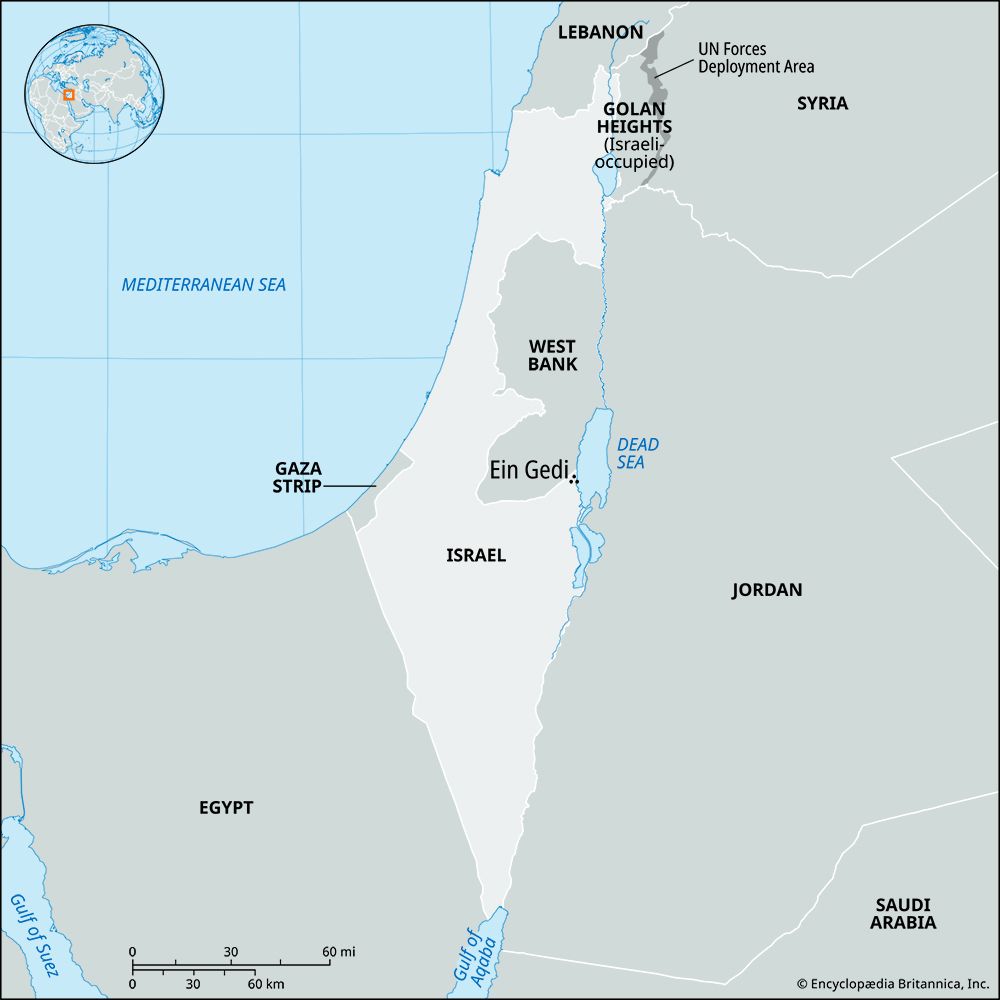
‘En Gedi is an oasis, archaeological site, and kibbutz located in southeastern Israel along the western shore of the Dead Sea.
What is ʿEn Gedi?
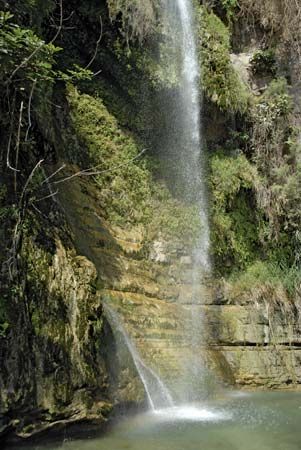
‘En Gedi is an oasis, archaeological site, and kibbutz located in southeastern Israel along the western shore of the Dead Sea.1
Due to its natural spring, the site has supported human habitation since remote antiquity. Archaeological excavations have uncovered a sanctuary dating back to the Chalcolithic period (4th millennium BCE), with evidence of continuous settlement from the 7th century BCE through the Byzantine era.1
Today, the area is a popular Israeli nature reserve known for its unique tropical vegetation. The modern kibbutz, founded in 1953, is primarily agricultural, specializing in the cultivation of dates, bananas, and early-season vegetables.1
What is a kibbutz?
A kibbutz is a collective settlement in Israel, typically focused on agriculture or industry, where all wealth is held in common.23
Key characteristics of these communities include:
- Communal Living: While adults maintain private living quarters, meals are prepared and eaten in common, and children are generally housed and cared for as a group.23
- Governance: Members hold weekly general meetings to determine policy, elect administrative leaders, and vote on important matters.23
- Economic Structure: Profits are reinvested into the settlement after providing for members’ food, clothing, shelter, and social or medical services.23
- History: The first kibbutz was established at Deganya in 1909. These settlements played a vital role in pioneering new Jewish communities and significantly influenced early Israeli society.2
While they have moved toward greater privacy regarding personal property since 1948, kibbutzim continue to contribute to Israel’s economy and leadership in ways that exceed their relatively small share of the total population.2
Why is the Dead Sea unique?
The Dead Sea is a unique salt lake situated between Israel and Jordan that stands out for several remarkable physical and environmental characteristics:
- Lowest Elevation on Earth: It is the lowest body of water on the surface of the planet, with a surface level currently situated more than 1,400 feet (over 430 meters) below sea level.45
- Extreme Salinity and Buoyancy: The water is exceptionally saline, which gives it a high density that makes it easy for bathers to float. This extreme salt concentration excludes almost all forms of life, with the exception of certain bacteria.67
- Geological Setting: The lake occupies part of a graben—a downfaulted block of the Earth’s crust—located along a tectonic plate boundary.8
- Environmental Challenges: Due to the diversion of the Jordan River for commercial and agricultural use, the lake’s water level has dropped precipitously, leading to the formation of sinkholes along its shores and the separation of its northern and southern basins.485
What are some other famous oases in the world?
An oasis is a fertile tract of land in a desert that sustains life through a perennial supply of fresh water, typically sourced from underground aquifers.11
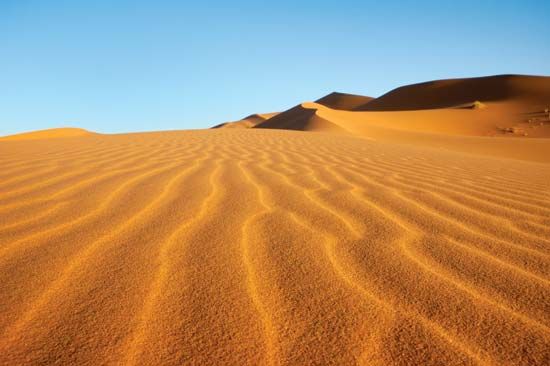
Several notable oases are found within the Sahara, where they have historically served as vital hubs for agriculture and trade:
- Siwa Oasis: Located in western Egypt, this fertile area is famous for its thousands of date palms and olive trees. It was historically significant as the site of the oracle temple of Amon, which was famously consulted by Alexander the Great.12
- Al-Khārijah (Kharga) and Al-Dākhilah (Dakhla): These oases in the Libyan Desert are supplied by water from sandstone aquifers, with intake areas located hundreds of miles away.11
- Al-Zaytūn (Zeitun): A smaller oasis situated near the Siwa Oasis in Egypt.12
These locations rely on irrigation methods—ranging from traditional foggaras (underground tunnels) to modern motorized pumps—to support the cultivation of date palms, cereals, and various fruits.1113
Sources
- ʿEn Gedi — Encyclopædia Britannica
- kibbutz — Encyclopædia Britannica
- Did you know? — Merriam-Webster
- Dead Sea — Encyclopædia Britannica
- Dead Sea - Physiography and geology — Encyclopædia Britannica
- Dead Sea - Climate and hydrology — Encyclopædia Britannica
- Dead Sea - Salinity — Encyclopædia Britannica
- Dead Sea: Top Questions — Encyclopædia Britannica
- Dead Sea - Human imprint — Encyclopædia Britannica
- 6 Lakes That Are Drying Up - Dead Sea — Encyclopædia Britannica
- Siwa Oasis — Encyclopædia Britannica
- oasis — Encyclopædia Britannica
- oasis — Merriam-Webster
- Sahara - People of the Sahara — Encyclopædia Britannica
Published on · 3 min read