Jordan River
The relationship between the Dead Sea and the Jordan River is primarily defined by the river’s role as the sea's main water source, rather than the sea…
How does the Dead Sea affect the Jordan River’s ecosystem?
The relationship between the Dead Sea and the Jordan River is primarily defined by the river’s role as the sea’s main water source, rather than the sea affecting the river’s upstream ecosystem.12
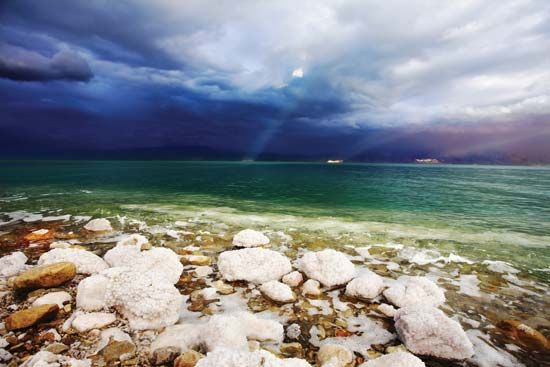
Because the Jordan River flows into the Dead Sea, the sea does not dictate the river’s internal ecology. Instead, human intervention—specifically the diversion of the Jordan River’s water for commercial and agricultural use—has severely impacted both bodies of water. This reduction in inflow has caused the Dead Sea’s water level to drop precipitously, leading to increased salinity that excludes almost all life except for bacteria.1324
Conversely, the river’s own ecosystem has been altered by damming and irrigation projects, which have converted former floodplains into agricultural land and reduced the river’s natural flow. Recent efforts, such as the 2022 Joint Declaration of Intent between Israel and Jordan, aim to address these environmental challenges by focusing on pollution removal and increasing the freshwater discharge of the Jordan River into the Dead Sea.21
How does the Jordan River play a role in the water resources of the region?
The Jordan River serves as a critical, albeit heavily utilized, water resource in the Middle East. Because the region faces chronic water shortages, the river’s flow is essential for supporting agricultural, industrial, and household needs across Israel, Jordan, and the West Bank.456
Agricultural and Economic Importance
The river’s waters are vital for irrigation, enabling the cultivation of crops in areas that were historically barren. Key infrastructure projects include:
- King Abdullah Canal: This 43-mile (69 km) canal has transformed the Jordanian side of the valley, allowing for the production of bananas, oranges, early vegetables, and sugar beets.4
- Israeli Water Grid: Israel utilizes a water-supply grid that pumps approximately 11.3 billion cubic feet (320 million cubic meters) of the river’s water annually to support the center and south of the country.4
- Agricultural Settlements: The river supports numerous communities, including the oldest kibbutz in Israel, Deganya, and various agricultural projects along the West Bank.4
Regional Challenges
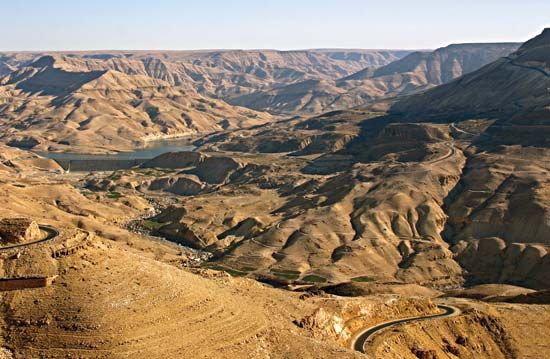
The intense demand for water has led to significant environmental and political strain. The diversion of the river’s flow by regional states, combined with the damming of its main tributary, the Yarmuk River, has drastically reduced the amount of water reaching the Dead Sea. This over-extraction has contributed to a precipitous drop in the Dead Sea’s water level and has become a point of conflict among the surrounding nations as they compete for access to limited natural aquifers and river water.476
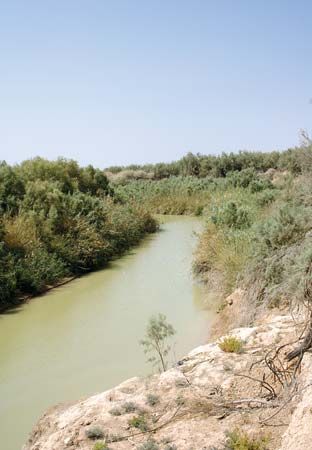
What is the geographical location and course of the Jordan River?
The Jordan River is a significant waterway in the Middle East that flows through a structural depression, holding the distinction of having the lowest elevation of any river in the world.4
Geographical Course
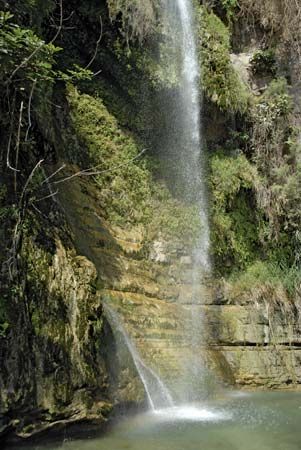
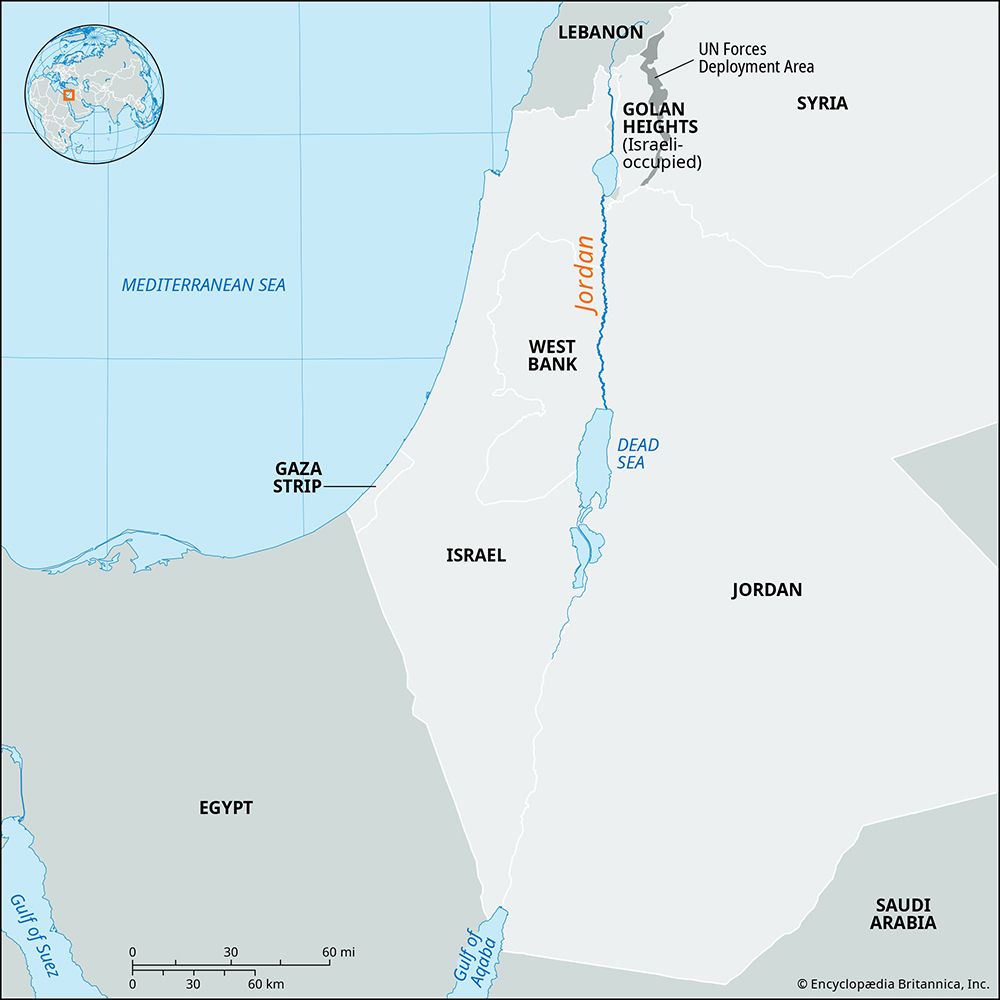
The river originates at the foot of Mount Hermon on the border between Syria and Lebanon, fed by three primary sources: the Ḥāṣbānī, the Bāniyās, and the Dan River. These converge in the Ḥula Valley in northern Israel.4
From there, the river flows south into the Sea of Galilee. Upon exiting the southern shore, it continues its southward journey, serving as a boundary between Israel and the West Bank to the west and Jordan to the east. The river eventually empties into the Dead Sea through a broad delta.4
While the river spans over 223 miles (360 km) in length due to its meandering course, the direct distance between its source and the Dead Sea is less than 124 miles (200 km).4
What historical and religious significance does the Jordan River hold?
The Jordan River holds profound historical and religious significance, being deeply revered by Christians, Jews, and Muslims alike.4
Religious Significance
The river is perhaps most famous in the Christian tradition as the site where Jesus was baptized by St. John the Baptist. Because of this event, the river has remained a major religious destination and a site for baptisms for centuries.4
Historical Context
Beyond its specific association with the baptism of Jesus, the river and its surrounding valley have been central to the history of the region since the Middle Bronze Age. The area was home to various ancient kingdoms, including Gilead, Moab, and the land of the Ammonites. Biblical accounts frequently reference the river as a boundary and a site of significant events, such as the movements of the Israelite tribes. Additionally, the Dan River, a primary tributary of the Jordan, originates at Tel Dan, the site of the biblical city of Dan.89
Sources
- 6 Lakes That Are Drying Up - Dead Sea — Encyclopædia Britannica
- Dead Sea - Salinity — Encyclopædia Britannica
- Dead Sea - Human imprint — Encyclopædia Britannica
- Jordan River — Encyclopædia Britannica
- Dead Sea — Encyclopædia Britannica
- Israel - Drainage — Encyclopædia Britannica
- Jordan - Resources and power — Encyclopædia Britannica
- Jordan - Biblical associations — Encyclopædia Britannica
- Dan River — Encyclopædia Britannica
Published on · 4 min read