Encephalartos
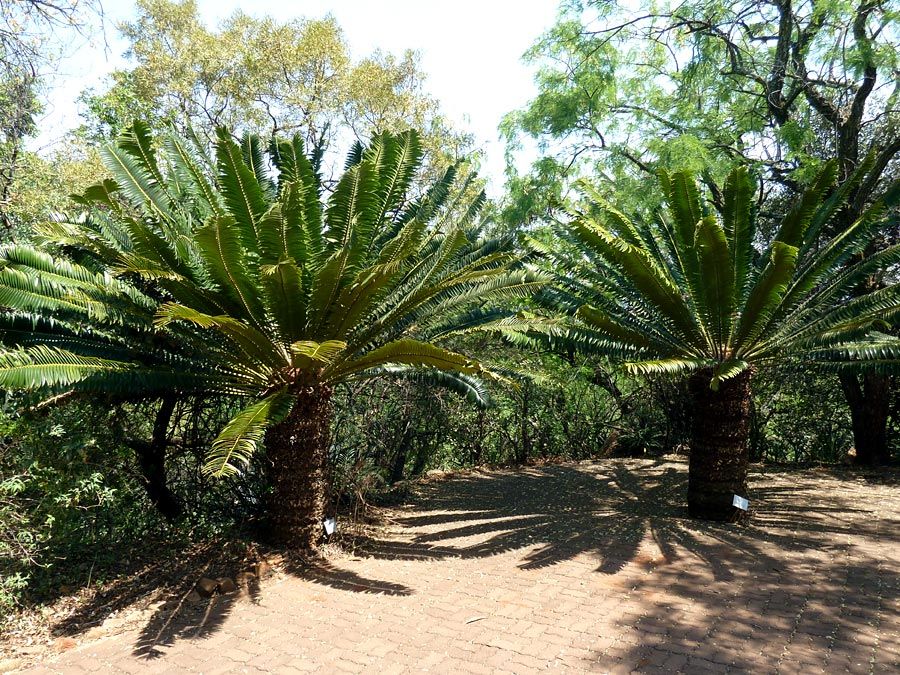
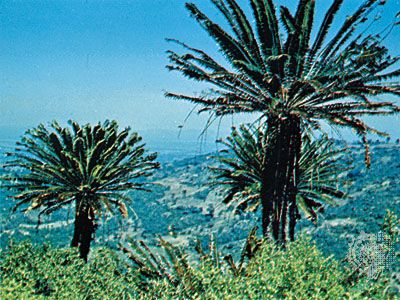
Encephalartos is a genus comprising 65 species of palmlike cycads within the family Zamiaceae, native to central and southern Africa. These gymnosperms are…
What is Encephalartos?
Encephalartos is a genus comprising 65 species of palmlike cycads within the family Zamiaceae, native to central and southern Africa. These gymnosperms are dioecious, meaning they produce male and female reproductive cones on separate individual plants.1
The genus includes both tuberous and columnar varieties, often characterized by stout trunks and spiny, pinnate leaves. While the starchy center of the bread palm (Encephalartos caffer) has historically been used to prepare food, many species are now threatened. Because these plants are highly sought after in horticulture, over-collection has pushed many endemic species toward extinction1. Consequently, numerous species are listed as endangered or critically endangered on the IUCN Red List of Threatened Species, with at least four species already extinct in the wild. It is a moral imperative to protect these rare plants from further decline caused by human exploitation.12
What are the main differences between cycads and palm trees?
While cycads and palm trees are often confused due to their similar appearance, they are biologically distinct groups with fundamental differences in their classification and reproduction.
Biological Classification
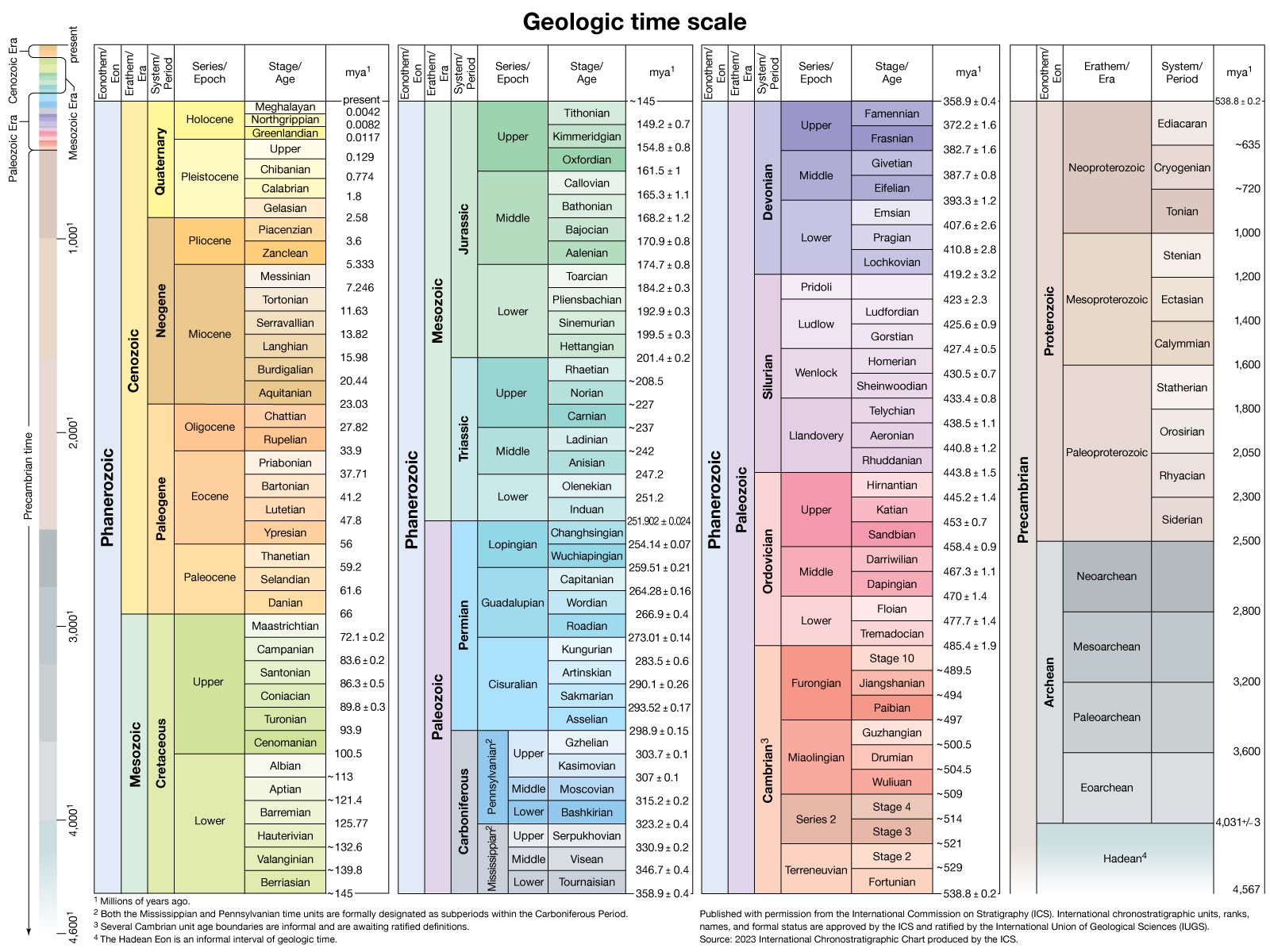
- Cycads: These are gymnosperms, a group of seed-bearing plants that do not produce flowers or fruits. They belong to the order Cycadales and have a long evolutionary history dating back to the Mesozoic Era4.3
- Palm Trees: Palms are angiosperms, or flowering plants, belonging to the family Arecaceae within the order Arecales. They produce flowers and fruits, which cycads do not.4
Reproductive Differences
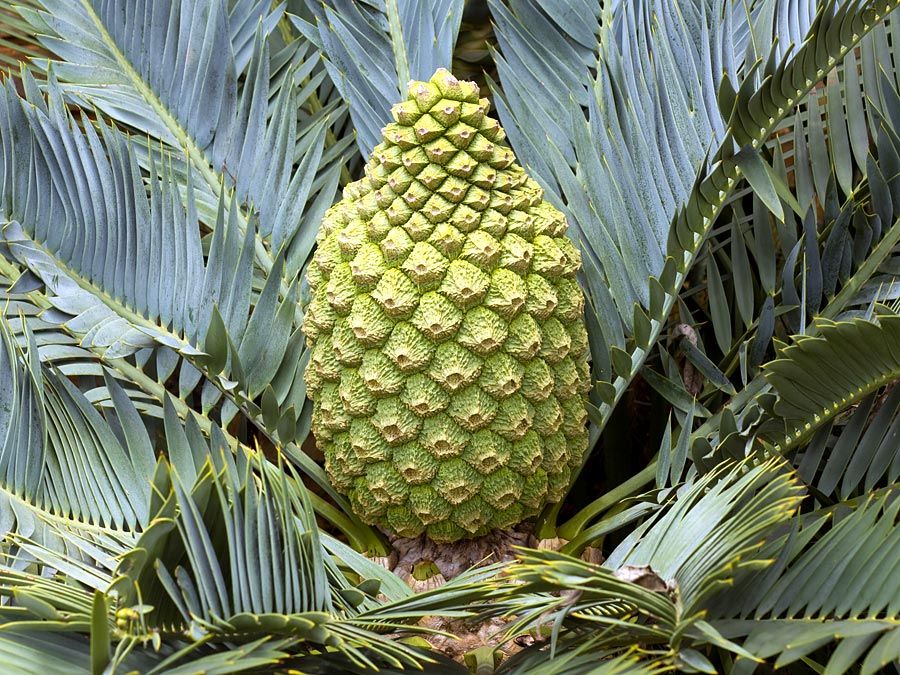
- Cycads: They are dioecious and reproduce using cones. Their reproduction is considered primitive, as they rely on flagellated, motile sperm to fertilize the female ovules.53
- Palm Trees: Palms produce flowers that develop into fruits and seeds. Their reproductive structures are typically organized into inflorescences, which are often protected by bracts called spathes.4
Structural Distinctions
- Leaves: While both have large, compound leaves, the development process differs. Palm leaves form from a single meristem that creates a plicated blade, which then separates into pinnae. Cycad leaves are often circinate (uncoiling like fern leaves) and are generally stiffer.64
- Stems: Cycads often have a large pith surrounded by a narrow zone of wood, and some species have partially buried, tuberous trunks. Palms exhibit different internal anatomy, characterized by collateral vascular bundles and the presence of silica bodies.54
Why are many cycad species currently endangered?
Many cycad species are currently endangered primarily due to their high desirability as ornamental plants in gardens and greenhouses, which has led to widespread overharvesting from the wild.8
Because cycads are slow-growing, they are particularly vulnerable to poaching, where individuals are illegally collected to be sold as specimen plants. This commercial exploitation has pushed many species to the brink of extinction, resulting in numerous species being classified as endangered or critically endangered.84
To combat these threats, international trade in cycads is strictly controlled by the Convention on International Trade in Endangered Species, and most species now receive protection under conservation laws within their native countries. It is essential to uphold these protections to prevent the further loss of these ancient, unique plants.84
How do gymnosperms reproduce using cones?
Gymnosperms reproduce using specialized structures called cones, or strobili, which facilitate the production and transport of pollen and the development of seeds.1011
Reproductive Structures
- Male Cones (Microstrobili): These cones contain microsporophylls, which bear microsporangia (pollen sacs). Inside these sacs, cells undergo meiosis to produce haploid microspores, which develop into pollen grains—the male gametophytes.1012
- Female Cones (Megastrobili): These cones consist of scales called megasporophylls that house megasporangia. Within each megasporangium, a cell undergoes meiosis to produce megaspores, which develop into the female gametophyte containing the egg.1013
The Reproductive Process
- Pollination: Pollen is transported by wind or insects to the female cone. In many gymnosperms, the ovule exudes a “pollination droplet” that captures the pollen grain and draws it into the ovule.101214
- Fertilization: A pollen tube emerges from the grain and grows through the megasporangium toward the egg-containing archegonium. Once the tube reaches the egg, sperm cells are discharged to fertilize it, forming a diploid zygote.1012
- Seed Development: The fertilized egg develops into an embryo, nourished by the female gametophyte tissue. The ovule matures into a seed, which is typically “naked” and exposed on the cone scales.101113
Sources
- Encephalartos — Encyclopædia Britannica
- encephalartos — Merriam-Webster
- Did you know? — Merriam-Webster
- cycad — Encyclopædia Britannica
- Cycas — Encyclopædia Britannica
- cycadophyte - Cycads — Encyclopædia Britannica
- Arecales — Encyclopædia Britannica
- cycadophyte - Ecology and habitats — Encyclopædia Britannica
- poaching — Encyclopædia Britannica
- gymnosperm - General features — Encyclopædia Britannica
- plant reproductive system - Seed plants — Encyclopædia Britannica
- seed - Gymnosperm seeds — Encyclopædia Britannica
- plant reproductive system - Gymnosperms — Encyclopædia Britannica
- pollination — Encyclopædia Britannica
Published on · 3 min read