Endothyra
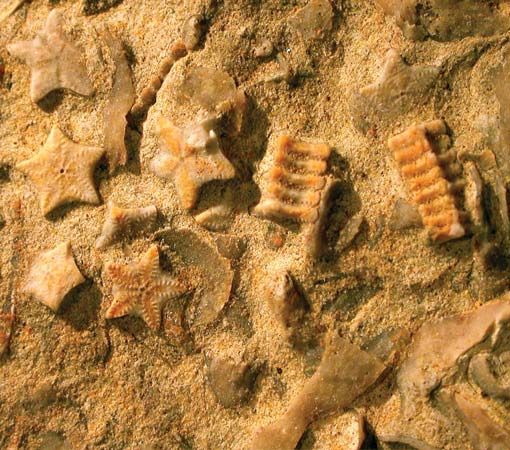
Endothyra is an extinct genus of foraminiferan, which are unicellular organisms characterized by a shell, or test. These protozoans are found as fossils in…
What is Endothyra?
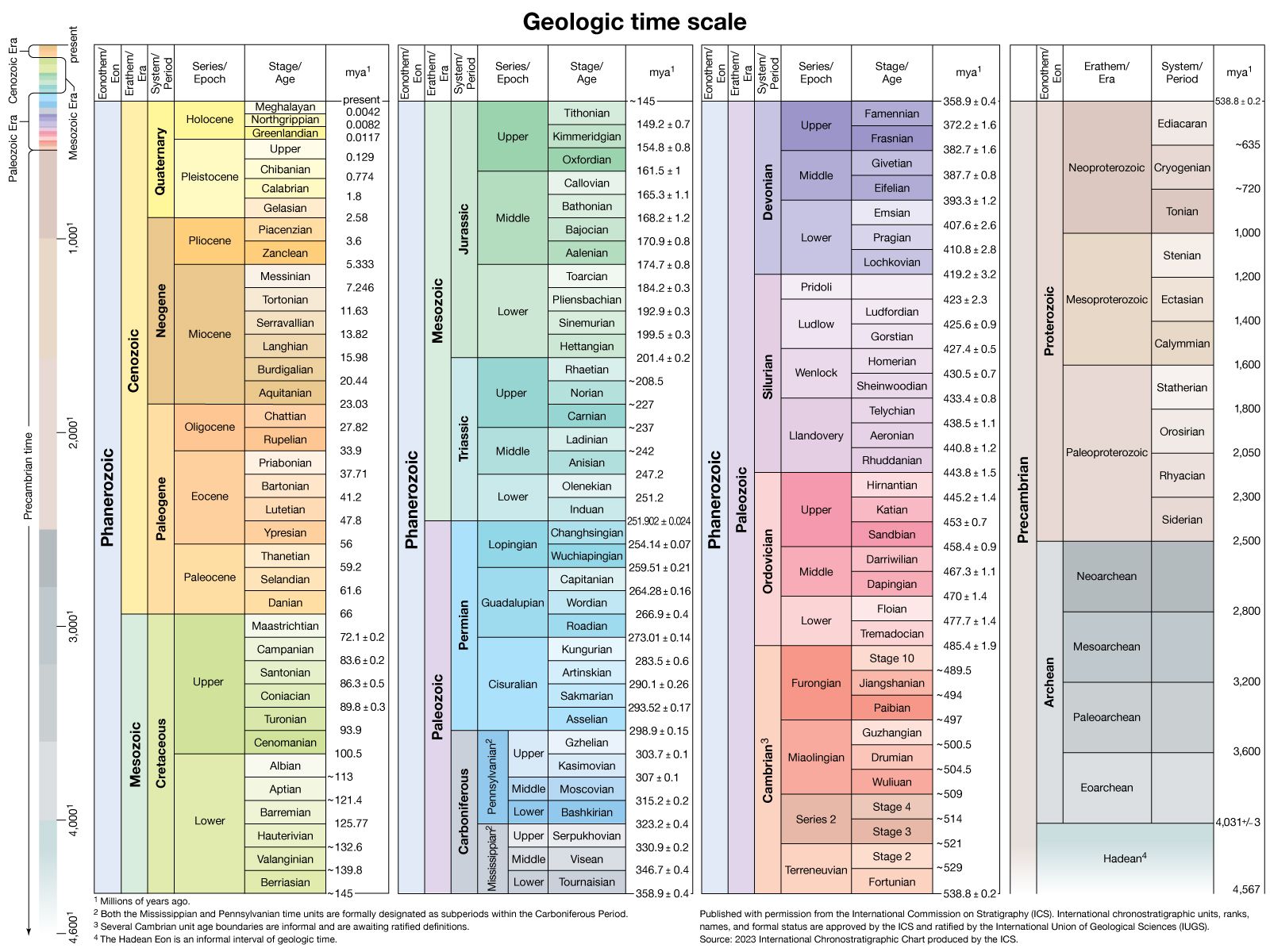
Endothyra is an extinct genus of foraminiferan, which are unicellular organisms characterized by a shell, or test. These protozoans are found as fossils in marine rocks dating from the Devonian to the Triassic periods, spanning approximately 416 million to 200 million years ago.1
Endothyra is distinguished by its tightly coiled shell and is particularly notable for its abundance in rocks from the Mississippian Subperiod (359 million to 318 million years ago). Like other foraminiferans, these organisms are significant in the fossil record, often serving as index fossils that assist geologists in dating rock layers and conducting petroleum exploration.12
What are index fossils and why are they important?
An index fossil is any plant or animal preserved in the Earth’s rock record that serves as a marker for a specific geologic time period or environment. To be considered a useful index fossil, an organism must meet several criteria: it must be easily recognizable, abundant, widely distributed geographically, and have existed for only a short span of time.3
These fossils are essential to geology because they provide the foundation for defining boundaries within the geologic time scale and for the correlation of strata across different regions. By identifying these specific taxa, scientists can link rock layers found in disparate locations, allowing for the construction of a consistent historical framework for the planet.34
Common examples include single-celled Protista with hard body parts, such as foraminiferans, as well as larger forms like ammonoids and various mammals in more recent terrestrial sediments.34
How do foraminiferans contribute to the formation of limestone?
Foraminiferans play a fundamental role in the formation of limestone and chalk through the accumulation of their skeletal remains, known as tests. These unicellular organisms secrete calcium carbonate to build their shells, which vary in size and complexity.25
When foraminiferans die, their empty tests settle on the ocean floor, creating deposits often referred to as foraminiferal ooze. Over geological time, these loose carbonate sediments undergo lithification—a process of compaction and cementation—to form limestone.26
The contribution of these organisms to rock formation is significant in both shallow and deep-water environments:
- Deep-Sea Deposits: Planktonic foraminiferans contribute to the formation of pelagic calcareous oozes on the abyssal plains. These deposits are restricted by depth; below the carbonate compensation depth (approximately 4,500 meters), the rate of dissolution exceeds the rate of accumulation, preventing limestone formation.6
- Shallow-Water Deposits: Larger, bottom-dwelling foraminiferans, such as the nummulitids, have historically contributed to massive limestone formations. For instance, the Eocene limestones of Egypt, which provided the stone for the pyramids, are composed largely of these organisms.27
What are pseudopodia and how do they help protozoans?
A pseudopodium is a temporary or semipermanent extension of the cytoplasm used by various protozoans and certain other cells for locomotion and feeding. These structures are essential for amoeboid movement, a crawling-like process where the cell extends a projection and flows its contents into it to advance its position.8910
Beyond movement, pseudopodia are vital for phagotrophic feeding. Depending on the type, they can engulf prey directly or trap it within a sticky, fine mesh. There are four primary types of pseudopodia, each with distinct functions:89
- Lobopodia: Blunt, fingerlike projections used primarily for creeping across surfaces.810
- Filopodia: Slender, tapering structures that can branch to help the organism move, even when carrying a heavy shell.910
- Reticulopodia: Branching filaments that fuse to form dense networks, which are highly effective for entrapping prey.89
- Axopodia: Long, stiff, and sticky projections supported by microtubules; they can be used for capturing prey or, in some species, moving like oars.8910
Sources
- Endothyra — Encyclopædia Britannica
- foraminiferan — Encyclopædia Britannica
- index fossil — Encyclopædia Britannica
- Tertiary Period - Correlation of Tertiary strata — Encyclopædia Britannica
- sedimentary rock - Origin of limestones — Encyclopædia Britannica
- marine sediment — Encyclopædia Britannica
- Tertiary Period - Foraminiferans — Encyclopædia Britannica
- pseudopodium — Encyclopædia Britannica
- protist - Pseudopodia — Encyclopædia Britannica
- Pseudopodial locomotion — Encyclopædia Britannica
Published on · 3 min read