Ephedra
The premise that Ephedra differs from other plants in the Ephedraceae family is inaccurate, as Ephedra is the only genus within that family.
How does ephedra differ from other plants in the Ephedraceae family?
The premise that Ephedra differs from other plants in the Ephedraceae family is inaccurate, as Ephedra is the only genus within that family.12
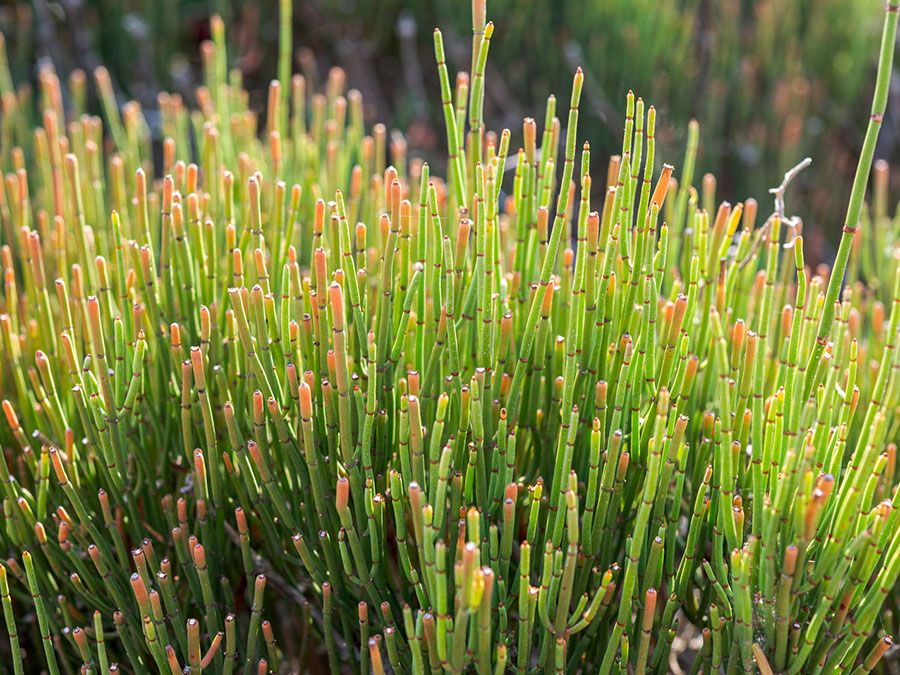
The family Ephedraceae consists exclusively of the genus Ephedra, which comprises approximately 65 species of gymnosperm shrubs. These plants are evolutionarily isolated and represent the sole genus within the order Ephedrales. Because there are no other genera in the family, Ephedra defines the characteristics of the Ephedraceae, including their status as jointed, nearly leafless shrubs adapted to dry or desert environments, where their green stems perform the bulk of photosynthesis.123
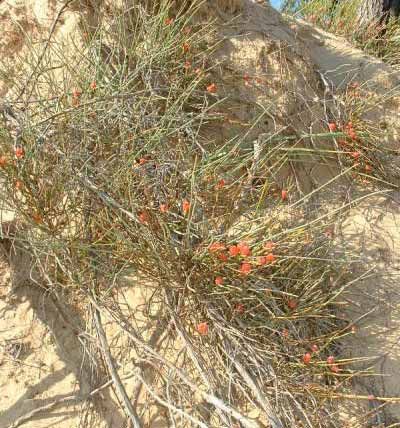
What are the different species of ephedra plants?
The genus Ephedra consists of approximately 65 species of gymnosperm shrubs distributed across dry regions in both the Eastern and Western hemispheres. While there are many species, several are notable for their historical, medicinal, or regional significance.
Notable Species
- Asian Species:
- Ephedra sinica (commonly known as ma huang): Historically significant as a source of the drug ephedrine, which has been used in Chinese and Ayurvedic medicine for thousands of years.
- North American Species:
Often referred to as joint firs or Mormon tea, these species include:
- E. viridis (green Mormon tea)
- E. californica (California joint fir)
- E. nevadensis (Nevada joint fir)
- E. aspera (rough joint fir)
- E. torreyana (Torrey’s Mormon tea)
- Mediterranean Species:
- E. fragilis (known as the joint pine)
These plants are characterized by their jointed, nearly leafless stems, which perform the majority of the plant’s photosynthesis to minimize water loss in arid environments.1
How has ephedra been used traditionally in medicine and culture?
Ephedra has a long history of traditional use in medicine and culture, spanning thousands of years across different regions.
Medicinal Applications
In Asia, particularly in China, the species Ephedra sinica, known as ma huang, has been utilized for over 5,000 years to treat conditions such as asthma and hay fever6. It is a primary source of the alkaloid ephedrine, which has been used to break fevers, induce sweating, and act as a decongestant. Several species are also significant in Ayurvedic medicine.14
Cultural and Regional Uses
In the southwestern United States and Mexico, indigenous peoples and later pioneers used various local species—often called joint firs—as sources of food and medicine. Stem fragments from these plants are commonly prepared as a tea, known variously as Mormon tea, Mexican tea, or desert tea. These plants are well-adapted to arid environments, with their green stems performing the bulk of photosynthesis to minimize water loss.15
How do ephedra plants reproduce?
Ephedra plants reproduce through a process involving specialized reproductive structures known as strobili, or cones. Most Ephedra species are dioecious, meaning individual plants produce either pollen-bearing (microsporangiate) cones or seed-bearing (megasporangiate) cones, though some species may bear both types on the same plant.78
Reproductive Process
- Pollen Production: Within the male cones, microsporangia undergo meiotic division to produce haploid pollen grains. These grains are boat-shaped and feature longitudinal ridges and furrows.7
- Ovule Development: Female cones consist of paired bracts that enclose an ovule. Inside the ovule, a cell divides meiotically to form megaspores. One megaspore enlarges and undergoes mitotic divisions to create a megagametophyte, which eventually forms egg-bearing structures called archegonia.7
- Fertilization: Unlike many other gymnosperms, the sperm of Ephedra lack flagella. Once pollination occurs, the pollen grains germinate and develop tubes that deliver the sperm to the eggs within the archegonia to initiate fertilization.17
Sources
- ephedra — Encyclopædia Britannica
- gnetophyte - Annotated classification — Encyclopædia Britannica
- ephedra — Merriam-Webster
- Mormon tea — Merriam-Webster
- ma huang — Merriam-Webster
- ephedrine — Encyclopædia Britannica
- plant reproductive system - Gymnosperms — Encyclopædia Britannica
- gnetophyte - Reproductive structures and function — Encyclopædia Britannica
- gnetophyte - General features — Encyclopædia Britannica
Published on · 3 min read