Gnetaceae
Gnetaceae is a family of tropical gymnosperms belonging to the order Gnetales and the division Gnetophyta. The family consists of a single genus, Gnetum…
What is Gnetaceae?
Gnetaceae is a family of tropical gymnosperms belonging to the order Gnetales and the division Gnetophyta. The family consists of a single genus, Gnetum, which includes approximately 30 or more species.12
These plants exhibit several unique characteristics:
- Growth Habits: While many Asian varieties are woody vines, African species are predominantly trees. One notable example is G. gnemon, a tree that can reach 20 meters in height and produces edible, plumlike fruit.1
- Angiosperm-like Features: Unlike many other gymnosperms, Gnetum species possess broad leaves with conspicuous, netlike venation and contain open-ended pipes known as vessels in their xylem, both of which are traits typically associated with angiosperms.13
- Reproduction: The plants are dioecious, meaning male and female reproductive structures are found on separate plants. Their reproductive structures, housed within cones, have sometimes been compared to the flowers of angiosperms.2
How do Gnetum leaves resemble those of flowering plants?
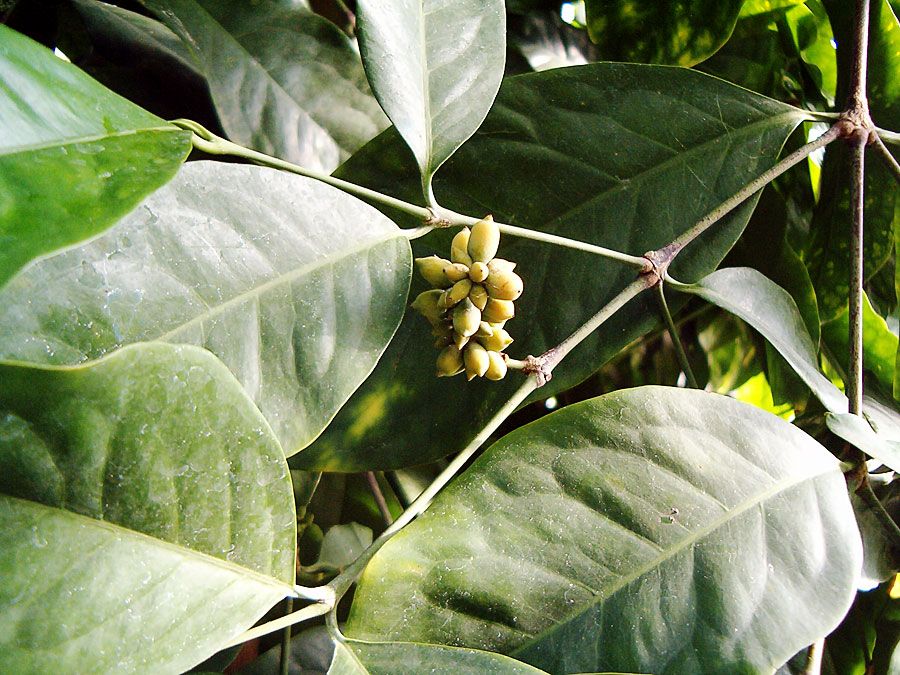
The leaves of Gnetum species bear a striking resemblance to those of angiosperms (flowering plants) in their overall form, structure, and venation patterns.1
Key features of this resemblance include:
- Broad Leaf Shape: Unlike the needlelike or scalelike leaves typical of many other gymnosperms, Gnetum leaves are broad1.4
- Pinnate Venation: The leaves feature a pinnate venation system, which consists of a prominent midvein with lateral secondary veins extending toward the leaf margin.1
- Netlike Veining: The leaves exhibit a conspicuous, netlike meshwork of smaller veins, a characteristic trait of angiosperms that distinguishes Gnetum from other gymnospermous groups.51
These morphological similarities, combined with the presence of vessels in their xylem—a feature also typical of flowering plants—historically led some botanists to speculate that Gnetum might be closely related to the ancestral stock of angiosperms. However, modern molecular research indicates that flowering plants did not evolve directly from a gnetophyte ancestor.563
What are the main differences between Gnetum, Ephedra, and Welwitschia?
The three genera within the division Gnetophyta—Gnetum, Ephedra, and Welwitschia—are distinct in their morphology, growth habits, and ecological adaptations.
Key Differences
Feature
Gnetum
Ephedra
Welwitschia
Growth Habit
Mostly
lianas
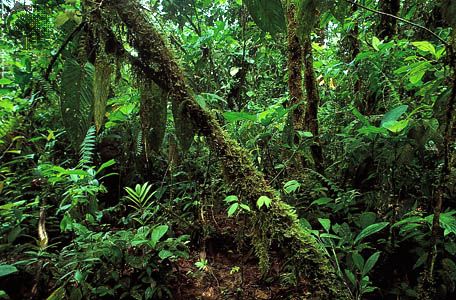
or trees; tropical rainforests.
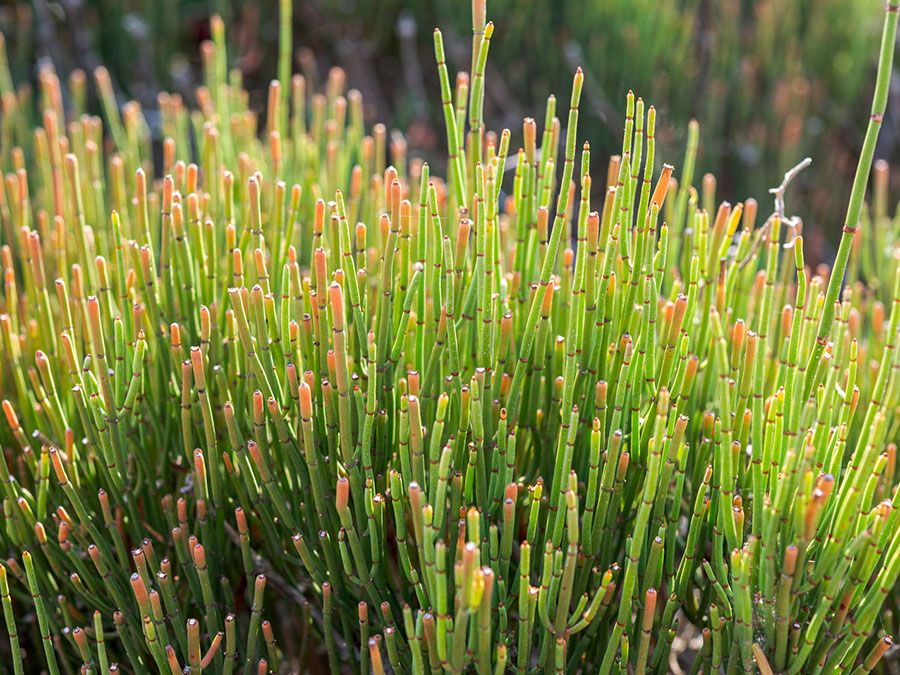
Branched
shrubs
; dry, cool regions.
Massive squat stem; restricted to the
Namib
Leaf Form
Broad, oval leaves with netlike venation; resemble
angiosperms
.
Small, scalelike leaves.
Two large, permanent, leathery, straplike leaves.
Reproduction
Dioecious; structures in whorls on elongated axes.
Often dioecious; structures in compound strobili.
Dioecious; structures in compound strobili.
Unique Traits
Contains
vessels
in
xylem
.
Source of
ephedrine
.
Leaves grow from a basal meristem for the plant’s life.
Summary of Distinctions
- Gnetum: Known for its angiosperm-like leaves and tropical climbing habit. It is unique among most gymnosperms for having vessels in its xylem.784
- Ephedra: Primarily desert or arid-region shrubs. They are well-known for their medicinal properties and have highly reduced, scalelike leaves.784
- Welwitschia: A highly specialized, long-lived desert plant. It is defined by its two permanent leaves that grow continuously from the base, a growth pattern unlike any other plant in the world.784
While all three share certain reproductive characteristics—such as having two integuments around their ovules and lacking flagellated sperm—their physical forms are highly specialized to their respective environments.9
Why are gnetophytes considered important in the study of plant evolution?
Gnetophytes are significant in the study of plant evolution primarily because they possess a unique combination of traits that historically led botanists to propose them as a potential evolutionary link between gymnosperms and angiosperms.53
Their importance in evolutionary discourse stems from several key features:
- Vessel Elements: Unlike most other gymnosperms, which rely solely on tracheids for water conduction, gnetophytes possess vessels in their xylem. This specialized tissue is a hallmark of flowering plants, making gnetophytes an outlier among gymnospermous groups.5310
- Reproductive Morphology: The compound nature of their pollen- and seed-producing strobili has led some researchers to interpret these structures as precursors to the flowers found in angiosperms.5
- Classification Debates: These similarities prompted the historical proposal of the group Chlamydospermae, intended to bridge the gap between gymnosperms and angiosperms. While modern molecular research has established that flowering plants did not evolve directly from a gnetophyte ancestor, these plants remain vital for understanding the diversity of vascular plants and the evolution of seed-bearing structures.53
Sources
- Gnetaceae — Encyclopædia Britannica
- gnetophyte - Annotated classification — Encyclopædia Britannica
- plant - Gymnosperms — Encyclopædia Britannica
- gnetophyte - Leaves — Encyclopædia Britannica
- gnetophyte - Critical appraisal — Encyclopædia Britannica
- gnetophyte - Stem — Encyclopædia Britannica
- gnetophyte - General features — Encyclopædia Britannica
- gymnosperm - Gnetophyta — Encyclopædia Britannica
- plant reproductive system - Gymnosperms — Encyclopædia Britannica
- double fertilization — Merriam-Webster
- vessel — Encyclopædia Britannica
- xylem — Encyclopædia Britannica
- plant - Variations involving seed plants — Encyclopædia Britannica
Published on · 3 min read