Epoch
An epoch is a term with distinct meanings depending on the context:
What is epoch?
An epoch is a term with distinct meanings depending on the context:
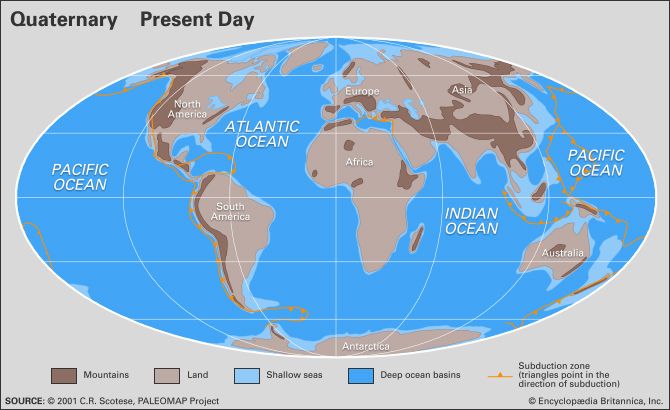
- Geology: It is a specific unit of geological time during which a rock series is deposited. It serves as a subdivision of a geological period. When used formally, such as in the Quaternary period, the word is capitalized1.
- General Usage: It refers to an extended period of time associated with a particular person, development, or age, often marking the beginning of a new era.12
- Astronomy and Chronology: It denotes a fixed point of reference or a specific instant in time used for calculations or systems of measurement.2
Etymologically, the word derives from the Greek epochē, meaning “cessation” or “fixed point,” reflecting its historical use as a marker for the start of a chronological system.2
How do geologists determine the start and end of an epoch?
Geologists determine the start and end of an epoch by analyzing the stratigraphic record, which is the sequence of rock layers that serves as a physical archive of Earth’s history. The process relies on several integrated methodologies:45
- Biostratigraphy: The primary method involves identifying the emergence and disappearance of widespread fossil species within rock strata. By correlating these fossil assemblages across different regions, scientists can delineate the boundaries of geological intervals.46
- Radiometric Dating: This technique provides numerical ages by measuring the radioactive decay of isotopes within rocks. It allows geologists to assign absolute dates to the relative time scale established by fossils and rock sequences.475
- Magnetostratigraphy: Researchers analyze the magnetic orientation preserved in rocks, which reflects Earth’s magnetic field at the time of their formation. Patterns of magnetic reversals provide a global chronological framework.65
- Global Standard Sections: To ensure consistency, the International Commission on Stratigraphy defines boundaries using a Global Stratotype Section and Point (GSSP), often referred to as a “golden spike.” This serves as the official, internationally recognized reference point for the start of a specific geological unit.8
What is the difference between an epoch, an era, and a period?
In the study of geologic time, scientists organize Earth’s history into a hierarchical system of units based on the stratigraphy of rock layers. These units are categorized by their duration, with eras, periods, and epochs representing different scales of time.10
Hierarchical Differences
- Era: An era is a very long span of time, representing the second-longest division of geological history, surpassed only by eons. An era is composed of one or more geological periods.5
- Period: A period is a subdivision of an era. It serves as a major unit of time during which specific rock systems were formed.510
- Epoch: An epoch is a smaller subdivision of a geological period. It represents the interval of time during which a specific rock series is deposited.11
While these terms are often used interchangeably in casual conversation, in formal geology, they represent a strict “calendar” of Earth’s history, with each boundary delineated by the emergence or disappearance of fossil species and other stratigraphic markers.10
Why do computers use a specific date as their epoch?
Sorry, the Britannica knowledge base does not contain this information.
Sources
- epoch — Encyclopædia Britannica
- epoch — Merriam-Webster
- Did you know? — Merriam-Webster
- Anthropocene Epoch — Encyclopædia Britannica
- geologic time — Encyclopædia Britannica
- geology - Historical geology and stratigraphy — Encyclopædia Britannica
- Tertiary Period - Correlation of Tertiary strata — Encyclopædia Britannica
- Silurian Period - Silurian boundaries — Encyclopædia Britannica
- stratigraphy — Encyclopædia Britannica
- era — Encyclopædia Britannica
- era — Merriam-Webster
Published on · 2 min read