Eryops
Eryops was a large, primitive amphibian from the Permian period that possessed specialized features for both aquatic and terrestrial environments.
What adaptations did Eryops have for both aquatic and terrestrial life?
Eryops was a large, primitive amphibian from the Permian period that possessed specialized features for both aquatic and terrestrial environments.1
Terrestrial Adaptations
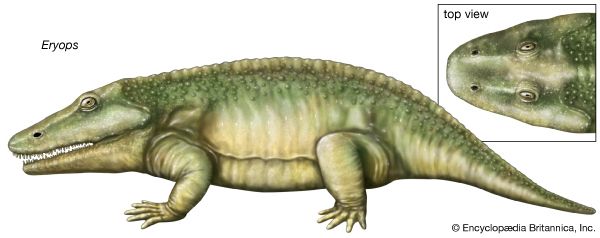
Eryops was exceptionally well-adapted for life on land compared to many of its contemporaries. Its vertebral column was robust, providing the necessary structural support for movement outside of water. Additionally, it featured massive shoulder and hip girdles paired with broad, sturdy limbs, which allowed it to traverse terrestrial landscapes effectively.1
Aquatic and General Adaptations
While highly capable on land, Eryops retained features suited for an amphibious lifestyle. Its large, upward-directed eye sockets suggest it spent significant time near the water’s surface, likely to monitor its surroundings. As a predator, it utilized large, pointed teeth on its jaws and palate to hunt fish, though it also preyed upon land vertebrates. Furthermore, its skin was covered in bony nodules, which served as a form of protective armor against predators.1
How were Eryops fossils first discovered, and where have they been found?
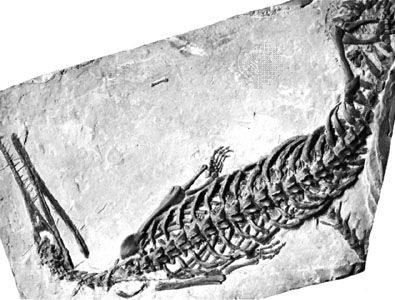
Eryops fossils are primarily found in North America, specifically within the Lower Permian rock formations of Texas and New Mexico.12
While the provided records confirm the geographical distribution of these fossils, they do not contain specific historical details regarding the initial discovery or the individuals responsible for finding the first specimens. The genus name itself is derived from the Greek eryein and the New Latin -ops.2
How does Eryops contribute to our understanding of amphibian evolution?
Eryops serves as a significant example in the study of amphibian evolution because it represents a highly successful transition toward a terrestrial lifestyle during the Permian Period.13
Its contribution to our understanding of this evolutionary shift includes:
- Structural Adaptation: Unlike many of its contemporaries that remained largely aquatic, Eryops possessed a robust vertebral column and massive limb girdles. These features demonstrate the skeletal modifications necessary to support body weight against gravity on land, a critical milestone in tetrapod evolution.13
- Ecological Versatility: As a large predator, Eryops illustrates how early amphibians occupied diverse niches. While it retained ties to water, its anatomy allowed it to effectively traverse terrestrial environments to hunt, showcasing the broadening ecological range of early land-dwelling vertebrates.12
- Evolutionary Context: As a member of the eryopoids, Eryops helps paleontologists map the diversity of labyrinthodonts. Its existence highlights the peak of amphibian development before the increasingly arid Permian climate favored the rise of amniotes, eventually leading to the decline of these ancient amphibian groups.32
During which geological time period did Eryops live, and what was the environment like then?
Eryops lived during the Permian Period, which spanned from approximately 299 million to 251 million years ago.51
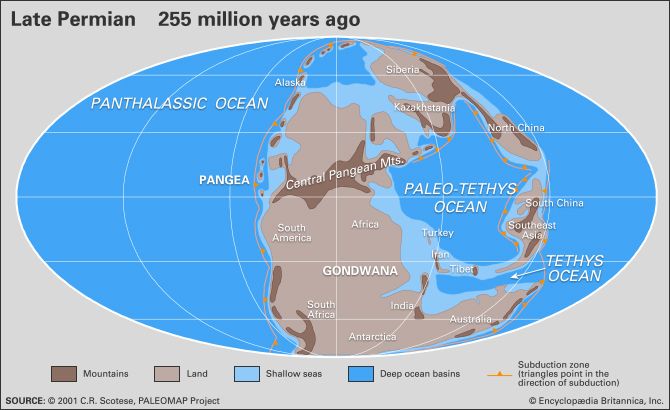
The environment during this time was significantly shaped by the formation of the supercontinent Pangea, which led to a trend of global warming and the development of increasingly dry to arid climates. As the period progressed, the climate became notably hot and dry in many tropical and subtropical regions, leading to the widespread expansion of deserts. These environmental shifts were further influenced by major mountain-building events that altered atmospheric flow and diverted warm marine air, as well as significant volcanic activity toward the end of the period.3
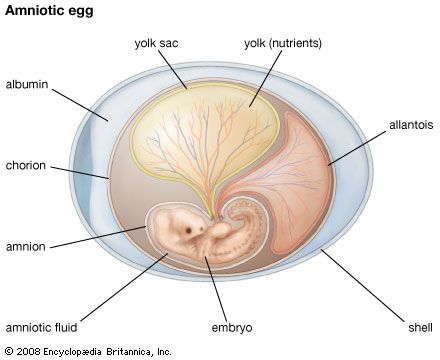
While many early amphibians were restricted to aquatic habitats, the arid conditions of the Permian favored the rise of amniotes, which were better adapted to terrestrial life. Consequently, ancient amphibian groups like Eryops largely disappeared by the end of the Permian Period as their environments changed.1
Sources
- Eryops — Encyclopædia Britannica
- Eryops — Merriam-Webster
- amphibian - Evolution and classification — Encyclopædia Britannica
- Carboniferous Period - Amphibians and early reptiles — Encyclopædia Britannica
- Permian Period - Paleoclimate — Encyclopædia Britannica
Published on · 3 min read