Filarial Worm
Filarial worms are parasitic nematodes belonging to the superfamily Filarioidea. While they were historically associated with the family Filariidae, that…
What are filarial worms and how are they classified within the nematode group?
Filarial worms are parasitic nematodes belonging to the superfamily Filarioidea. While they were historically associated with the family Filariidae, that classification is now often restricted to a small number of forms not considered to be of medical importance.12
These threadlike worms are characterized by a complex life cycle that typically requires two hosts: a vertebrate (the primary host) and an arthropod (the intermediate host), such as a mosquito or fly. Adult female worms produce microscopic embryos known as microfilariae, which circulate in the host’s blood or skin until they are ingested by a biting insect. Within the insect, these embryos develop into infective larvae, which are then transmitted to a new vertebrate host during a subsequent blood meal.31
In humans and other mammals, these parasites invade subcutaneous tissues and lymphatics, causing a group of infectious disorders collectively known as filariasis. These conditions range from inflammatory responses to chronic, debilitating diseases like elephantiasis and river blindness.31
How do filarial worms transmit to humans and what are the main species that cause diseases?
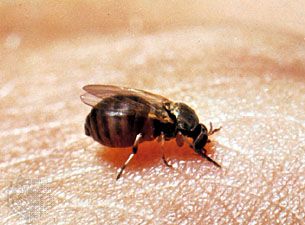
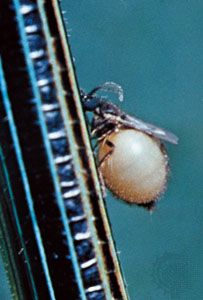
Filarial worms are transmitted to humans through the bites of infected bloodsucking insects, which serve as intermediate hosts. When an insect—such as a mosquito or fly—bites an infected person, it ingests microscopic embryos called microfilariae. Within the insect, these embryos develop into motile, infective larvae. During a subsequent blood meal, the insect introduces these larvae into a new human host, where they mature into adult worms over the course of about a year.21
Several species of these nematodes are responsible for human diseases:
- Wuchereria bancrofti: Causes Bancroftian filariasis, which can lead to elephantiasis due to the clogging of lymph channels.2
- Brugia malayi: Causes filariasis malayi, a condition with symptoms and pathological changes similar to those of Bancroftian filariasis.2
- Onchocerca volvulus: Causes onchocerciasis (river blindness), transmitted by black flies of the genus Simulium.25
- Loa loa: Causes loiasis, transmitted by flies of the genus Chrysops.2
- Acanthocheilonema perstans and Mansonella ozzardi: Other species that generally do not cause specific symptoms.2
What are the symptoms and health effects of filarial worm infections in humans?
Filarial worm infections, collectively known as filariasis, cause a range of health effects depending on the species of nematode involved. Infections generally begin with an inflammatory stage characterized by granulomatous lesions, swelling, and impaired circulation, followed by the enlargement of lymph nodes and dilation of lymph channels.2
Major Clinical Manifestations
- Bancroftian Filariasis and Filariasis Malay: These infections primarily affect the lymph nodes and vessels, particularly in the legs and genital area. Chronic cases can lead to elephantiasis, where lymph channels harden and become clogged with fibrous tissue, resulting in the gross expansion of tissues.2
- Onchocerciasis (River Blindness): This condition is marked by skin nodules, changes in pigmentation, dermal swelling, and severe itching. If the infection invades the eye, the disintegration of microfilariae can damage the cornea, potentially leading to permanent blindness.25
- Loiasis: Characterized by transient “calabar swellings”—areas of allergic inflammation beneath the skin. Adult worms may occasionally be visible moving beneath the conjunctiva of the eye, causing irritation.2
While some species, such as Acanthocheilonema perstans, often cause no specific symptoms, others can lead to significant, long-term disability if left untreated.2
What is the life cycle of a typical filarial worm?
The life cycle of a typical filarial worm is complex, requiring two hosts: an arthropod (the intermediate host, such as a mosquito or fly) and a vertebrate (the primary host, such as a human).12
The cycle generally proceeds as follows:
- Transmission to Human: When an infected insect bites a human, it introduces motile, infective larvae into the host’s body.12
- Maturation: Once inside the human, these larvae migrate to specific tissues—often the lymphatic system—where they mature into adult worms. This maturation process typically takes about 6 to 12 months.26
- Reproduction: Adult worms reproduce within the host, with females shedding thousands of microscopic, active embryos known as microfilariae each day.16
- Transmission to Insect: These microfilariae migrate into the host’s peripheral blood and skin. When a bloodsucking insect bites the infected human, it ingests the microfilariae.12
- Development: Inside the insect, the microfilariae grow into infective larvae, completing the cycle and preparing the insect to transmit the parasite to a new host during its next blood meal.12
Sources
- filarial worm — Encyclopædia Britannica
- filariasis — Encyclopædia Britannica
- Filariidae — Merriam-Webster
- nematode — Encyclopædia Britannica
- onchocerciasis — Encyclopædia Britannica
- parasitic disease - Major disease-causing parasites — Encyclopædia Britannica
Published on · 3 min read