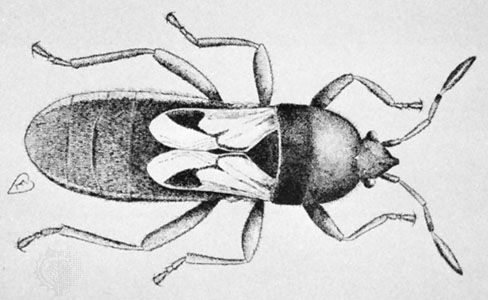
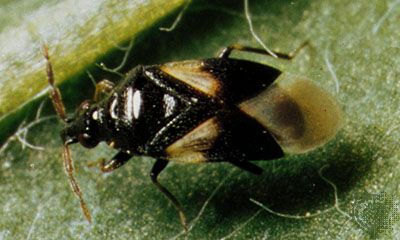
Flower Bug
Sorry, the Britannica knowledge base does not contain information regarding the specific natural predators of flower bugs (family Anthocoridae). While these…
What are the natural predators of flower bugs?
Sorry, the Britannica knowledge base does not contain information regarding the specific natural predators of flower bugs (family Anthocoridae). While these insects are well-documented as predaceous organisms that feed on pests like aphids, grape phylloxera, and chinch bugs, the provided sources do not identify the animals or insects that prey upon them.12
What unique characteristics do flower bugs possess that distinguish them from other insects?
Flower bugs (family Anthocoridae) possess several unique characteristics that distinguish them from other members of the true bug order, Heteroptera:
- Wing Structure: Unlike most heteropterans, flower bugs have a well-defined embolium, which is a specific section of the wing.1
- Genitalia: The external genitalia of male flower bugs are asymmetrical, a distinct anatomical feature within the family.4
- Morphology: These insects are generally small, ranging from 2 to 5 mm (0.08 to 0.2 inch) in length, and are typically characterized by a black coloration with white markings.1
- Anatomical Markers: They possess both ocelli (simple eyes) and a cuneus (a specific region on the forewing), and their wing membranes may or may not contain veins.4
While they are primarily known as predaceous insects that feed on small arthropods—such as aphids, mites, and chinch bugs—some species are known to inhabit bird nests, and a few, such as the larger pirate bug (Lycotcoris campestris), are capable of biting humans.14
Are there any specific species of flower bugs that are considered beneficial or harmful to gardens?
Flower bugs (family Anthocoridae) are generally considered highly beneficial to gardens and agriculture. Because they are primarily predaceous, they serve as natural pest control agents by feeding on harmful insects such as aphids, thrips, and chinch bugs. For example, the insidious flower bug (Orius insidiosus) is a common North American species valued for its role in preying on the grape phylloxera.12
While the vast majority of these insects are beneficial, they are not strictly “harmful” in the sense of damaging garden plants. However, some species can be considered a nuisance to humans. The larger pirate bug (Lycotcoris campestris), for instance, is known to bite and suck human blood, which may be an unwelcome interaction for gardeners.1
Overall, their predatory nature makes them a valuable asset for managing garden pests without the need for chemical intervention.2
How do flower bugs interact with plants and flowers in their environment?
Flower bugs (family Anthocoridae) interact with plants primarily as a habitat and a site for reproduction rather than as pollinators. While they are frequently found on flowers, their presence is typically linked to their role as predators of other insects that inhabit these plants, such as aphids, thrips, and chinch bugs.13
Their specific interactions with plant environments include:
- Reproduction: Flower bugs deposit their eggs directly into plant tissue.1
- Habitat: Beyond flowers, these insects utilize various parts of the plant environment for shelter and survival, including loose bark and piles of plant debris, where adults often pass the winter.1
- Predatory Role: By hunting pests that feed on plants, flower bugs provide a natural service to the garden ecosystem, helping to manage populations of harmful insects like the grape phylloxera.13
Unlike some other insects that have evolved specialized relationships with flowers for pollination, flower bugs are not categorized as significant pollinators in the provided literature.172
Sources
- flower bug — Encyclopædia Britannica
- flower bug — Merriam-Webster
- pollination - Beetles and flies — Encyclopædia Britannica
- heteropteran - Annotated classification — Encyclopædia Britannica
- heteropteran - Food habits — Encyclopædia Britannica
- heteropteran - Habitats — Encyclopædia Britannica
- Coleoptera - As predators — Encyclopædia Britannica
- major types of pollinators - Beetles and flies — Encyclopædia Britannica
Published on · 3 min read