Fritillary
The term fritillary refers to two distinct groups of organisms:
What is fritillary?
The term fritillary refers to two distinct groups of organisms:
Plants
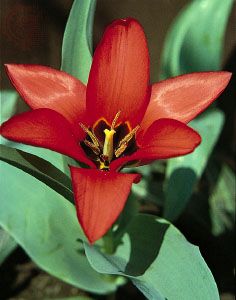
The fritillary is an ornamental plant belonging to the genus Fritillaria within the Liliaceae family. These bulbous, perennial herbs are native to the North Temperate Zone and are characterized by solitary, bell-shaped nodding flowers. Many species are known for a distinctive checkered pattern on their petals and possess a nectar gland at the base of each flower segment. Common varieties include the snake’s head and the crown imperial head](https://www.britannica.com/plant/snakes-head) and the crown imperial.1
Butterflies
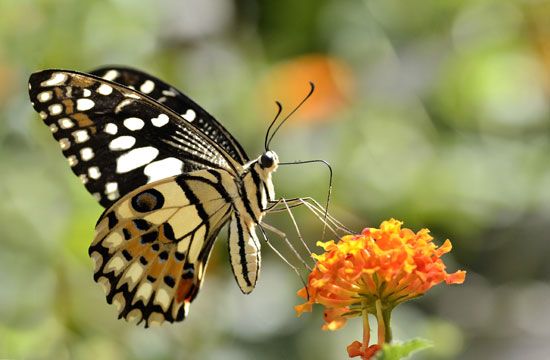
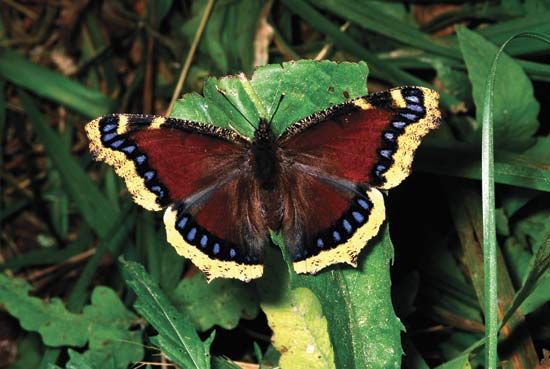
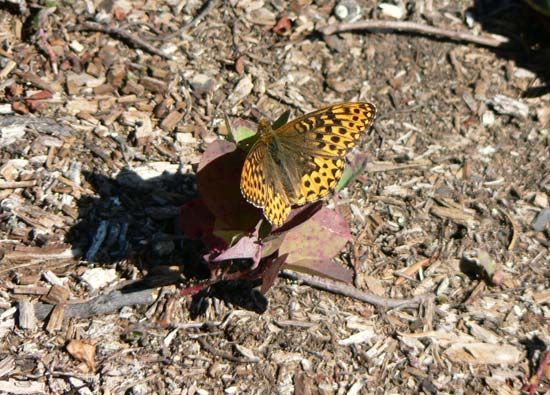
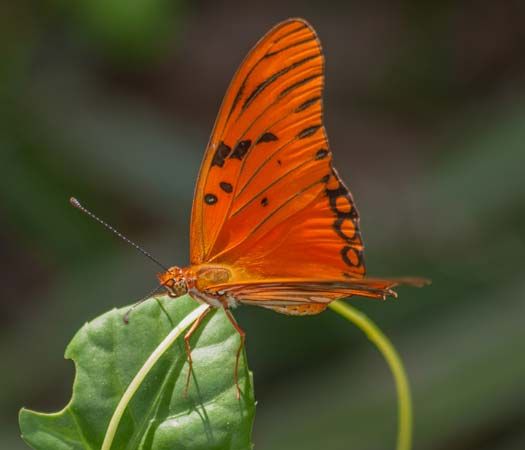
The name is also applied to various butterflies in the family Nymphalidae. These are often categorized by size:2
- Large fritillaries (silverspots): Members of the genus Speyeria, typically featuring silver markings on the undersides of their wings.2
- Smaller fritillaries: Often members of the genus Boloria.2
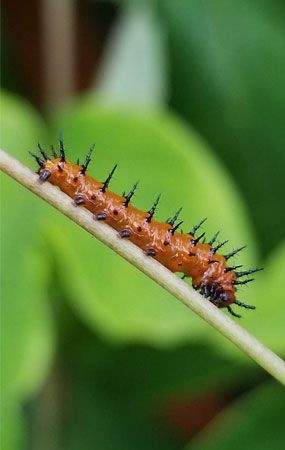
Many of these butterfly larvae are nocturnal and feed specifically on violet leaves.2
Why do some fritillary flowers have a checkered pattern?
While the checkered appearance of many fritillary flowers is a well-documented characteristic of the genus Fritillaria, the specific evolutionary or biological reason for this pattern is not explicitly detailed in the provided search results.
In general, the coloration of flowers serves as an interspecific signal to attract pollinators. Plants often utilize intricate patterns, such as nectar guides, to orient insects toward the center of the flower where they can access nectar and facilitate pollination. While these patterns are highly effective at attracting bees and other insects, the specific function of the checkered pattern in Fritillaria remains a subject for further investigation.
What is the life cycle of a fritillary butterfly?
The life cycle of a fritillary butterfly follows the standard four-stage process of complete metamorphosis characteristic of the family Nymphalidae.
- Larval Stage: Fritillary larvae are typically nocturnal and feed specifically on the leaves of violet plants. Like other nymphalids, these caterpillars often feature distinct physical characteristics such as branching spines, horns, or knobby projections known as tubercles.
- Pupal Stage: Once the larval stage is complete, the insect enters the pupa stage, also called a chrysalis. Unlike some other butterfly groups that construct cocoons, fritillaries pupate naked. The chrysalis hangs in a head-down position, often secured by a silk pad and a stalk known as a cremaster. During this phase, the insect undergoes a significant transformation of its body tissues.
- Adult Stage: The mature butterfly emerges from the chrysalis. Adult fritillaries are categorized into large species (genus Speyeria, often called silverspots due to markings on their hindwings) and smaller species (genus Boloria).
How do nectar glands help plants survive?
Nectar glands, or nectaries, are vital to plant survival by facilitating reproduction and providing defense through coevolution.
Reproductive Success
Floral nectaries secrete a sugar-rich nectar that acts as a food reward to attract pollinators such as bees, butterflies, and hummingbirds. By positioning these glands at the base of stamens, plants ensure that visitors come into contact with pollen during feeding. To maximize cross-pollination, many plants produce only small amounts of nectar, forcing animals to visit multiple flowers to obtain a full meal.
Defense and Survival
Extrafloral nectaries, located on stems or leaves, serve different survival functions:
- Mutualism: They attract protective insects, such as ants, which defend the plant against herbivores or competing vegetation. In some cases, such as the bullhorn acacia, this relationship is an obligative mutualism where both species rely on each other for survival.
- Predation: Some carnivorous plants, like pitcher plants, use nectar as bait to lure prey into traps.
Sources
- fritillary — Encyclopædia Britannica
- fritillary — Encyclopædia Britannica
- angiosperm - The corolla — Encyclopædia Britannica
- coloration - Interspecific signals — Encyclopædia Britannica
- Lepidoptera - Pupa , or chrysalis — Encyclopædia Britannica
- brush-footed butterfly — Encyclopædia Britannica
- nectar — Encyclopædia Britannica
- nectary — Encyclopædia Britannica
Published on · 3 min read