Frog
It is a common misconception that frogs and toads are distinct, immutable categories. In reality, both are tailless amphibians belonging to the order Anura…
What are the main differences between frogs and toads?
It is a common misconception that frogs and toads are distinct, immutable categories. In reality, both are tailless amphibians belonging to the order Anura, and taxonomically, all toads are considered a type of frog. The labels used to separate them are largely based on superficial physical characteristics.1
While there is no scientific way to definitively distinguish between them, you can often identify them using these general observations:
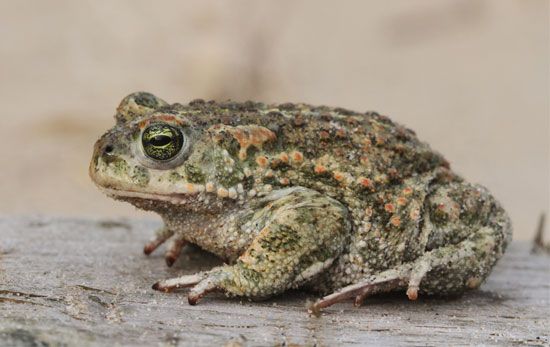
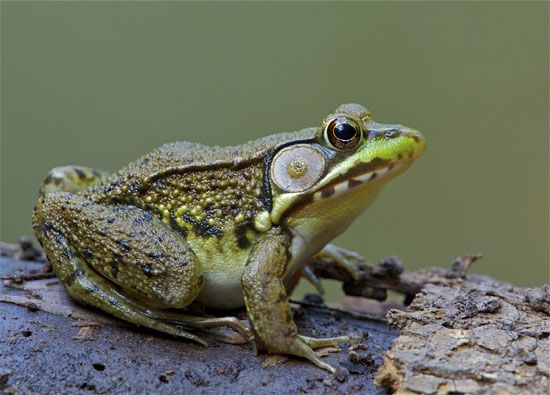
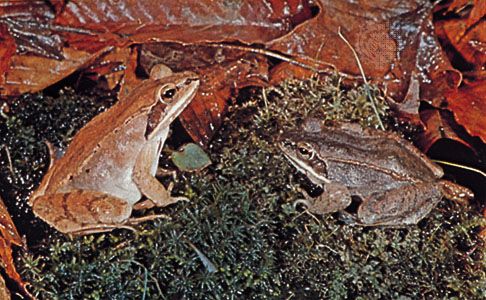
- Skin: Frogs typically have smooth, moist skin, whereas toads often have dry, rough, and bumpy skin. While the bumps on a toad may look like warts, it is a myth that touching them will cause you to develop warts.12
- Habitat: Because frogs require moisture to keep their skin hydrated, they are commonly found near bodies of water. Toads are better at retaining moisture and are more frequently found in drier environments away from ponds or streams.1
- Legs and Movement: Frogs generally have long, powerful hind legs adapted for leaping and swimming. Toads often have shorter hind legs, giving them a squat appearance, and they typically move by taking small hops or even walking.12
What are some of the most diverse and unusual frog species found around the world?
The world’s frogs exhibit remarkable diversity in size, appearance, and survival strategies, particularly within tropical environments. Here are some of the most unusual and diverse species:
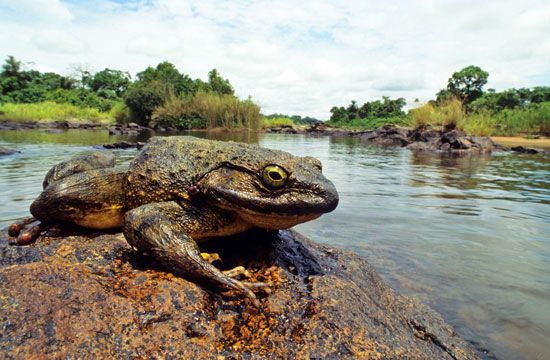
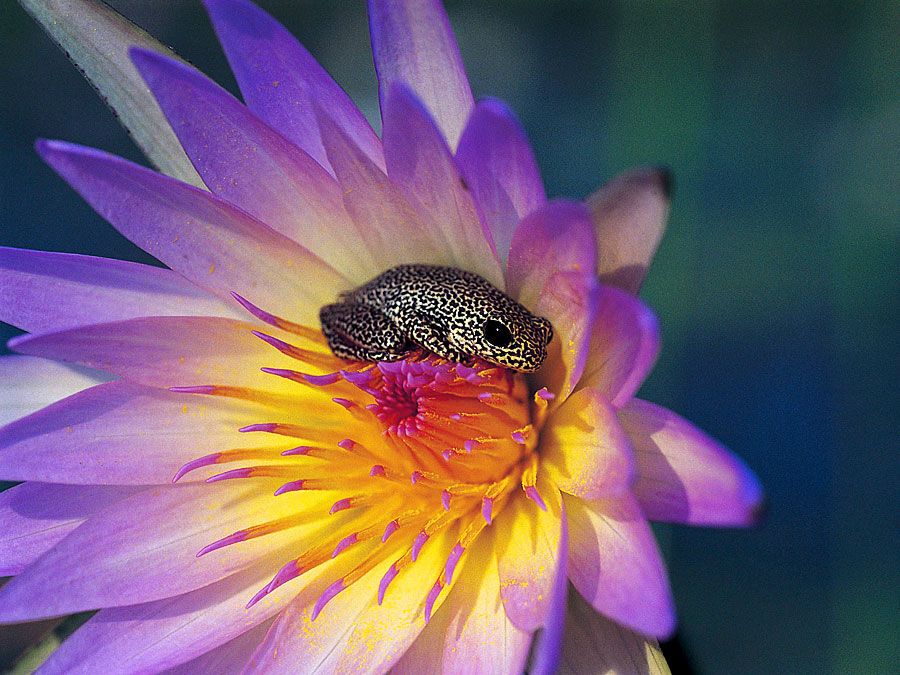
- Size Extremes: The goliath frog (Conraua goliath) is the world’s largest, reaching nearly 12 inches in length. Conversely, many species are tiny, such as the Brazilian Psyllophryne didactyla, which measures less than 0.4 inches.24
- Transparent and Lungless: Members of the glass frog family have such thin, transparent skin on their undersides that their internal organs are visible. Meanwhile, the lungless frog (Barbourula kalimantanensis) of Borneo has evolved to obtain all its oxygen through its skin.2
- Mimicry and Defense: The Malayan leaf frog (Megophrys nasuta) mimics the shape and texture of forest floor leaf litter. Other species, like the golden poison frog and the blue poison dart frog, use brilliant warning coloration to signal their potent toxicity. The mimic poison frog is notable for its ability to evolve color patterns that resemble other local toxic species.24
- Unique Morphology: The red-eyed tree frog is famous for its bulging red eyes and neon-green body, while the tomato frog of Madagascar resembles a plump, red fruit and secretes a sticky, glue-like deterrent when threatened.4
What are some of the most endangered frog species, and why are they threatened?
Many frog species worldwide are currently facing severe population declines and the threat of extinction due to a combination of environmental and human-driven factors.
Primary Threats to Frog Populations
- Amphibian Chytridiomycosis: Caused by the fungus Batrachochytrium dendrobatidis (Bd), this pandemic disease is a leading cause of decline. The fungus infects the skin, disrupting gas exchange and electrolyte balance, which often leads to cardiac arrest in the host. It has been implicated in the decline or extinction of hundreds of species, particularly in tropical and temperate montane regions.6
- Habitat Loss and Degradation: The destruction of forests for logging and agriculture, as well as water pollution from pesticides and infrastructure projects like dams, significantly reduces the available living space for many species.789
- Human Exploitation: Many frogs are hunted for food or captured for the illegal wildlife trade, including the pet trade and, in some cases, for use in frog-jumping contests.89
- Environmental Changes: Factors such as global warming, acid rain, and ozone depletion are also contributing to the widespread reduction of amphibian populations.7
Notable Endangered Species
- Goliath Frog (Conraua goliath): As the world’s largest frog, this species is highly vulnerable due to its narrow habitat requirements and specific diet. Its population has plummeted due to hunting, habitat fragmentation, and the illegal pet trade.89
- Panamanian Golden Frog: This species is among those that have been the focus of intensive conservation efforts by zoos to prevent extinction, often due to the devastating impact of chytridiomycosis.10
How do frogs breathe, and how does this differ between their aquatic and terrestrial stages?
Frogs possess a highly adaptable respiratory system that changes significantly as they transition from aquatic larvae to terrestrial adults.11
Aquatic Stage (Tadpoles)
During their larval stage, frogs are primarily aquatic and rely on gills for respiration. These gills, along with their large tail fins, facilitate gas exchange by allowing oxygen to diffuse directly from the water into their bloodstream.1112
Terrestrial Stage (Adults)
As frogs metamorphose, their gills and tail fins degenerate, and they develop simple, saclike lungs. Because these lungs lack the complexity of those in birds or mammals, adults use a “buccal pumping” mechanism: they draw air into their mouth and elevate the floor of their mouth to force it into the lungs.1112
Cutaneous Respiration
Regardless of their stage, frogs can also absorb oxygen and eliminate carbon dioxide directly through their thin, moist, and vascularized skin—a process called cutaneous respiration. This is particularly vital when frogs are submerged or hibernating, as it allows them to survive entirely on skin-based gas exchange when their metabolic rate is low.1112
Sources
- What’s the Difference Between a Frog and a Toad? — Encyclopædia Britannica
- frog and toad - Size range and diversity of structure — Encyclopædia Britannica
- frog and toad - From tadpole to adult — Encyclopædia Britannica
- 7 Awesome Frog Species of the Tropics — Encyclopædia Britannica
- frog and toad - Egg laying and hatching — Encyclopædia Britannica
- amphibian - Distribution and abundance — Encyclopædia Britannica
- amphibian chytridiomycosis — Encyclopædia Britannica
- goliath frog — Encyclopædia Britannica
- Zoos - Pro 3: Zoos save species from extinction and other dangers. — Encyclopædia Britannica
- goliath frog: Top Questions — Encyclopædia Britannica
- How do frogs breathe? — Encyclopædia Britannica
- Respiratory system - Amphibians — Encyclopædia Britannica
Published on · 4 min read