Gannett Peak
Gannett Peak is a mountain located in the Wind River Range and serves as the highest point in Wyoming, reaching an elevation of 13,804 feet (4,207 meters).…
What is Gannett Peak?
Gannett Peak is a mountain located in the Wind River Range and serves as the highest point in Wyoming, reaching an elevation of 13,804 feet (4,207 meters). Situated on the crest of the Continental Divide within the Bridger-Teton National Forest, the peak is characterized by significant glacial features, including the Gannett, Gooseneck, and Dinwoody glaciers.12
The mountain was first climbed by Captain Benjamin Bonneville in 1833. It was officially named in 1906 to honor Henry Gannett, a prominent geographer who contributed to the early Hayden Surveys and the U.S. Geological Survey.1
What is the Continental Divide?
The Continental Divide is a prominent, relatively continuous ridge of mountain summits that serves as the primary drainage partition for a continent. In general usage, the term refers to the main water parting that separates the direction in which water flows across a landmass.3
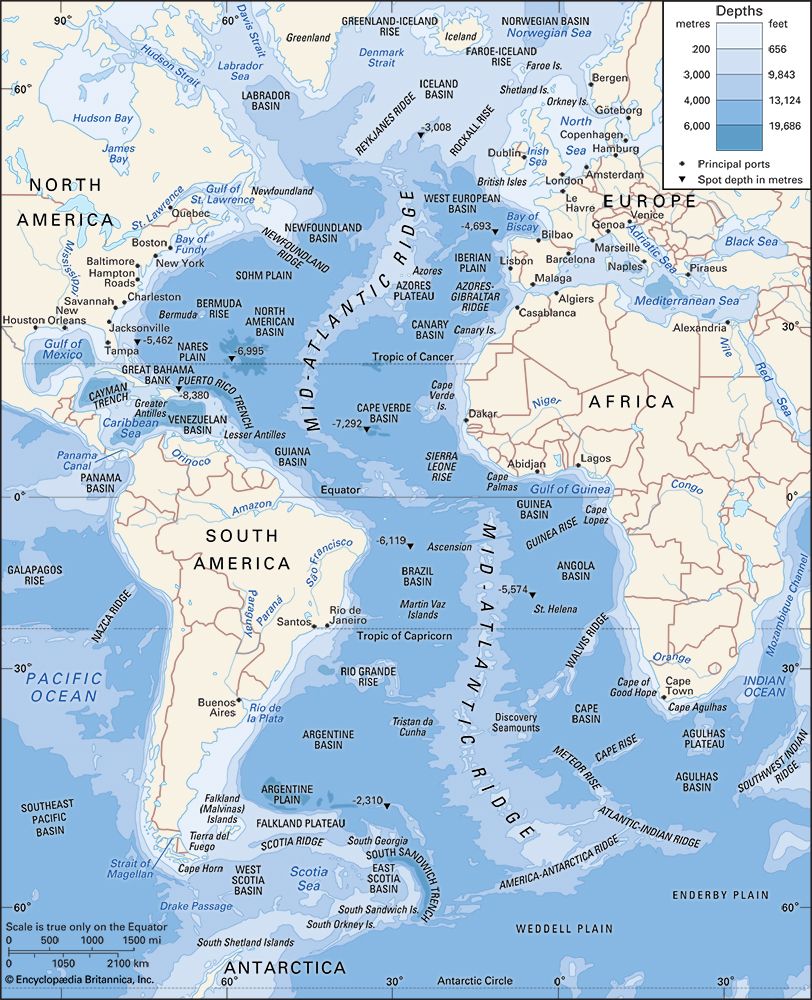
In North America, the Continental Divide—sometimes called the Great Divide—is a line of high points that separates water flowing westward into the Pacific Ocean from water flowing eastward toward the Atlantic Ocean or Arctic Ocean (including drainage into Hudson Bay or the Mississippi and Rio Grande river systems).345
This divide primarily follows the crest of the Rocky Mountains, extending from northwestern Canada through the United States—specifically Montana, Wyoming, Colorado, and New Mexico—and continuing southward into Mexico and Central America.34
How do glaciers shape mountain landscapes?
Glaciers are powerful agents of landscape transformation, reshaping mountains through two primary processes: abrasion and plucking (or quarrying).67
Mechanisms of Erosion
- Abrasion: Glaciers act like giant sheets of sandpaper. As they move, they carry rock debris at their base, which grinds against the bedrock, creating features ranging from microscopic scratches to deep gouges.6
- Plucking: Glaciers remove larger fragments of rock from their beds. This occurs through high-stress gradients that fracture bedrock, or through the refreezing of meltwater (regelation) that pries rock loose.6
Major Landforms
Glacial activity drastically alters the topography of mountain ranges, creating distinct features:
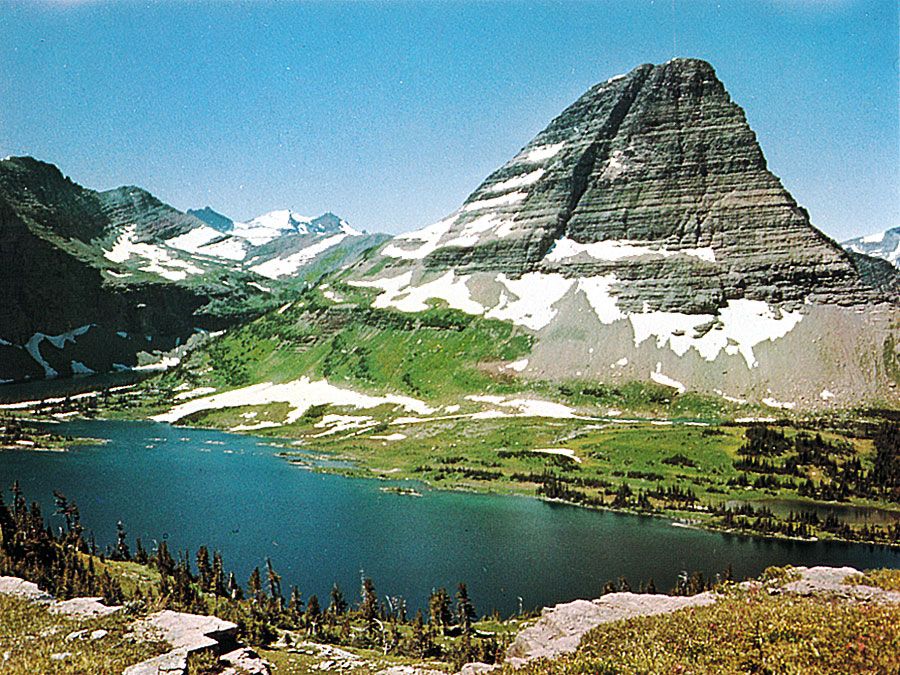
- Cirques: These are amphitheater-shaped hollows formed at the heads of glacial valleys. Their basins are often scoured deep enough to hold lakes called tarns lakes called tarns.6
- U-shaped Valleys: Glaciers inherit V-shaped stream valleys and reshape them by eroding the base and sidewalls, resulting in wide, flat-bottomed valleys with steep, often vertical sides.8
- Arêtes and Horns: As cirques erode into a mountain from multiple sides, they narrow the ridges between them into jagged, knife-edge arêtes. When three or more cirques meet, they leave behind a sharp, pyramidal peak known as a horn, such as the Matterhorn.8
Who was Henry Gannett?
It appears there is a misunderstanding regarding the identity of the individual. The available information does not contain details about a “Henry Gannett.” Instead, the records provide information on Frank Ernest Gannett (1876–1957), an influential American publisher who founded a major chain of daily newspapers in small and medium-sized U.S. cities.10
Frank Gannett began his career after graduating from Cornell University in 1898. He established a business strategy of acquiring and merging newspapers to eliminate competition, eventually expanding his holdings to include radio and television stations. By 1954, his media empire included 22 newspapers, and the company he founded later became the largest newspaper chain in the United States by circulation.10
Sources
- Gannett Peak — Encyclopædia Britannica
- Gannett Peak — Merriam-Webster
- Continental Divide — Encyclopædia Britannica
- Continental Divide — Merriam-Webster
- Rocky Mountains - Physiography — Encyclopædia Britannica
- glacial landform - Cirques , tarns, U-shaped valleys, arêtes, and horns — Encyclopædia Britannica
- Alps - Geology — Encyclopædia Britannica
- glacial landform - Glacial erosion — Encyclopædia Britannica
- glacial landform - Small-scale features of glacial erosion — Encyclopædia Britannica
- Frank Ernest Gannett — Encyclopædia Britannica
Published on · 2 min read