Gar
Gars are fascinating, ancient fishes that possess several unique adaptations for survival in their environments.
What unique behaviors or abilities do gar fish possess?
Gars are fascinating, ancient fishes that possess several unique adaptations for survival in their environments.1
- Air-Breathing Capability: Gars inhabit sluggish, stagnant waters where oxygen levels can be low. To survive, they possess a primitive lung—a vascularized gas bladder—that allows them to gulp air from the surface for gas exchange.1
- Protective Armor: Their bodies are encased in thick, diamond-shaped, enameled scales known as ganoid scales, which provide a robust layer of protection.1
- Predatory Efficiency: Gars are equipped with long, sharp-toothed beaks that function like forceps, making them highly effective at capturing prey.1
- Toxic Eggs: A key factor in their long-term survival is that their eggs are highly toxic to potential predators, which helps protect their offspring.1
- Basking Behavior: They are frequently observed basking at the water’s surface, often appearing similar to floating logs.1
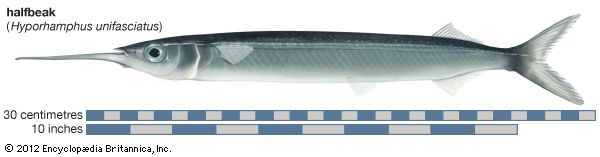
It is important to note that the term “gar” or “garfish” is sometimes applied to unrelated species, such as the needlefish in Europe or the halfbeak in Australia.1
How long have gar fish existed, and what is their evolutionary history?
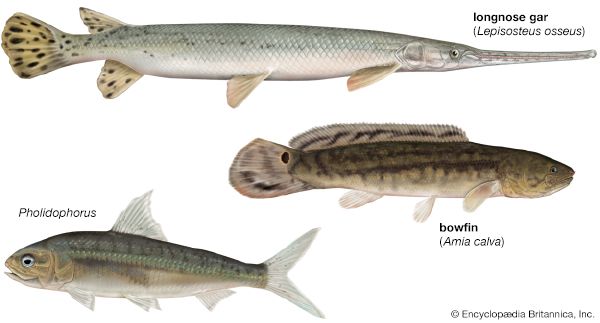
Gars are an ancient group of fishes belonging to the family Lepisosteidae, within the infraclass Holostei. Their evolutionary history is remarkably long, with the oldest known member of the family, Nhanulepisosteus mexicanus, identified from fossils discovered in Mexico that date back approximately 157 million years to the late Jurassic Period.1
Throughout their history, gars have demonstrated significant resilience. During the Eocene Epoch (56 million to 33.9 million years ago), their range extended across both North America and Europe. Their survival is often attributed to specialized adaptations, such as their ability to gulp air in low-oxygen environments and the production of toxic eggs that deter predators1. While many other ancient fish groups were replaced over time by newer, better-adapted lineages, the gar has persisted as a successful evolutionary line.14
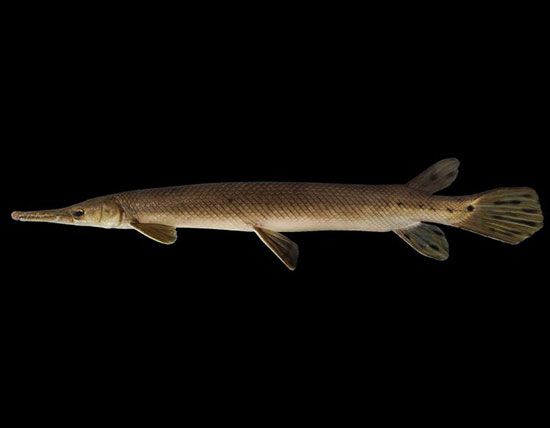
What are the different species of gar fish, and how do they differ?
There are seven recognized species of gar, all belonging to the family Lepisosteidae and the genera Atractosteus and Lepisosteus. While they share common traits such as diamond-shaped ganoid scales, air-breathing capabilities, and sharp-toothed beaks, they differ significantly in size and morphology.1
Key species and their distinguishing characteristics include:
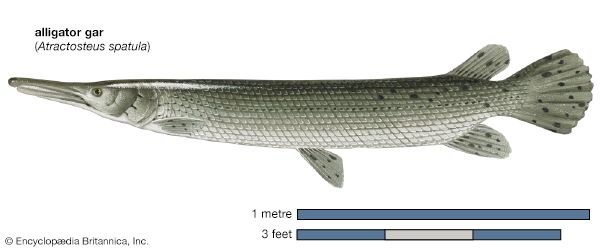
- Alligator gar (A. spatula): Found in the southern United States, this is one of the largest freshwater fishes, reaching lengths of up to 3 metres (10 feet). Unlike the long, slender beaks of other species, the alligator gar possesses a broad, relatively short beak.1
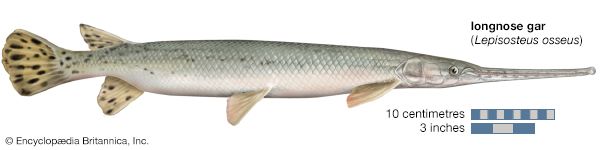
- Longnose gar (Lepisosteus osseus): Also known as the billfish, this species is characterized by a very long, forcepslike beak, which is highly effective for capturing prey.1
- Shortnose gar (L. platostomus): Native to the Mississippi River basin, this species is notably smaller than its relatives, typically growing to a maximum length of about 0.6 metres (2 feet).1
It is important to clarify that the common name “gar” is sometimes incorrectly applied to unrelated fishes, such as the needlefish in Europe or the halfbeak in Australia.1
Where are gar fish typically found in the wild?
Gar fish are primarily found in North America, where they inhabit a variety of aquatic environments. While they are predominantly freshwater fish, some species are known to descend into brackish water or even salt water.1
In the wild, gars typically prefer slow-moving or stagnant bodies of water, such as bayous and estuaries. These environments often have low oxygen levels, which gars are uniquely adapted to survive by gulping air at the surface. In these habitats, they are frequently observed basking near the surface, often appearing like floating logs.1
Sources
- gar — Encyclopædia Britannica
- lungfish - Adaptations for breathing — Encyclopædia Britannica
- fish - The respiratory system — Encyclopædia Britannica
- fish - Evolution and paleontology — Encyclopædia Britannica
- holostean - Extant groups — Encyclopædia Britannica
- shortnose gar — Merriam-Webster
- Lepisosteidae — Merriam-Webster
- alligator gar — Merriam-Webster
- Lepidosteidae — Merriam-Webster
Published on · 3 min read