Germander
Germander refers to a genus of plants known as Teucrium, which comprises approximately 260 species of herbs and subshrubs. These plants belong to the mint…
What is germander and which plant family does it belong to?
Germander refers to a genus of plants known as Teucrium, which comprises approximately 260 species of herbs and subshrubs. These plants belong to the mint family, scientifically known as Lamiaceae.12
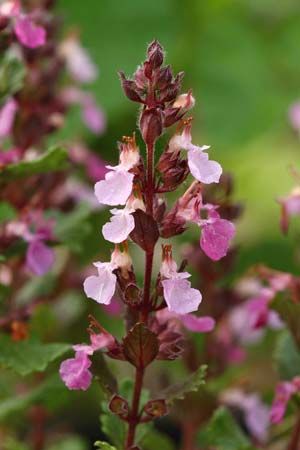
Typically perennial, germander plants are distributed nearly worldwide and are often cultivated as garden ornamentals. They are characterized by simple, aromatic leaves arranged oppositely on the stem and flowers that grow in spikelike clusters. These flowers, which can range in color from white and yellow to pink, red, or purple, often feature a prominent lower lip and are particularly attractive to bees. Well-known varieties include wall germander, American germander, and bush germander.12
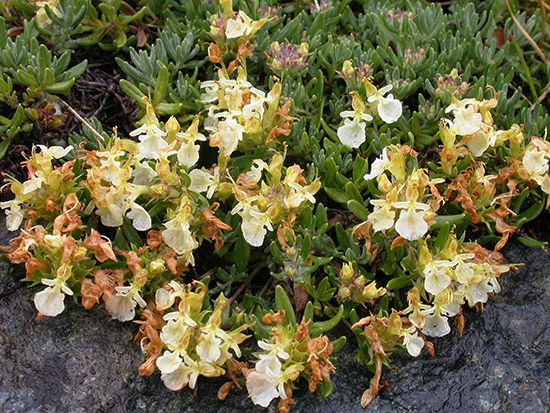
What are the different species of germander and their distinguishing features?
It is important to clarify that germander (Teucrium) is a distinct genus from geranium (Geranium), which belongs to a different plant family (Geraniaceae) and possesses different botanical characteristics.13
The genus Teucrium contains approximately 260 species of herbs and subshrubs. Several notable species are distinguished by their growth habits and floral characteristics:
- Wall germander (Teucrium chamaedrys): A perennial native to Eurasia, often grown as a hedge. It is recognized for its attractive evergreen foliage and pink-purple or bright rose flowers, which may feature red and white spots.14
- American germander (T. canadense): Native to North America, this species reaches heights of up to 90 cm (3 feet) and is characterized by slender spikes of purple to cream-colored flowers.1
- Woodland germander (T. scorodonia): Also known as wood sage, this European native is naturalized in North America. It is distinguished by its yellow flowers.1
- Bush germander (T. fruticans): A shrub that can grow to 1.5 meters (5 feet). It features lance-shaped leaves and scattered pale blue to lilac flowers, native to the coastal hillsides of Europe.1
How are germander plants typically used in gardening and landscaping?
Germander plants are highly valued in gardening and landscaping for their versatility, aesthetic appeal, and ability to attract pollinators. Because many species are perennial and feature attractive, aromatic foliage, they serve several functional and decorative roles in the landscape.1
- Hedges and Borders: Wall germander (Teucrium chamaedrys) is frequently utilized as a low-growing hedge or a border plant. Its evergreen nature ensures that it provides structure and visual interest throughout the year, while its dense growth habit makes it an excellent choice for defining garden edges.15
- Ornamental Displays: Various species are cultivated for their distinct floral displays. Depending on the variety, these plants produce spikes of white, yellow, pink, red, or purple flowers that add color to garden beds.1
- Pollinator Gardens: Germander flowers are particularly attractive to bees, making them a beneficial addition to gardens designed to support local pollinator populations.1
- Ground Cover: Due to their ability to spread vegetatively via rhizomes or stolons, some germander species can be used to fill in garden spaces effectively.1
What are the key differences between germander and other plants in the mint family?
While germander (Teucrium) belongs to the mint family (Lamiaceae) and shares common traits such as square stems and oppositely arranged leaves, it possesses specific floral characteristics that distinguish it from many other members of the family.167
The primary differences lie in the structure of the flowers:
- Floral Morphology: Unlike many mint family members that feature a classic two-lipped, open-mouthed, tubular corolla, germander flowers are characterized by a short corolla tube and a very prominent, enlarged lower lip.162
- Stamen Projection: Germander flowers are noted for having four stamens that project noticeably from the flower, a feature that helps differentiate them from other genera within the Lamiaceae family.2
Despite these differences, germander remains a typical member of the order Lamiales in its general reproductive biology, producing characteristic nutlet fruits as the flowers mature.186
Sources
- Germander — Encyclopædia Britannica
- germander — Merriam-Webster
- Teucrium — Merriam-Webster
- geranium — Encyclopædia Britannica
- wall germander — Merriam-Webster
- Lamiales - Main families — Encyclopædia Britannica
- Lamiaceae — Encyclopædia Britannica
- list of plants in the family Lamiaceae — Encyclopædia Britannica
Published on · 3 min read