Ghost Crab
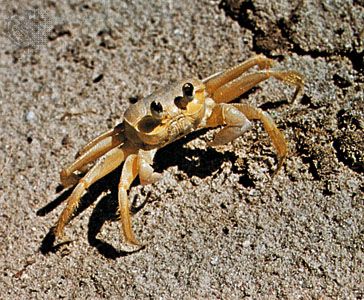
Ghost crabs (genus Ocypode) are shore crabs primarily found on sandy beaches across tropical and temperate regions. Their distribution varies by species:
Where can ghost crabs be found, and what type of habitats do they prefer?
Ghost crabs (genus Ocypode) are shore crabs primarily found on sandy beaches across tropical and temperate regions. Their distribution varies by species:12
- Western Atlantic: O. quadratus is found on beaches from New Jersey to Brazil. Another species, O. albicans, is common from Rhode Island to Brazil.13
- Indian and Pacific Oceans: Species such as O. ceratophthalmus inhabit beaches throughout these regions.1
- Red Sea: The species O. saratan is native to this area.1
These crustaceans are highly adapted to terrestrial life and prefer habitats consisting of dry sand located above the high-tide mark. They are known for their ability to run at great speeds across these sandy environments. To survive in these areas, ghost crabs construct deep burrows, sometimes reaching up to 1 meter (3.3 feet) into the sand, which provide shelter and protection. While they are amphibious and capable of scavenging on land, they remain closely tied to the coastal environment.12
What is the diet of ghost crabs, and how do they hunt for food?
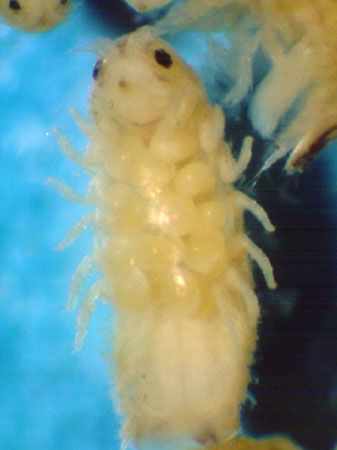
Ghost crabs are opportunistic scavengers and predators with a varied diet. A primary component of their food source includes sand fleas, which they forage for along the shoreline.1
Their hunting methods are adapted to their specific environments and prey:
- Active Predation: Some species, such as O. ceratophthalmus found in the Indian and Pacific oceans, demonstrate specialized hunting behaviors. They use their claws to actively catch flies from the undersides of leaves.1
- Scavenging: As shore crabs, they frequently patrol the beach to feed on organic debris and other small organisms found in the sand.1
How fast can ghost crabs run, and why is speed important for their survival?
Ghost crabs (genus Ocypode) are widely recognized for their remarkable running speed across the dry sand of their coastal habitats. While specific numerical top speeds can vary by species and environmental conditions, their rapid movement is a critical evolutionary adaptation for survival.14
The importance of this speed lies in its role as an effective escape strategy against predators. Because ghost crabs possess a flat body plan with jointed legs that favor lateral movement, they can travel with nearly equal velocity to either the left or the right. This sidelong gait allows them to react instantaneously to threats, providing the flexibility and unpredictability needed to evade capture. Furthermore, this rapid locomotion, combined with their ability to quickly retreat into deep burrows, ensures they can safely navigate and exploit the exposed sandy environments where they live.41
How do ghost crabs breathe while living on land?
Ghost crabs have evolved specialized adaptations to transition from aquatic to terrestrial respiration. While they still possess gills, which are typical of crustaceans, these structures are housed within enlarged branchial chambers beneath the carapace.567
To survive on land, ghost crabs utilize the following mechanisms:
- Vascularized Chambers: The lining of their branchial chambers is soft and richly supplied with blood vessels, allowing these areas to function similarly to lungs for gas exchange.67
- Moisture Retention: Because gills require moisture to function, land crabs possess specialized chambers designed to keep their gills moist, preventing them from drying out in the air.7
- Ventilation: They employ specialized appendages to create respiratory currents, ensuring that the air or water within these chambers is effectively circulated for oxygen uptake.57
These adaptations allow ghost crabs to extract oxygen efficiently while minimizing water loss, a critical requirement for their life in terrestrial environments.57
Sources
- ghost crab — Encyclopædia Britannica
- ghost crab — Merriam-Webster
- crustacean - Distribution and abundance — Encyclopædia Britannica
- Why do crabs walk sideways? — Encyclopædia Britannica
- Respiratory system - Gills of invertebrates — Encyclopædia Britannica
- crustacean - The respiratory system — Encyclopædia Britannica
- malacostracan - Respiration — Encyclopædia Britannica
Published on · 3 min read