Giant Huntsman Spider
The giant huntsman spider (Heteropoda maxima) is a massive, cave-dwelling spider native to Laos. First formally described in 2001, it holds the record for…
What is giant huntsman spider?
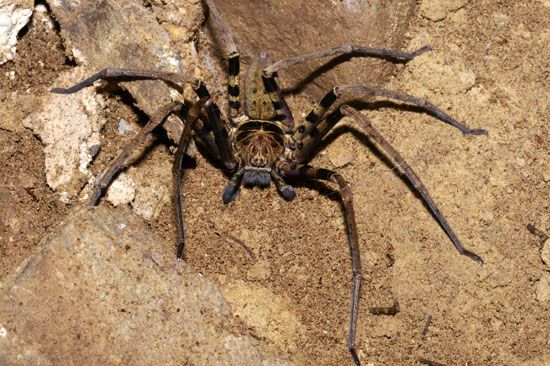
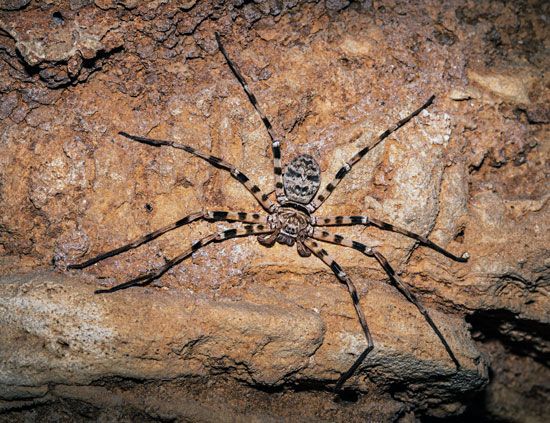
The giant huntsman spider (Heteropoda maxima) is a massive, cave-dwelling spider native to Laos. First formally described in 2001, it holds the record for the largest leg span of any known spider, reaching 25–30 cm (9.8–11.8 inches).12
Physical Characteristics and Behavior
While the goliath birdeater is heavier, the giant huntsman’s leg span is unmatched. Its flattened, yellowish-brown body allows it to navigate narrow rock crevices, and its twisted leg joints enable it to move sideways with a crablike gait.2
Unlike web-building spiders, the giant huntsman is an active predator. It uses speed and agility to hunt insects, small rodents, and reptiles, subduing them with venom.12
Interaction with Humans
Despite its intimidating size, the spider is reclusive and not considered dangerous to humans. Bites are rare, occurring only defensively, and typically result in only mild, localized symptoms.12
How does the goliath birdeater compare to the giant huntsman?
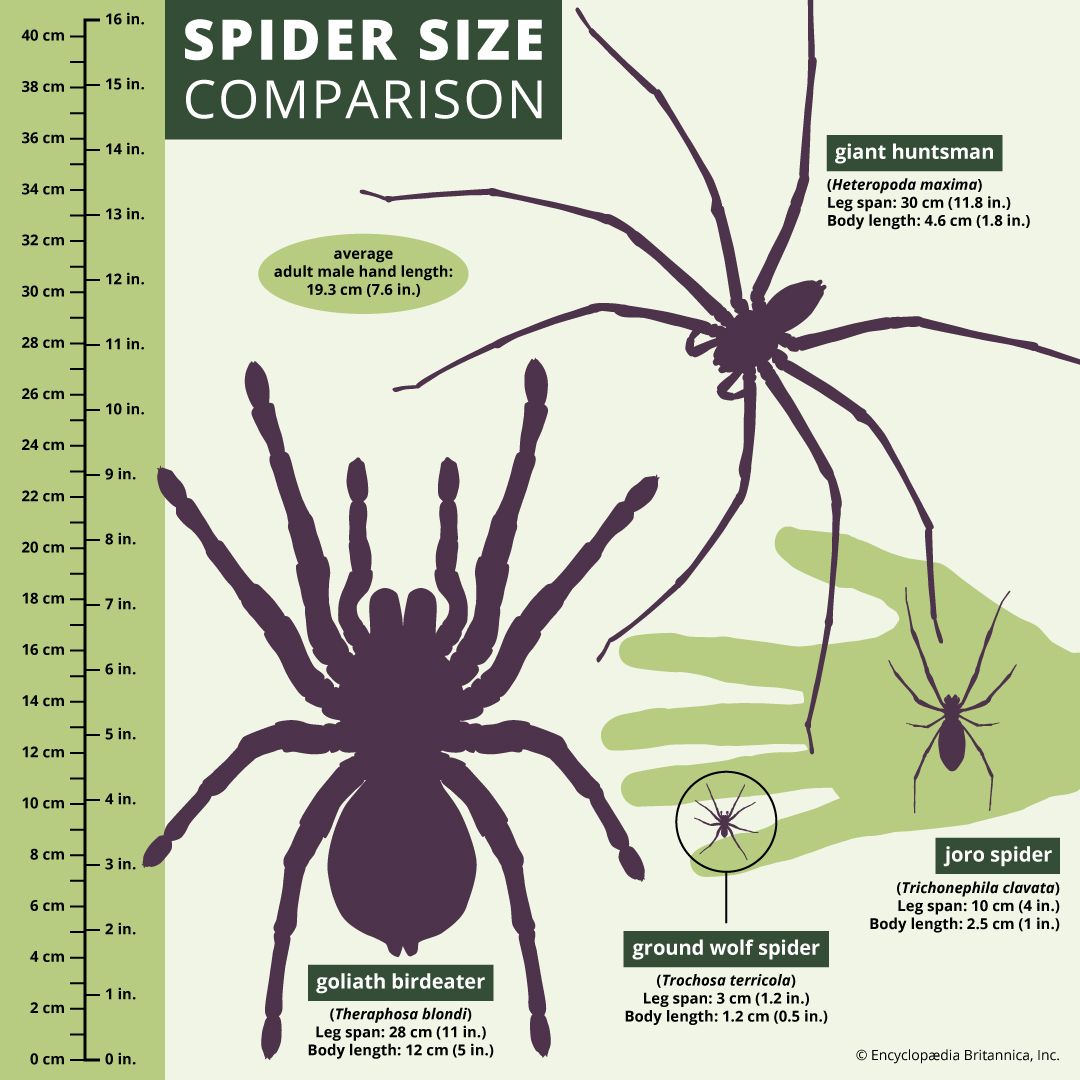
The goliath birdeater and the giant huntsman spider are both among the largest spiders on Earth, but they hold different records depending on how they are measured.
Key Comparisons
Feature
Goliath Birdeater
Giant Huntsman
Primary Distinction
Heaviest spider by mass
Largest leg span of any spider
Max Weight
Up to 170 grams (6 ounces)
About 167 grams (5.9 ounces)
Max Leg Span
Approximately 28 cm (11 inches)
25–30 cm (9.8–11.8 inches)
Body Length
Up to 12 cm (5 inches)
4.6 cm (1.8 inches)
Habitat
Amazon Rainforest
burrows
Caves in
Laos
Hunting Style
Ambush predator
Active hunter
Behavioral and Physical Differences
While the goliath birdeater is a bulky tarantula with a massive, fist-sized body, the giant huntsman has a relatively modest, flattened body designed for navigating narrow rock crevices. The goliath birdeater relies on ambush tactics and sensitive hairs to detect vibrations, whereas the giant huntsman actively pursues prey with significant speed and agility.134
Both spiders are generally not considered dangerous to humans, though the goliath birdeater possesses urticating hairs that it can release as a defense mechanism.143
Why do some spiders, like the giant huntsman, hunt without webs?
Spiders that do not build webs to trap prey are known as wandering spiders. While all spiders produce silk, only about half of all species use it to construct webs for prey capture.25
Instead of relying on a stationary trap, active hunters like the giant huntsman spider utilize speed, agility, and keen senses to pursue and overpower their prey. These spiders often possess well-developed senses of touch or sight to locate food. For example, wolf spiders and jumping spiders rely on sharp vision to stalk and pounce on insects, while others use sensitive hairs called trichobothria on their legs to detect vibrations and air currents.6578
By evolving to hunt actively, these spiders avoid the energy expenditure and maintenance required to build and repair webs daily. Instead, they use their physical prowess to subdue victims directly with venom.265
What are some other examples of cave-dwelling animals?
Animals that are specifically adapted to live their entire lives in the dark, subterranean environments of caves are known as troglobites. These organisms often exhibit common evolutionary traits, such as the loss of pigmentation (resulting in a pale appearance) and the reduction or complete loss of functional eyes.1112
Cave-Dwelling Fish
Many species of cave fish have evolved to thrive in total darkness by developing highly sensitive tactile organs across their bodies, heads, and tails, which allow them to navigate and detect prey without sight. Examples include:12
- Amblyopsidae: This family includes the southern cave fish (Typhlichthys subterraneus) and the blind fish of Mammoth Cave, Kentucky.12
- Characins: The eyeless Astyanax mexicanus (formerly Anoptichthys jordani) is a well-known species found in Mexican caves.12
- Gobies: Certain species in the genus Typhleotris inhabit karst caves in Madagascar.12
- Other species: Various cave-dwelling catfish and minnows, such as Caecobarbus geertsi, are found in subterranean waters across Africa, South America, and North America.12
These specialized creatures contrast sharply with surface-dwelling relatives, which typically retain functional eyes and pigmentation for life in illuminated environments.12
Sources
- giant huntsman spider: Top Questions — Encyclopædia Britannica
- giant huntsman spider — Encyclopædia Britannica
- What is the largest spider in the world? — Encyclopædia Britannica
- Goliath birdeater — Encyclopædia Britannica
- wandering spider — Merriam-Webster
- spider - Spiderwebs — Encyclopædia Britannica
- spider - Stalking prey — Encyclopædia Britannica
- spider — Encyclopædia Britannica
- arachnid - Locomotion — Encyclopædia Britannica
- spider - Nervous system and senses — Encyclopædia Britannica
- cave fish — Encyclopædia Britannica
- troglobite — Merriam-Webster
- paracanthopterygian - Ecology and behavior — Encyclopædia Britannica
Published on · 3 min read