Giganotosaurus
Giganotosaurus (Giganotosaurus carolinii) was a massive theropod dinosaur that inhabited Patagonia during the Cenomanian Stage of the Late Cretaceous Period…
What is Giganotosaurus?
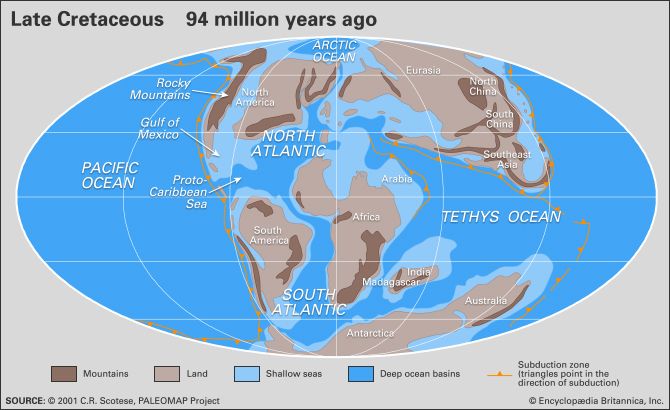
Giganotosaurus (Giganotosaurus carolinii) was a massive theropod dinosaur that inhabited Patagonia during the Cenomanian Stage of the Late Cretaceous Period, approximately 100 to 97 million years ago. Its name, which is Latin for “giant southern lizard,” reflects its status as one of the largest terrestrial carnivores in Earth’s history.1
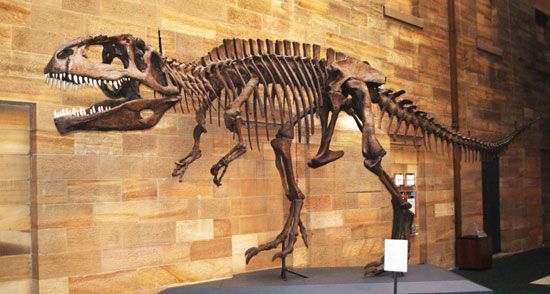
Reaching lengths of 12–13 meters (40–43 feet) and weighing up to 8,000 kg (or potentially more), this predator possessed a large head, serrated teeth, and sharp claws adapted for hunting large sauropod dinosaurs. While often compared to Tyrannosaurus rex, Giganotosaurus lived tens of millions of years earlier on a different continent and is estimated to have been a faster runner. Much of our current understanding of the genus comes from fossils discovered in Argentina beginning in the late 1980s1.1
When and where did Giganotosaurus live?
Giganotosaurus lived during the Cenomanian Stage of the Late Cretaceous Period, approximately 100 million to 97 million years ago.1
Geographically, this dinosaur inhabited the Patagonia region of Argentina. All known fossil remains of the genus have been discovered within this specific area, with the first specimens identified in the late 1980s near Lake Ezequiel and the Candeleros Formation.1
What did Giganotosaurus look like?
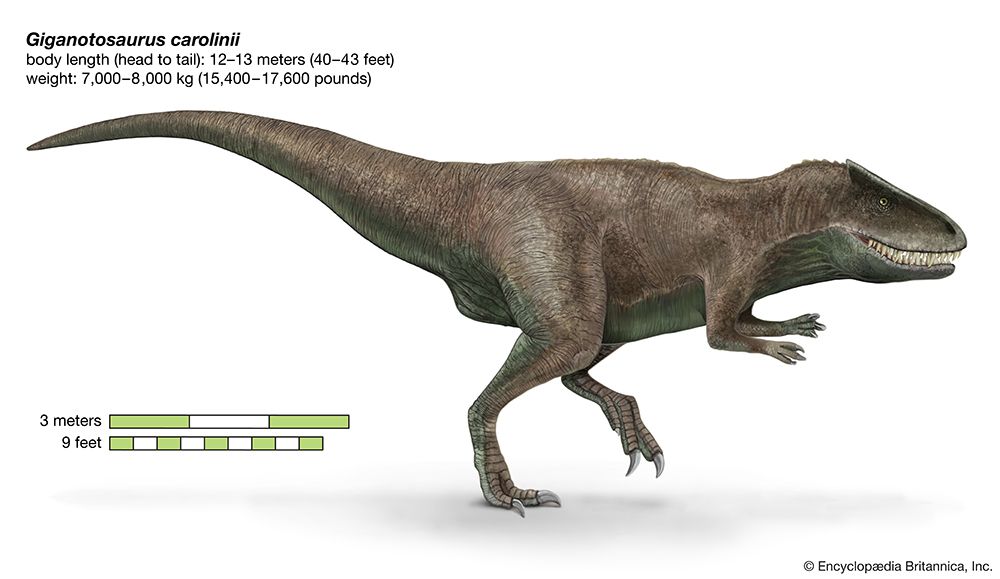
Giganotosaurus was a massive, bipedal theropod dinosaur characterized by a formidable physical build. It reached lengths of 12–13 meters (about 40–43 feet) and stood approximately 7 meters (23 feet) tall, with weight estimates typically ranging from 7,000 to 8,000 kg, though some models suggest it could have reached up to 14,000 kg.1
Its appearance was defined by several key features:
- Head and Jaws: It possessed a large head with a blunted chin and was equipped with dozens of serrated, daggerlike teeth that could grow up to 20 cm (about 8 inches) long.1
- Limbs: The dinosaur had three fingers on each hand and three toes on each foot, all of which featured sharp claws used for defense and rending prey.1
- Body Structure: It had a long tail and a robust skeletal structure, including a heavy pelvis and strong leg bones that supported its massive frame.1
These physical adaptations allowed it to function as a top-tier predator, capable of hunting large sauropod dinosaurs.1
How big was Giganotosaurus compared to other dinosaurs?
Giganotosaurus was among the largest terrestrial carnivores in Earth’s history, with a length of 12–13 meters (about 40–43 feet) and a weight typically estimated between 7,000 and 8,000 kg (about 15,400–17,600 pounds), though some models suggest it could reach up to 14,000 kg (about 30,800 pounds).1
When compared to other massive theropods, its size and physical characteristics are often evaluated as follows:
- Tyrannosaurus rex: While the two are comparable in length, some studies indicate that the largest Giganotosaurus specimens may have exceeded T. rex in mass. Additionally, modeling suggests Giganotosaurus may have been faster, with a top speed of 50.4 km (31.3 miles) per hour compared to 40 km (25 miles) per hour for T. rex.1
- Spinosaurus: This predator was longer than Giganotosaurus, measuring approximately 14–18 meters (about 43–59 feet).1
- Carcharodontosaurus: A close relative in the family Carcharodontosauridae, Carcharodontosaurus is estimated to have reached lengths of 13–14 meters (42–46 feet), with mass estimates for C. saharicus around 6 metric tons (6.6 short tons).5
Sources
- Giganotosaurus — Encyclopædia Britannica
- Cretaceous Period - Paleogeography — Encyclopædia Britannica
- A Journey Through Time Since the Precambrian - Cretaceous Period: 145 million to 66 million years ago — Encyclopædia Britannica
- Bird - The origin of feathers — Encyclopædia Britannica
- Carcharodontosaurus — Encyclopædia Britannica
Published on · 3 min read