Corsica
Corsica’s landscape is distinct from mainland France primarily due to its rugged, mountainous terrain and island geography. While mainland France features…
How does Corsica’s landscape differ from mainland France?
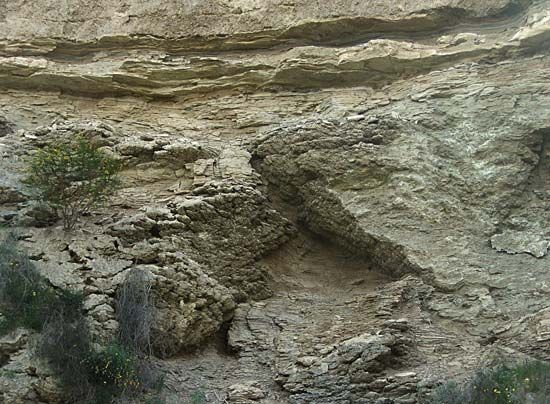
Corsica’s landscape is distinct from mainland France primarily due to its rugged, mountainous terrain and island geography. While mainland France features diverse topography, Corsica is defined by an ancient crystalline massif that covers about two-thirds of the island, creating a dramatic, high-altitude environment with 20 peaks exceeding 6,500 feet.1
Key differences include:
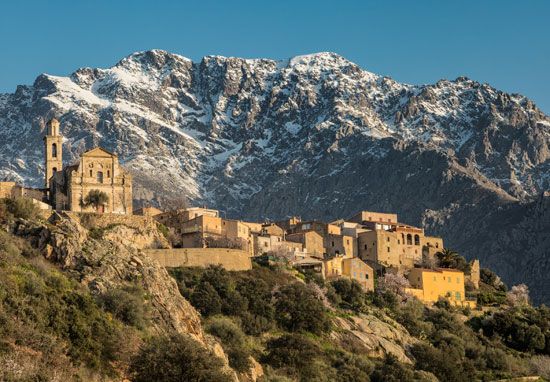
- Topography: Unlike the varied plains and plateaus of the mainland, Corsica is dominated by a central mountain range that descends steeply into deep gulfs and high cliffs on the west, and broken escarpments leading to alluvial plains on the east.1
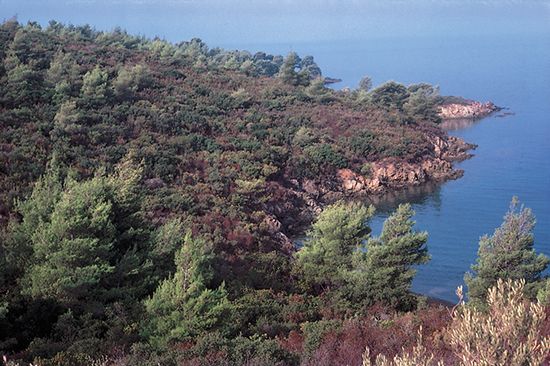
- Vegetation: The island is famous for its maquis—a dense, aromatic scrubland—and extensive forests of chestnut and laricio pine, which cover about one-fifth of the island.1
- Climate: Corsica experiences a distinct Mediterranean climate characterized by abundant precipitation and mild temperatures, which vary significantly with elevation.1
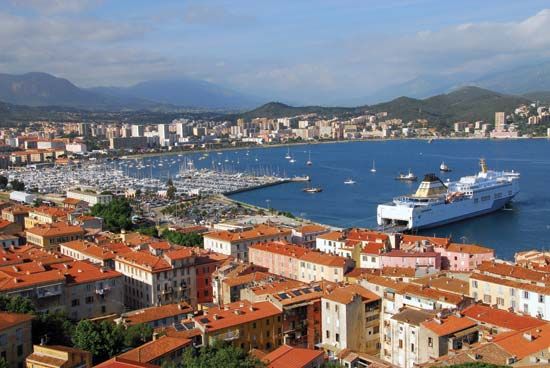
- Settlement Patterns: While the mainland has vast urban centers, Corsica’s population is concentrated in coastal towns, with many interior villages situated at high elevations.1
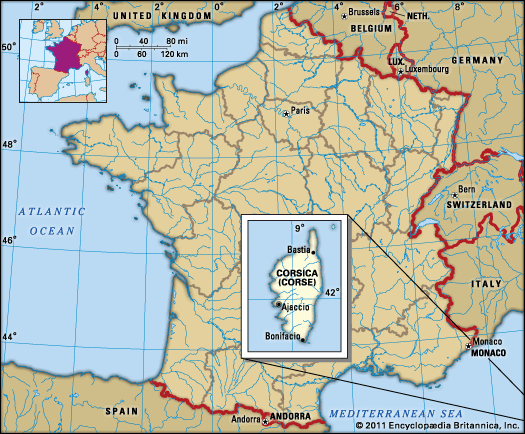
What is the geographical location and size of Corsica?
Corsica is an island in the Mediterranean Sea and a territorial collectivity of France. It is the fourth largest island in the Mediterranean, covering an area of 3,352 square miles (8,681 square km).3
Geographically, the island is situated 105 miles (170 km) from southern France and 56 miles (90 km) from northwestern Italy. It is separated from the island of Sardinia to the south by the 7-mile (11-km) Strait of Bonifacio.13
How did Corsica become a part of France, and what is its current political status?
Corsica’s integration into France followed centuries of shifting control among Mediterranean powers. After a long period of Genoese rule, a nationalist rebellion led by Pasquale Paoli established an independent Corsican republic in 1755. However, in 1768, the Genoese sold their rights to the island to France. French troops subsequently invaded, and by 1769, Corsica became a French province. Aside from brief periods of British, Italian, and German occupation, it has remained a French territory ever since.1
Regarding its current political status, Corsica is a collectivité territoriale (territorial collectivity) of France. While it is often grouped with the country’s regions, its status was officially changed in 1991 to a collectivité territoriale à statut particulier (territorial collectivity with special status). This unique classification grants the island a greater degree of autonomy than that afforded to standard French regions.15
What are the main cultural and linguistic characteristics of Corsica?
Corsica possesses a distinct cultural and linguistic identity shaped by its history and Mediterranean location.
Language
While French is the official language and is spoken by virtually all residents, most Corsicans also use the native dialect known as Corsu. This dialect is closely related to Tuscan and exhibits regional variations between the northern department of Haute-Corse and the southern department of Corse-du-Sud. The roots of this linguistic heritage trace back to the Roman Empire, which introduced the Latin that evolved into the modern dialect.136
Cultural Characteristics
- Religion: Roman Catholicism is the dominant religion on the island.1
- Music and Arts: Traditional folk music remains a vibrant part of local life, performed by groups in towns across the island. Additionally, there has been a notable revival of traditional handicrafts.1
- Heritage: The island is rich in history, featuring numerous megalithic monuments such as dolmens and menhirs that date back to the Neolithic period.17
Sources
- Corsica — Encyclopædia Britannica
- France - Land of France — Encyclopædia Britannica
- Corsica: Top Questions — Encyclopædia Britannica
- Corte — Encyclopædia Britannica
- France - Regional and local government — Encyclopædia Britannica
- Corsican — Merriam-Webster
- Western architecture - Sardinia and Corsica — Encyclopædia Britannica
Published on · 3 min read