Golden Lion Marmoset
The golden lion marmoset (Leontopithecus rosalia), more commonly known as the golden lion tamarin, is a striking primate belonging to the family…
What is golden lion marmoset?
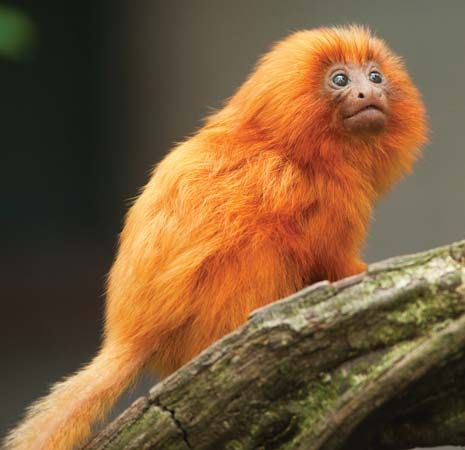
The golden lion marmoset (Leontopithecus rosalia), more commonly known as the golden lion tamarin, is a striking primate belonging to the family Callitrichidae. It is characterized by its long, silky, golden fur, a black face, and a thick, lionlike mane.12
As a member of the tamarin group, this species is larger than “true” marmosets and possesses long, slender fingers used for extracting insects from crevices. These monkeys are found exclusively in fragmented forest habitats within the Brazilian state of Rio de Janeiro. Due to habitat loss and other pressures, the golden lion tamarin is currently listed as an endangered species. Like other lion tamarins, they exhibit complex social behaviors, including potential polyandry, where multiple males may assist in rearing a single female’s offspring.21
What are the main differences between marmosets and tamarins?
While the term “marmoset” is sometimes used broadly to refer to the entire family Callitrichidae, there are distinct biological differences between “true” marmosets and tamarins within this family.2
The primary anatomical difference lies in their dentition:
- “True” Marmosets (genus Callithrix): These possess short lower canine teeth. They are specialized for gnawing tree bark to induce sap flow, using their long lower incisors to create notches in the wood.2
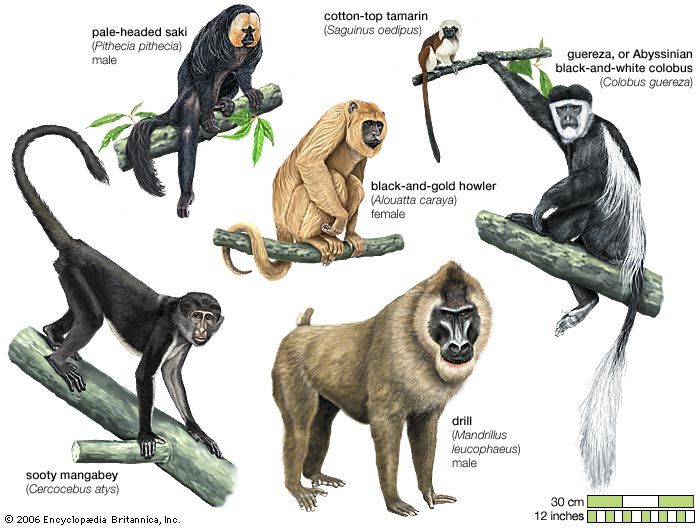
- Tamarins (genera Saguinus and Leontopithecus): These are distinguished by their relatively long lower canine teeth.2
Additional differences include:
- Size and Morphology: Tamarins, particularly the lion tamarins, are generally larger than “true” marmosets. Lion tamarins also possess long, slender hands and fingers adapted for hooking insects out of crevices.2
- Social and Reproductive Behavior: While both groups exhibit social structures where older young assist in rearing infants, reproductive suppression in “true” marmosets is physiological, triggered by the presence of a breeding pair. In contrast, reproductive suppression in some tamarins appears to be behavioral, and they are more likely to tolerate polyandrous systems where two males assist in rearing a single female’s offspring.2
Why is the golden lion tamarin’s habitat in Brazil so fragmented?
The golden lion tamarin’s habitat in the Brazilian state of Rio de Janeiro is highly fragmented primarily due to centuries of extensive human activity and deforestation.
Starting in the 16th century, both Indigenous peoples and European settlers began clearing large tracts of land using slash-and-burn techniques. This initial clearing was followed by the expansion of sugar plantations, coffee farms, and the growth of sprawling urban centers, which collectively obliterated most of the original forests that once covered the region.1
This process of habitat fragmentation has divided large, continuous forest blocks into smaller, isolated patches. For species like the golden lion tamarin, this isolation poses significant threats, including:
- Reduced Connectivity: Increased distances between forest patches make it difficult for animals to move safely, leaving them vulnerable to predators or other hazards.3
- Reproductive Challenges: Fragmentation can hinder reproduction by reducing the likelihood that individuals of reproductive age will encounter one another, potentially leading to genetic bottlenecks.3
- Limited Resources: Small, isolated fragments may lack the necessary space or resources to support territorial animals.3
How do lion tamarins use their long fingers to find food?
Sorry, the Britannica knowledge base does not contain information regarding the specific mechanism by which lion tamarins use their long fingers to find food. While it is noted that lion tamarins possess long, slender hands and fingers adapted for hooking insects out of crevices, the provided search results do not detail the specific behavioral process of how they utilize these features to forage.
Sources
- golden lion marmoset — Encyclopædia Britannica
- marmoset — Encyclopædia Britannica
- Rio de Janeiro — Encyclopædia Britannica
- Brazil - Conservation and ecology — Encyclopædia Britannica
- Atlantic Forest — Merriam-Webster
- Deforestation - Effects — Encyclopædia Britannica
- primate - Hands and feet — Encyclopædia Britannica
- hand — Encyclopædia Britannica
- primate - Diet — Encyclopædia Britannica
Published on · 3 min read