Grasshopper Mouse
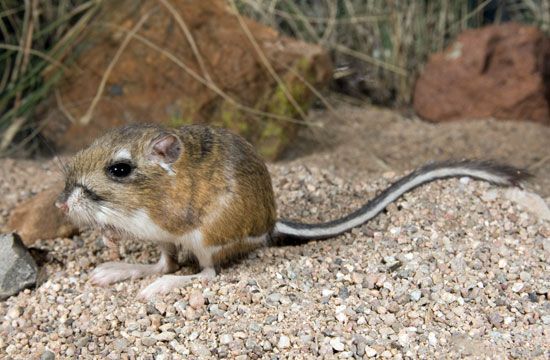
The grasshopper mouse belongs to the genus Onychomys. This name is derived from New Latin, combining the elements onych- (referring to a claw or nail) and…
What is the scientific name of the grasshopper mouse, and how did it get this name?
The grasshopper mouse belongs to the genus Onychomys. This name is derived from New Latin, combining the elements onych- (referring to a claw or nail) and -mys (the Greek-derived term for mouse).12
The common name “grasshopper mouse” reflects the animal’s specialized diet, as these rodents are primarily insectivorous and frequently consume grasshoppers, along with other insects such as beetles, crickets, and scorpions. Unlike many other mice that rely heavily on seeds, these highly territorial and aggressive predators are known for their carnivorous habits, often stalking and killing other small rodents. Because of their unique hunting behavior and vocalizations—which include a high-pitched howl—they are sometimes referred to as “scorpion mice” or described as miniature versions of larger mammalian carnivores.13
How widespread are grasshopper mice, and what types of environments do they inhabit?
Grasshopper mice are found throughout the western regions of North America, ranging from central Canada down through the United States into northern and central Mexico.1
These rodents are specifically adapted to open, semiarid, and arid environments. Their distribution and habitat preferences vary by species:
- Northern grasshopper mouse (Onychomys leucogaster): Inhabits grassland and shrub steppes, spanning from central Canada through the Great Plains and Great Basin into northern Mexico.1
- Southern grasshopper mouse (O. torridus): Prefers warm, very arid, scrubby desert habitats, ranging from southern California, Nevada, and Utah into northeastern Mexico.1
- Mearns’ grasshopper mouse (O. arenicola): Also favors arid, scrubby desert environments, with a range extending from the southwestern United States to central Mexico.1
Grasshopper mice typically reside in burrows, often occupying those previously constructed by prairie dogs, kangaroo rats, or pocket mice, though they also build their own for nesting and food storage.1
How does the grasshopper mouse’s diet differ from that of typical mice?
The dietary habits of the grasshopper mouse differ significantly from those of typical mice, such as the house mouse, which are generally omnivorous and opportunistic feeders that consume a variety of plant and animal matter, including seeds and grains.1
In contrast, the grasshopper mouse is a specialized, insectivorous, and carnivorous predator. Its diet consists primarily of insects, such as grasshoppers, beetles, crickets, and scorpions. Furthermore, these mice actively stalk, kill, and consume other small rodents, including kangaroo rats, white-footed mice, and voles. While typical mice often rely heavily on seeds and grains, seeds constitute only a minor portion of the grasshopper mouse’s diet. Due to their aggressive, territorial nature and their focus on hunting live prey, grasshopper mice are considered small analogues of larger mammalian carnivores.51
How does the grasshopper mouse’s behavior compare to other rodent species?
The behavior of the grasshopper mouse (Onychomys) distinguishes it from most other rodent species through its highly aggressive and territorial nature. While many rodents are opportunistic generalists or herbivores, grasshopper mice are voracious predators that function as small analogues of larger mammalian carnivores.16
Key behavioral differences include:
- Predatory Aggression: Unlike many rodents that primarily forage for vegetation, grasshopper mice actively stalk and kill live prey, including insects and other small rodents.1
- Territoriality: They maintain strong territorial boundaries, which, combined with their low population densities, sets them apart from more social or prolific rodent species like the house mouse or brown rat.16
- Unique Communication: A striking behavioral trait is their use of a high-pitched, pure-tone howl to communicate over long distances. This vocalization is audible to humans and functions similarly to a miniature version of a coyote howl, a behavior not typically observed in other common mouse species.1
We could dive deeper into the evolutionary history of these unique predators or explore how their territorial behavior influences their social interactions.
Sources
- grasshopper mouse — Encyclopædia Britannica
- Onychomys — Merriam-Webster
- grasshopper mouse — Merriam-Webster
- scorpion mouse — Merriam-Webster
- house mouse — Encyclopædia Britannica
- rodent - Natural history — Encyclopædia Britannica
Published on · 3 min read