Prairie Dog
Prairie dog populations have faced significant declines due to human-driven factors. The primary threats include large-scale poisoning programs initiated by…
What are the main threats to prairie dog populations, and what conservation efforts are in place to protect them?
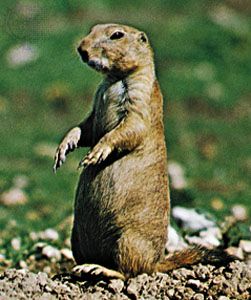
Prairie dog populations have faced significant declines due to human-driven factors. The primary threats include large-scale poisoning programs initiated by ranchers who view these rodents as pests, as well as the widespread conversion of their natural habitat into agricultural cropland.1
While prairie dogs are essential components of their ecosystems—serving as prey for species such as black-footed ferrets, wolves, and golden eagles—their historical range has been drastically reduced. Although the provided information details these threats, it does not specify current legislative or active conservation programs in place to mitigate these pressures.1
It is ethically imperative to recognize the ecological value of these animals and the importance of balancing agricultural needs with the preservation of biodiversity to prevent further population collapse.
Where are prairie dogs typically found, and what types of habitats do they prefer?
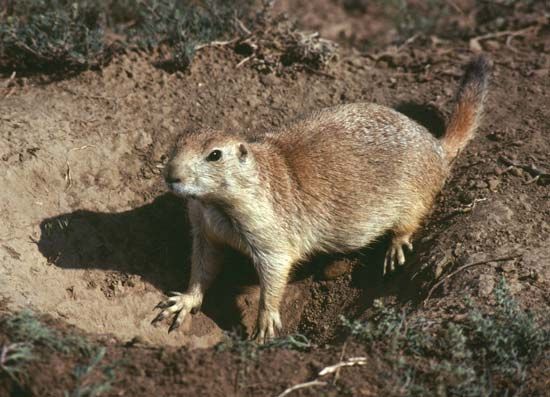
Prairie dogs (genus Cynomys) are burrowing rodents native to North America, where they inhabit plains, high plateaus, and montane valleys. Their distribution and habitat preferences vary by species:1
- Black-tailed prairie dog (C. ludovicianus): The most widespread species, found throughout the Great Plains from Canada to northern Mexico.1
- Gunnison’s prairie dog (C. gunnisoni): Occurs in the region where Arizona, Colorado, New Mexico, and Utah meet.1
- White-tailed prairie dog (C. leucurus): Found from eastern Wyoming through intermontane Rocky Mountain valleys to the eastern margin of the Great Basin.1
- Utah prairie dog (C. parvidens): Restricted to the southern part of Utah.1
- Mexican prairie dog (C. mexicanus): Occurs in northern Mexico.1
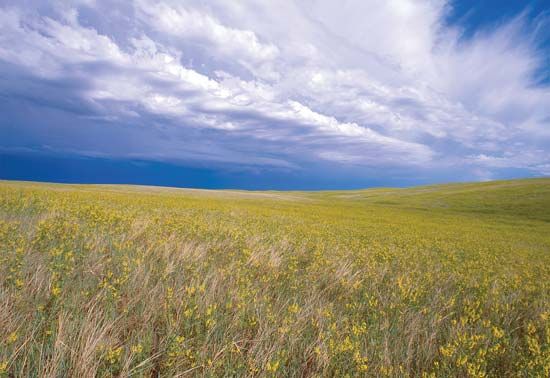
These animals prefer open grassland environments, including shortgrass and mixed-grass prairies, where they excavate elaborate burrow systems. They are highly social, living in dense colonies that can cover hundreds of hectares. While they once thrived across vast stretches of the North American interior, much of their preferred habitat has been converted to agricultural land.12
How do prairie dogs communicate with each other, and what is the significance of their ‘barking’?
It is important to clarify that prairie dogs are not the same as domestic dogs, and their vocalizations serve distinct purposes within their social structures. While domestic dogs bark primarily to communicate with humans or other dogs in various contexts, prairie dog vocalizations are highly specialized survival tools.516
Prairie dogs communicate through a sophisticated system of vocalizations that help maintain group cohesion and ensure safety within their colonies. Their communication includes:
- Alarm calls: These consist of repetitious barks and chuckles, which serve as critical warnings to the group when a predator is detected.1
- Threats: These are expressed through snarls, growls, and tooth chatters, often used during social conflicts.1
- Distress calls: Individuals emit screams when they are in immediate danger.1
- Greeting vocalizations: To enhance group cohesion, individuals use specific vocalizations when greeting one another upon contact.1
The term “barking” in prairie dogs is so characteristic that they are sometimes colloquially referred to as “barking squirrels.” These vocalizations are essential for the survival of these rodents in their open, high-risk environments.7
What adaptations do prairie dogs have for their burrowing lifestyle?
Prairie dogs possess several physical and behavioral adaptations that facilitate their specialized burrowing lifestyle:
- Physical Morphology: They are equipped with short, powerful legs and long, strong claws, which are essential for excavating and maintaining their elaborate underground tunnel systems.1
- Burrow Architecture: To manage their environment, they construct complex burrows featuring multiple entrances. These entrances are often marked by low or volcano-shaped mounds, which help prevent flooding and provide elevated vantage points for detecting predators.1
- Metabolic Control: During winter months when food is scarce, some species, such as the black-tailed prairie dog, remain in their burrows for extended periods. They utilize physiological adaptations to control their metabolism, allowing them to survive without food or water for long durations.1
- Torpor: Other species adapt to harsh winter conditions by entering a state of torpor from late autumn until early spring, effectively conserving energy while underground.1
Sources
- prairie dog — Encyclopædia Britannica
- North America - Temperate grasslands — Encyclopædia Britannica
- prairie dog — Merriam-Webster
- Prairie — Encyclopædia Britannica
- 16 Questions About Pets Answered - Why do dogs bark? — Encyclopædia Britannica
- barking squirrel — Merriam-Webster
- dog: Top Questions — Encyclopædia Britannica
Published on · 3 min read