Gray Wolf
The gray wolf (Canis lupus) is the largest wild member of the Canidae family. Its physical characteristics are primarily defined by a robust, muscular build…
What are the physical characteristics that distinguish gray wolves from other canines?
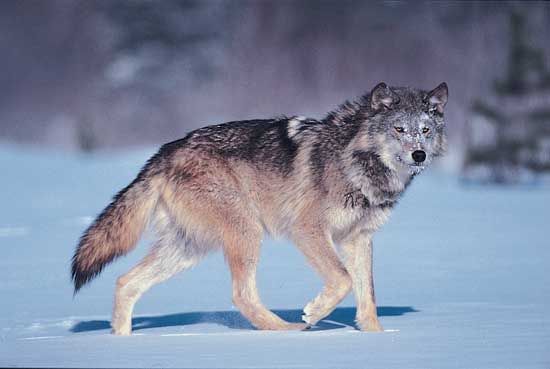
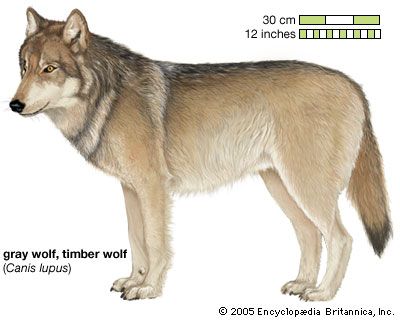
The gray wolf (Canis lupus) is the largest wild member of the Canidae family. Its physical characteristics are primarily defined by a robust, muscular build engineered for endurance and predatory efficiency.1234
Key physical traits that distinguish the gray wolf include:
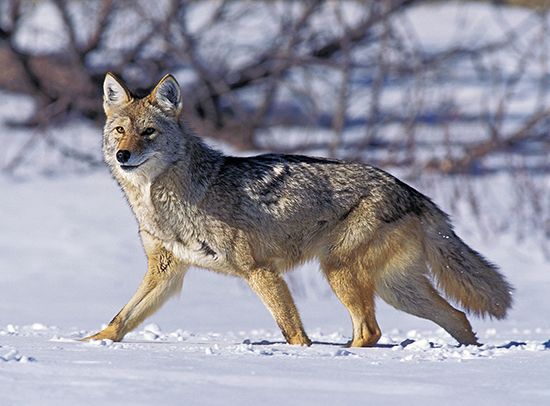
- Size and Build: Gray wolves are significantly larger and more robust than other wild canids like coyotes canids like coyotes. They typically weigh between 14 and 65 kg (31 to 143 pounds) and stand about 76 cm (30 inches) tall at the shoulder. Their frame features a deep but narrow chest, long legs, and large feet, which are specifically adapted for extensive travel and pursuing prey at speeds up to 60 km (37 miles) per hour.423
- Dentition and Jaws: They possess powerful jaws and large canine teeth that facilitate their role as apex predators of large hoofed mammals.23
- Appearance: A typical adult is about 2 metres (6.6 feet) long, including a bushy tail. Their fur color varies by region—ranging from gray, brown, and reddish to black or white—with light-colored coats being common in Arctic regions.23
What are some of the subspecies of gray wolves, and how do they differ?
The classification of gray wolf (Canis lupus) subspecies is a subject of ongoing scientific debate, with estimates ranging from 5 to over 30 recognized subspecies worldwide. Because taxonomists often disagree on the criteria for these distinctions, there is no single, universally accepted list.3261
Variation Among Subspecies
Subspecies of the gray wolf vary significantly in size, coloration, and geographic distribution. These differences are often adaptations to their specific environments:6
- Size: Generally, the largest wolves are found in northern latitudes, such as in Alaska, west-central Canada, and northern Asia, where they may weigh up to 65 kg (143 pounds). Conversely, the smallest wolves inhabit southern regions, including the Middle East, Arabia, and India.25
- Coloration: While gray is the most common coat color, subspecies may exhibit brown, reddish, black, or white fur. Wolves in Arctic regions are frequently light-colored or white, providing camouflage in snowy habitats.25
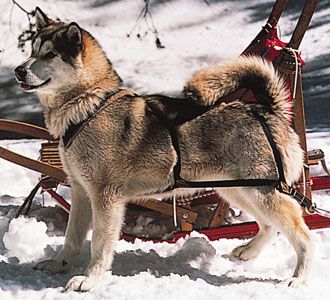
- Examples: Taxonomic examples include the northern timber wolf (C. lupus occidentalis) and the domestic dog (C. lupus familiaris), which is classified as a subspecies of the gray wolf.16
Taxonomic Complexity
The classification of certain “wolves” has been complicated by hybridization. For instance, the red wolf and the eastern wolf were historically considered subspecies of the gray wolf, but modern molecular studies suggest they are hybrids of gray wolves and coyotes. As genetic research continues, the recognized number and status of these subspecies remain subject to revision.71
What is the typical habitat and geographical distribution of gray wolves?
The gray wolf (Canis lupus) historically possessed one of the largest distributions of any land mammal, spanning the entire Northern Hemisphere above 20° N latitude, including North America, Europe, Asia, and Africa.82
Habitat and Range
Gray wolves are highly adaptable and historically occupied nearly every type of habitat within their range, including forests and tundra, with the notable exceptions of tropical forests and the most arid deserts. While often perceived as strictly wilderness animals, they are capable of thriving near human populations provided they are not excessively persecuted and food sources remain available.843
Current Distribution
Due to human activity, their range has been reduced to approximately two-thirds of its historical extent.38
- North America: Populations are concentrated in Canada, Alaska, and parts of the United States, including Minnesota, Michigan, Wisconsin, and areas surrounding Yellowstone National Park.38
- Eurasia: Populations are stable or increasing in many countries, particularly in Scandinavia and southern Europe, with total numbers exceeding 100,000.8
How do gray wolves communicate with each other within their packs?
Gray wolves are highly social animals that rely on a sophisticated system of communication to maintain their dominance hierarchy and strengthen social bonds within their family groups. They primarily communicate through three methods:910
- Visual Signaling: Wolves use facial expressions, specific body postures, and tail positions to convey information and assert their status within the pack.9
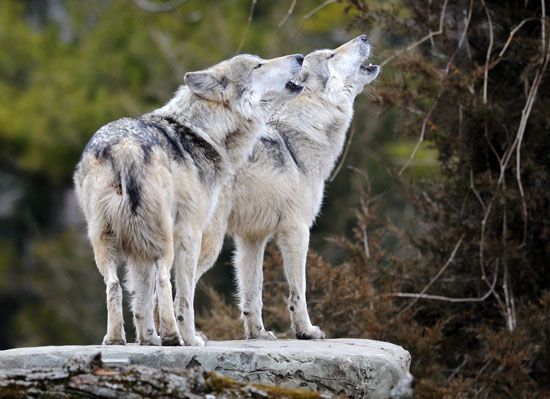
- Vocalizations: Howling is a primary form of communication. It allows pack members to locate one another when separated during hunts and serves to reinforce social connections. Research indicates that wolves often howl to pack members they share a strong, affectionate bond with, rather than out of anxiety. Additionally, aggressive howls are used to warn rival packs to stay away from their territory.910
- Scent Marking: Wolves mark their territory using urine and feces. This chemical signaling informs neighboring packs of the territory’s boundaries, helping to prevent unwanted intrusions.910
We could dive deeper into how these communication methods change when wolves interact with other species or humans.
Sources
- gray wolf - Physical description — Encyclopædia Britannica
- wolf - Gray wolf — Encyclopædia Britannica
- gray wolf — Encyclopædia Britannica
- What is the difference between a wolf and a coyote? — Encyclopædia Britannica
- dog - Wolves — Encyclopædia Britannica
- taxonomy - Ranks — Encyclopædia Britannica
- wolf - Other wolves — Encyclopædia Britannica
- gray wolf - Conservation status — Encyclopædia Britannica
- gray wolf - Pack behaviour — Encyclopædia Britannica
- Why Do Wolves Howl? — Encyclopædia Britannica
Published on · 4 min read