Gruiform
Human interaction with Gruiform birds has been characterized primarily by hunting and habitat impact, though their overall influence on human interests…
How have humans interacted with Gruiform birds throughout history?
Human interaction with Gruiform birds has been characterized primarily by hunting and habitat impact, though their overall influence on human interests remains limited.
Historically, humans have hunted various larger species for food or sport. In the United States, specific rails, such as the king rail and clapper rail, are pursued as game birds. Conversely, some species, like the sandhill crane and the Australian brolga, are occasionally viewed as pests when they damage grain crops.12
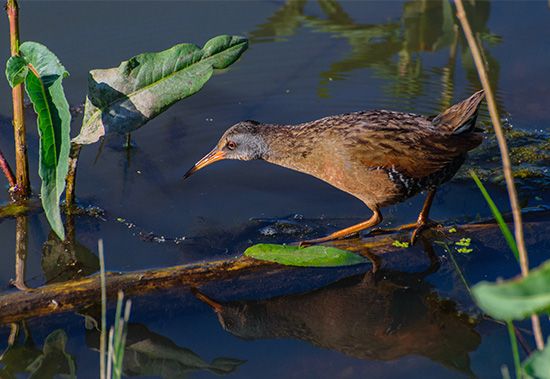
Human activity has also significantly contributed to the decline of many Gruiform populations. Since 1600, at least 18 species of rails have gone extinct, often because flightless island-dwelling populations were unable to survive hunting by humans or the introduction of non-native predators during sea voyages. Today, many Gruiforms, including the whooping crane, are listed as vulnerable or endangered due to hunting pressures and modern agricultural practices. While these birds have been declining for millions of years due to changing ecological conditions, human intervention has accelerated these trends in recent centuries.31
What are the typical nesting and breeding behaviors of Gruiform birds?
Gruiform birds exhibit a diverse range of nesting and breeding behaviors, often beginning with elaborate courtship rituals.
Courtship and Pair Formation
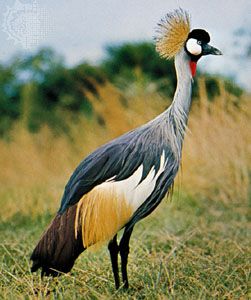
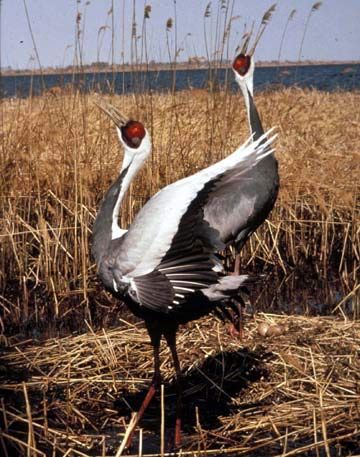
Many Gruiforms, such as cranes, engage in complex “dances” involving leaping, bowing, and tossing objects like sticks or leaves. These birds often pair for life. Other species, like rails, rely primarily on vocalizations to establish territories and attract mates. In some groups, such as button quails, sex roles are reversed; the female is more brightly colored and performs the courtship displays.56
Nesting Sites and Construction
Nesting habits vary significantly across the order:
- Ground Nesters: Many species, including bustards, lay eggs on bare ground with minimal nest construction. Others, like cranes, build mounds of vegetation in shallow water, while rails construct simple grass nests often concealed by pulled-down vegetation.5
- Elevated Nesters: Finfoots and sun bitterns typically nest on tree branches, often overhanging water. Mesites build stick nests in trees, requiring accessible branches for their flightless young to climb.5
Incubation and Parental Care
Clutch sizes range from a single egg in the kagu to over 10 in some rails. While both sexes typically share incubation and care, there are notable exceptions:
- Male-only care: In polyandrous button quails, males perform all incubation and chick-rearing duties.
- Female-only care: In bustards and trumpeters, the female handles these responsibilities alone.
Most young are downy and leave the nest shortly after hatching, though some species, such as the sun bittern and bustards, care for their young at the nest for a longer period.5
What role do Gruiform birds play in their ecosystems?
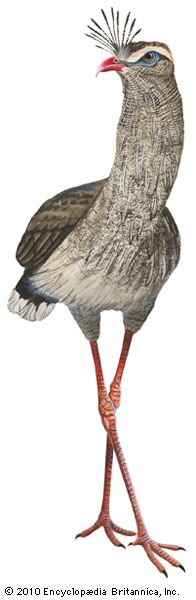
Gruiform birds occupy diverse ecological niches, ranging from aquatic marshes to arid grasslands, and function primarily as omnivorous consumers within their respective environments.81
As a group, they play a significant role in controlling populations of small animals. Their diet is generally weighted toward animal matter, including mollusks, crustaceans, frogs, insects, and small vertebrates like lizards and rodents. For instance, limpkins specialize in consuming large snails, while cranes act as opportunistic predators that forage for a wide variety of prey, including snakes and small mammals.8
In addition to their role as predators, many species contribute to the cycling of plant material. Some, such as coots and gallinules, consume significant amounts of aquatic vegetation, while others like bustards forage on grasses and various plant crops. Through their foraging behaviors—such as digging for roots and bulbs with their powerful bills or probing ground debris—these birds also influence the physical structure of their habitats.8
How do Gruiform birds communicate with each other?
Gruiform birds communicate through a sophisticated combination of visual displays and vocalizations, which are essential for courtship, territorial defense, and social interaction.
Visual Communication
Many Gruiforms are renowned for their elaborate physical displays. Cranes perform iconic dances involving rhythmic bowing, head-bobbing, and leaping, often while tossing objects like sticks or grass into the air. Other species utilize specialized plumage and posture to convey information:106
- Sun Bitterns: Spread their wings and tails to reveal intricate color patterns while running in circles.106
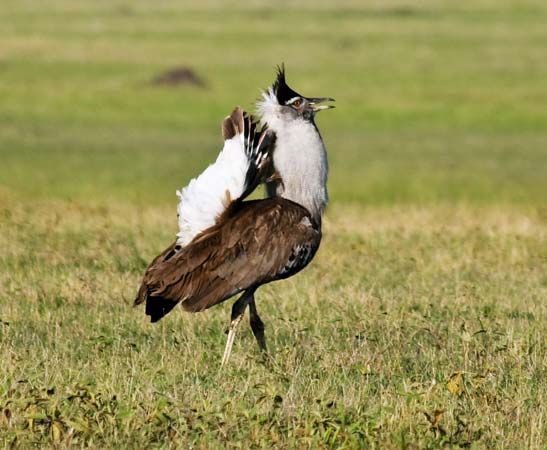
- Bustards: During the breeding season, males puff out specialized feathers to transform into an “enormous feather ball” to attract females.6
- Kagus: Use aggressive posturing, such as raising crest feathers and spreading wings, to intimidate adversaries.6
Vocal Communication
Vocalizations are critical for many species, particularly rails, which rely on distinct songs and calls to establish territories and attract mates. These sounds vary widely, ranging from the explosive whinny of the sora to the low, tuning-fork-like moaning of the buff-spotted crake. Larger species, such as trumpeters, are named for their loud, resonant cries, while male bustards use specialized neck pouches to produce booming calls that can resemble the roar of a lion.6
Sources
- Gruiform — Encyclopædia Britannica
- Gruiform - Evolution and paleontology — Encyclopædia Britannica
- crane — Merriam-Webster
- Rail — Encyclopædia Britannica
- Gruiform - Nesting — Encyclopædia Britannica
- Gruiform - Courtship — Encyclopædia Britannica
- Animal social behavior - Social interactions involving the costs and benefits of parental care — Encyclopædia Britannica
- Gruiform - Food habits — Encyclopædia Britannica
- Gruiform - Habitat — Encyclopædia Britannica
- Gruiform - General features — Encyclopædia Britannica
Published on · 4 min read