Kagu
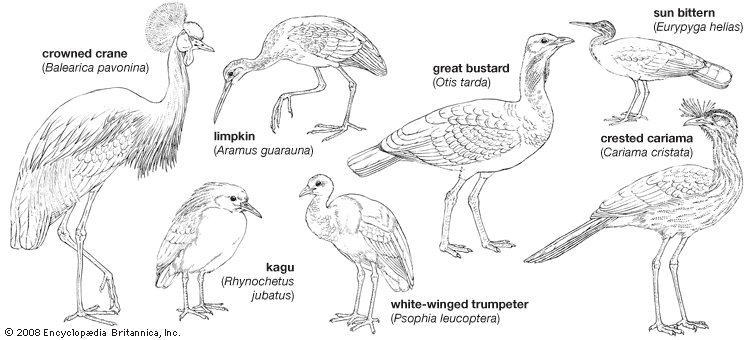
The Kagu (Rhynochetus jubatus) is a nearly extinct, virtually flightless bird native to New Caledonia. It is the sole member of the family Rhynochetidae.
What is Kagu?
The Kagu (Rhynochetus jubatus) is a nearly extinct, virtually flightless bird native to New Caledonia. It is the sole member of the family Rhynochetidae.1
Measuring about 55 cm (22 inches) in length, the kagu is a chunky bird characterized by loose, gray plumage and an erectile crest. Its bill, legs, and eyes are a distinctive reddish-orange. During courtship, the bird performs a dance with its wings spread, revealing attractive black, white, and rust-colored spots. Primarily nocturnal, it is known for its loud, piercing, or rattling calls and for foraging in forests for insects and snails.12
The species has faced a severe population decline, largely due to the introduction of dogs to its native habitat.1
Why is the Kagu considered a flightless bird?
The Kagu (Rhynochetus jubatus) is considered a flightless bird because it has lost the ability to fly through the process of evolution. While scientists generally accept that flightless birds are descended from ancestors that could fly, the specific reasons for this loss of flight are not fully understood.13
One prominent hypothesis suggests that flight became unnecessary for birds that colonized isolated habitats lacking predators. In such environments, the energy-intensive adaptation of flight was no longer required for survival, and over time, other traits were favored by natural selection.3
Because these birds lost the defensive advantage of flight, they became highly vulnerable when non-native predators—such as dogs in the case of the Kagu—were introduced to their environments. This loss of flight is a secondary condition, as the Kagu belongs to a family of birds whose ancestors were capable of flight.132
What makes New Caledonia’s ecosystem unique for birds?
New Caledonia’s ecosystem is uniquely significant for birds primarily due to its isolation and diverse, protected habitats. The island is encircled by one of the world’s longest barrier reefs, which, along with its extensive lagoons, forms a UNESCO World Heritage site that supports a wide array of marine and associated life.56
On land, the island features a subtropical climate with varied terrain, ranging from dense forests along the east coast to savannas in the west. This environment has allowed for the evolution of specialized, endemic species, most notably the Kagu. As an isolated island, New Caledonia historically provided a predator-free environment that allowed certain birds to evolve without the need for flight. However, this same isolation makes the local bird population highly vulnerable to external threats; the introduction of non-native species, such as dogs, has had a devastating impact on endemic birds like the Kagu, which lack natural defenses against such predators.512
How do conservationists protect endangered species like the Kagu?
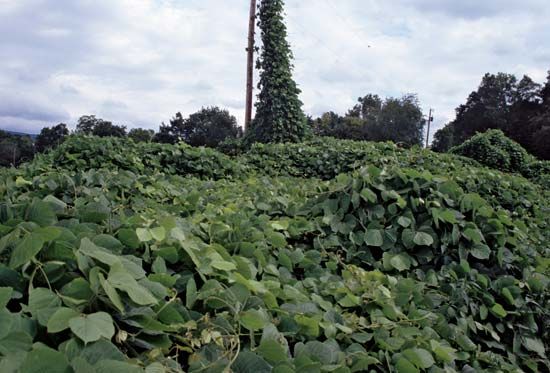
Conservationists protect endangered species like the Kagu—which has suffered primarily due to the introduction of dogs—by focusing on the management of invasive species and habitat restoration.19
Effective conservation strategies include:
- Prevention: The most critical step is preventing the introduction of exotic species through stricter controls at ports, including the inspection of shipping materials to stop “stowaway” organisms.9
- Eradication Programs: For species already established, conservationists employ aggressive monitoring and removal programs. While these efforts are often expensive and time-consuming, they are essential for protecting biodiversity.910
- Biological Control: In some cases, such as with invasive plants, experts may introduce specific insects to manage populations. However, this approach requires caution to ensure the introduced agents do not harm native species.10
- Education: Providing citizens with the knowledge and resources to manage exotic plants and animals in their regions is vital to preventing further biodiversity loss.9
We could dive deeper into the specific challenges of managing invasive predators on isolated islands.
Sources
- Kagu — Encyclopædia Britannica
- kagu — Merriam-Webster
- Bird - Flightlessness — Encyclopædia Britannica
- Flightless bird — Encyclopædia Britannica
- New Caledonia — Encyclopædia Britannica
- New Caledonia — Encyclopædia Britannica
- Psittaciform - Evolution — Encyclopædia Britannica
- Columbiform - Evolution and paleontology — Encyclopædia Britannica
- invasive species - Solutions — Encyclopædia Britannica
- conservation - Removing invasive species — Encyclopædia Britannica
Published on · 3 min read