Gryphaea
Gryphaea is an extinct genus of mollusks related to modern oysters, known primarily through fossils found in rocks dating from the Jurassic Period to the…
What is Gryphaea?
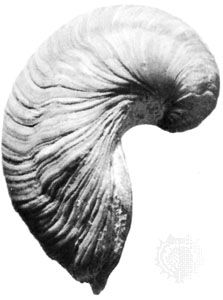
Gryphaea is an extinct genus of mollusks related to modern oysters, known primarily through fossils found in rocks dating from the Jurassic Period to the Eocene Epoch.12
These organisms are distinguished by their unique, asymmetrical shell structure. The left valve was significantly larger and more convoluted, featuring an incurved beak, while the right valve remained relatively flat. In some mature specimens, the shell’s coiling became so extreme that it likely prevented the animal from opening its shell, ultimately leading to its death. These fossils are often colloquially referred to as “devil’s toenails” due to their distinct, curved appearance.12
How do fossils help scientists understand the Jurassic Period?
Fossils are essential for understanding the Jurassic Period, serving as the primary evidence for reconstructing Earth’s history during that time. Scientists utilize fossils in several key ways:3
- Establishing Time Scales: Certain organisms, such as ammonites and ostracods, are used as index fossils. Because these species were abundant, widespread, and evolved rapidly, their presence in rock strata allows scientists to correlate and sequence geological layers, effectively dividing the Jurassic into precise time intervals.45
- Reconstructing Paleoclimate: By analyzing the distribution of fossil plants and marine invertebrates, researchers can infer ancient climate conditions. For example, the presence of warm-adapted plants at high latitudes suggests an expanded tropical zone, while oxygen isotope analysis in marine fossils provides data on ancient water temperatures.6
- Mapping Evolutionary History: The fossil record documents the recovery of marine ecosystems following mass extinctions, such as the one at the Triassic-Jurassic boundary. It also tracks the “Mesozoic Marine Revolution,” an evolutionary arms race between predators and prey that drove significant diversification in marine life.75
What are the main differences between Gryphaea and modern oysters?
While Gryphaea is closely related to modern oysters, it exhibits distinct morphological differences that set it apart from its living relatives.
The primary differences include:
- Shell Morphology: Gryphaea is characterized by a highly asymmetrical shell. The left valve is significantly larger and more convoluted, featuring a prominent, incurved beak, while the right valve remains relatively flat. In contrast, modern oysters typically exhibit more uniform or less extreme shell growth patterns.12
- Growth Limitations: In mature Gryphaea specimens, the coiling of the shell often became so pronounced that it likely prevented the animal from opening its shell entirely, which would have resulted in the organism’s death. Modern oysters do not exhibit this specific evolutionary constraint, as they maintain the ability to open their shells throughout their lifespan.1
- Surface Markings: Gryphaea shells often feature fine markings that extend across the shell at right angles to the direction of growth, a feature distinct from the typical growth patterns seen in contemporary oyster species.1
Why are these fossils often called devil’s toenails?
The fossils of the genus Gryphaea are commonly referred to as “devil’s toenails” due to their distinctively curved and convoluted shape. The large, thick left valve of the shell often features a prominent, incurved appearance that resembles a large, claw-like or twisted toenail, which led to this descriptive folk name.1
Sources
- Gryphaea — Encyclopædia Britannica
- Gryphaea — Merriam-Webster
- index fossil — Encyclopædia Britannica
- Jurassic Period - Marine life — Encyclopædia Britannica
- Jurassic Period - Paleoclimate — Encyclopædia Britannica
- Jurassic Period - Protists and invertebrates — Encyclopædia Britannica
- geologic time — Encyclopædia Britannica
Published on · 2 min read