Gulf of Suez
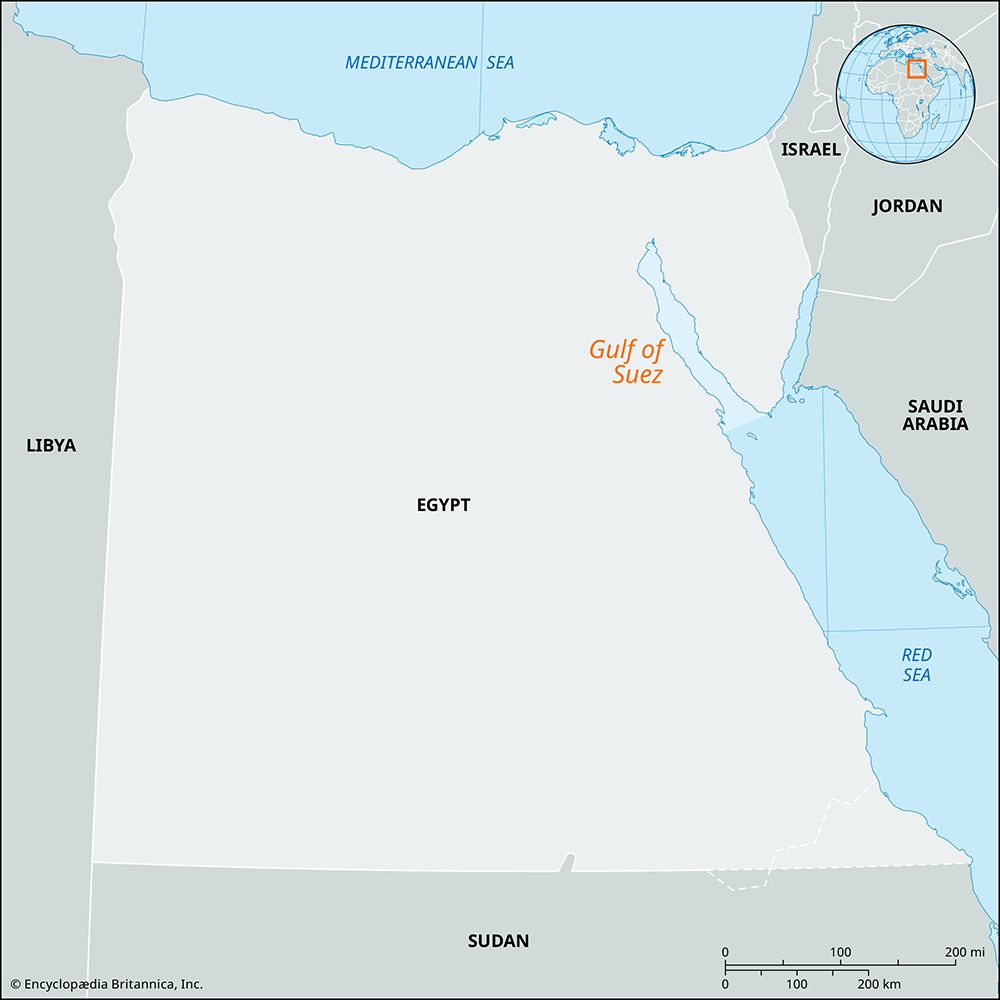
The Gulf of Suez is the northwestern arm of the Red Sea, situated between the African mainland to the west and the Sinai Peninsula to the east in Egypt. It…
What is Gulf of Suez?
The Gulf of Suez is the northwestern arm of the Red Sea, situated between the African mainland to the west and the Sinai Peninsula to the east in Egypt. It extends 195 miles (314 km) from its mouth at the Strait of Jubal to the city of Suez, with a width ranging from 12 to 20 miles (19 to 32 km).1
The gulf serves as a vital shipping route and is linked to the Mediterranean Sea via the Suez Canal. While settlements along the gulf are primarily limited to small fishing and mining villages, the region became significant for its oil resources, with numerous onshore and offshore discoveries made during the 1970s and 1980s. Additionally, the harbour of Abū Zanīmah on the Sinai coast supports local manganese mining operations.1
How does the Suez Canal impact global trade?
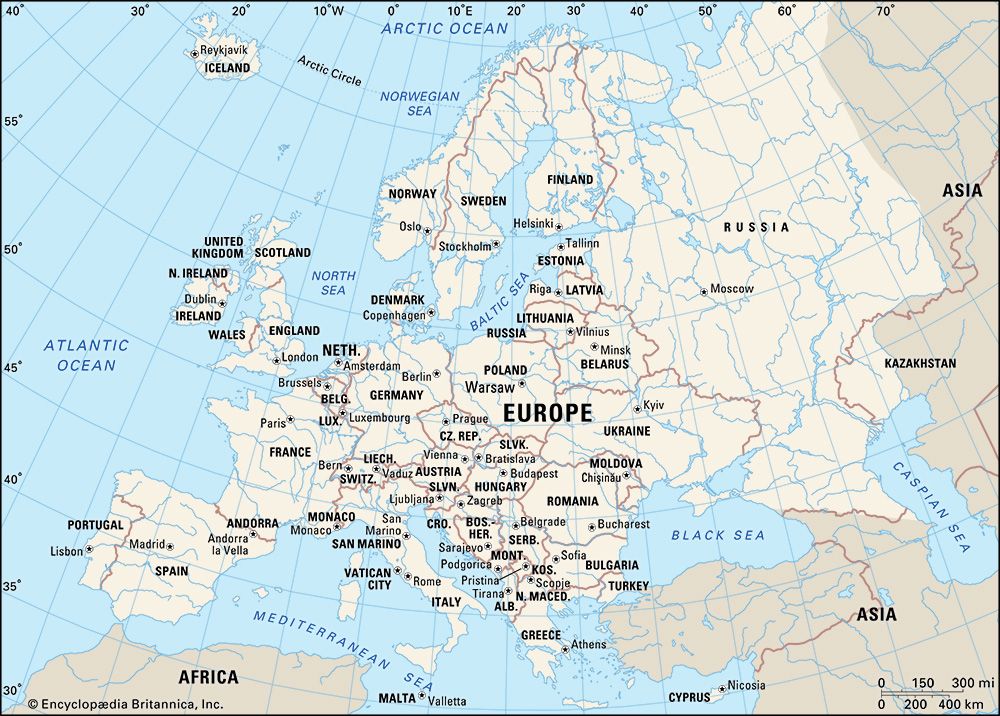
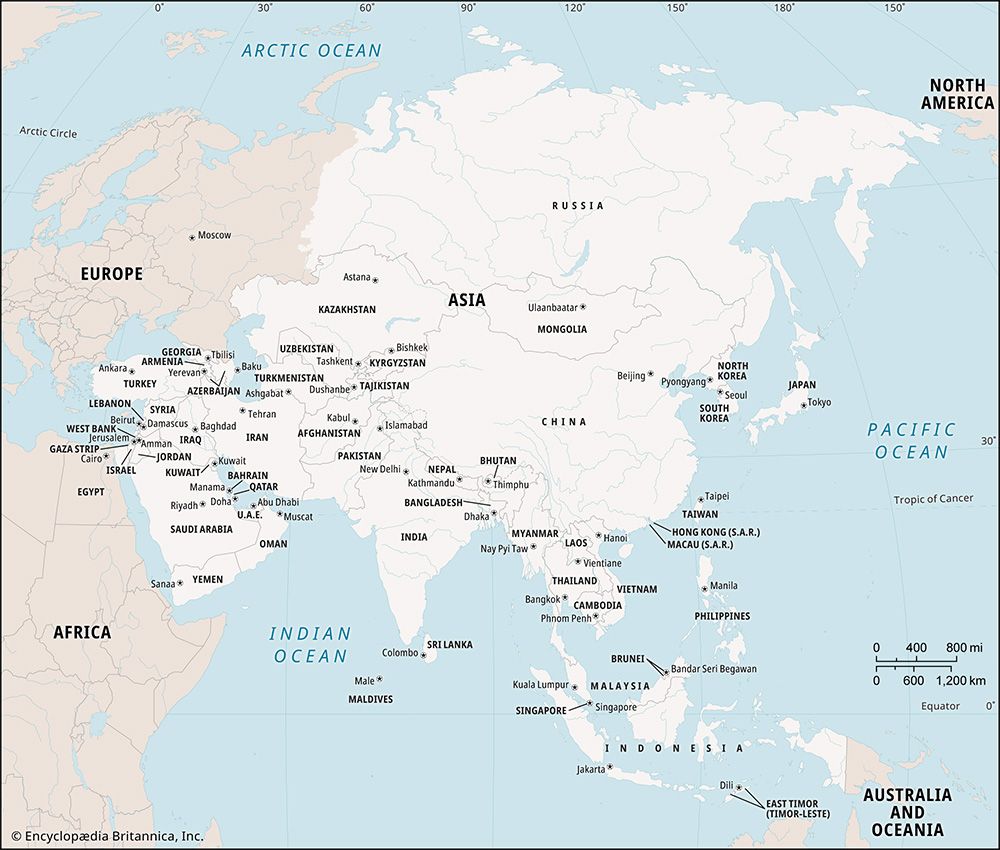
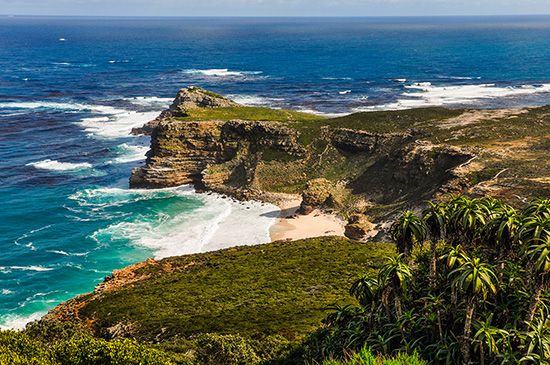
The Suez Canal is a critical artery of global trade, serving as the shortest maritime route between Europe and Asia by connecting the Mediterranean Sea to the Red Sea. Before its completion in 1869, ships traveling between these regions were forced to undertake the significantly longer journey around the Cape of Good Hope at the southern tip of Africa.36
The canal’s impact on trade is defined by several key factors:
- Efficiency: By providing a direct, lockless passage, the canal drastically reduces transit times and costs for international shipping.64
- Cargo Diversity: While historically vital for crude oil and petroleum shipments, the canal now facilitates a wide range of goods, including grain, ores, metals, and a growing volume of container traffic.4
- Strategic Vulnerability: Because it is a central hub, disruptions—such as the 2021 Ever Given blockage or recent security threats from the Houthi movement—can have immediate, widespread effects on global supply chains.67
What is the geography of the Sinai Peninsula?
The Sinai Peninsula is a triangular, 23,500-square-mile (61,000-square-km) landmass that serves as a bridge between Africa and Asia. Its geography is defined by two distinct regions:89
- The Southern Mountains: This area is characterized by rugged, igneous, and sharply serrated peaks, including Mount Catherine, the highest point in Egypt at 8,668 feet (2,642 meters). The terrain is deeply incised by canyonlike wadis that drain toward the Gulf of Suez and the Gulf of Aqaba.89
- The Northern Plateau: Covering two-thirds of the peninsula, this region consists of the Al-Tīh and Al-ʿAjmah plateaus. It slopes northward toward the Mediterranean Sea and features the extensive Wadi Al-ʿArīsh drainage basin, dome-shaped hills, and coastal plains with significant sand dunes.89
The peninsula experiences an arid climate, though the southern mountains are cooler and receive more precipitation than the low-lying north. While vegetation is mostly ephemeral, the region supports diverse wildlife and contains valuable mineral resources, including petroleum and manganese.9
How was the Suez Canal constructed?
The construction of the Suez Canal was a monumental engineering feat that transformed global maritime trade. Following a preliminary concession granted in 1854 by the Egyptian viceroy Saʿīd Pasha, Ferdinand de Lesseps formed the Suez Canal Company to oversee the project.106
Construction began in 1859 and took 10 years to complete, facing significant challenges including harsh climates, labor shortages, and a cholera epidemic. The process evolved from manual labor—where peasants were drafted to dig with picks and baskets—to the use of advanced steam-powered dredgers and shovels. Because the canal was designed as a lockless, sea-level waterway, engineers utilized the natural depressions of Lake Timsah and the Bitter Lakes to facilitate the path. Additionally, a “Sweet Water Canal” was constructed to provide fresh water to the arid region, supporting the workforce.1062
The 193-km (120-mile) waterway was officially opened on November 17, 1869, successfully linking the Mediterranean Sea to the Red Sea.1062
Sources
- Gulf of Suez — Encyclopædia Britannica
- Suez Canal — Encyclopædia Britannica
- Suez Canal: Top Questions — Encyclopædia Britannica
- Suez Canal - Operation — Encyclopædia Britannica
- Arabian Sea - Transportation — Encyclopædia Britannica
- canals and inland waterways - The Suez Canal — Encyclopædia Britannica
- Suez Canal - International status — Encyclopædia Britannica
- Egypt - Sinai Peninsula — Encyclopædia Britannica
- Sinai Peninsula — Encyclopædia Britannica
- Suez Canal - Construction — Encyclopædia Britannica
Published on · 3 min read