Gulf of Aqaba
The Gulf of Aqaba is the northeastern arm of the Red Sea, situated in a deep cleft between the Sinai Peninsula and Saudi Arabia. It is a significant…
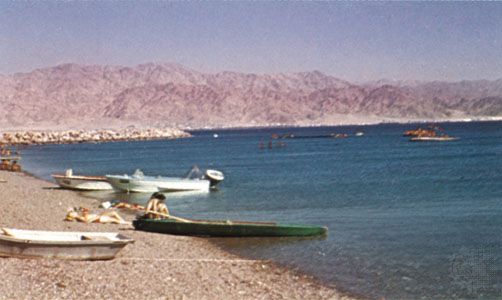
Where is the Gulf of Aqaba located, and which countries border it?
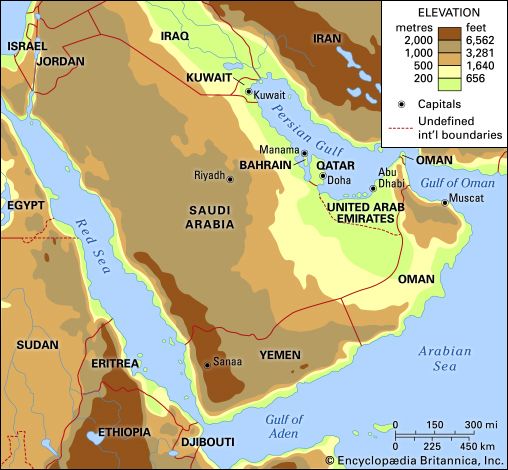
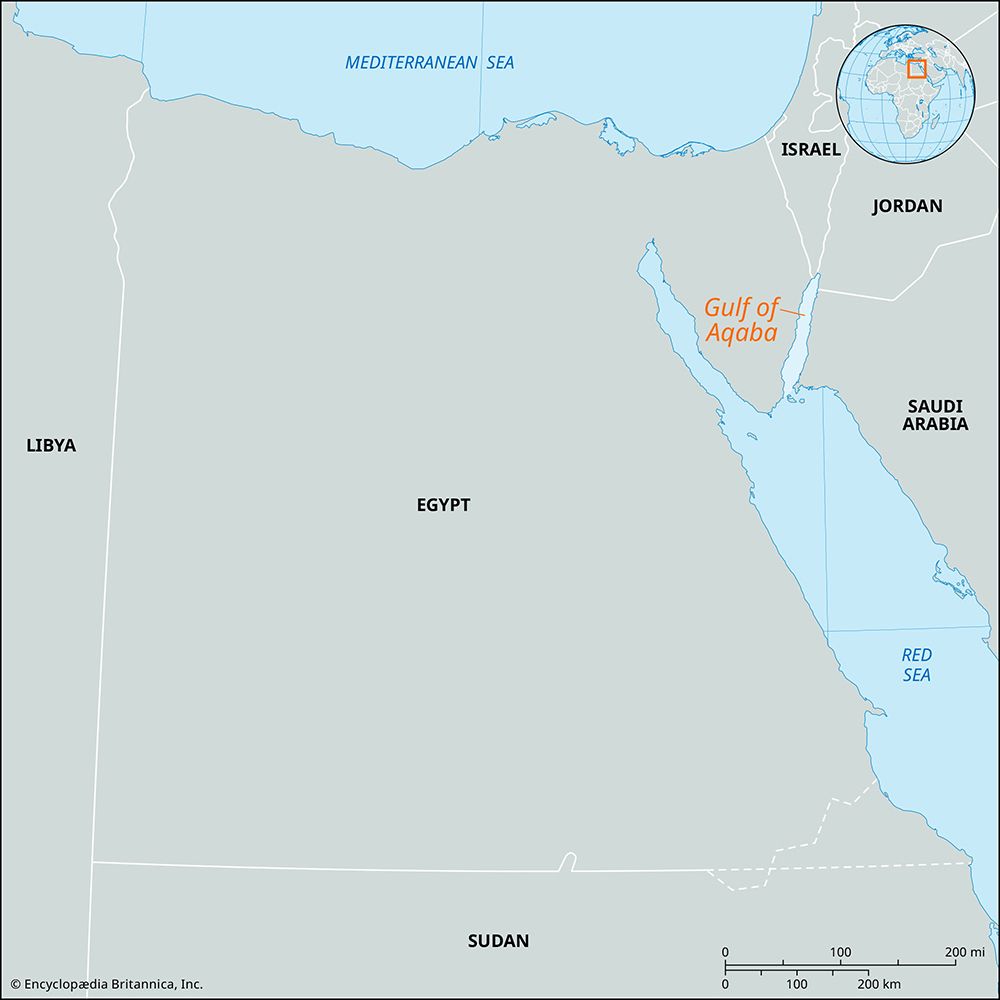
The Gulf of Aqaba is the northeastern arm of the Red Sea, situated in a deep cleft between the Sinai Peninsula and Saudi Arabia. It is a significant geological feature forming part of the East African Rift System.1
The gulf is bordered by four countries:
- Egypt: Located along the western coast of the Sinai Peninsula.1
- Israel: Maintains a coastline at the head of the gulf, featuring the port of Elat.1
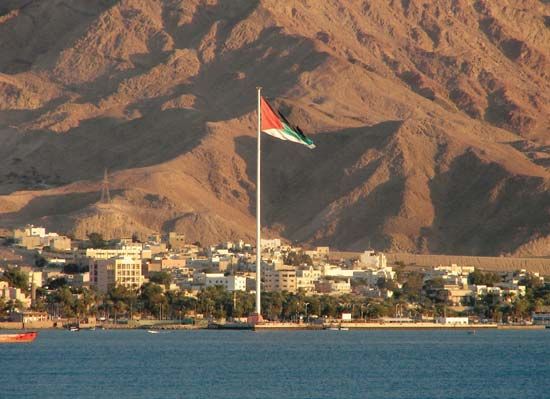
- Jordan: Possesses a 16-mile (26 km) coastline in the southwest, where its only port, Al-Aqabah, is located.12
- Saudi Arabia: Borders the eastern side of the gulf.1
Navigation within the gulf can be challenging due to its narrow entrance at the Straits of Tiran, the presence of coral reefs, and frequent sudden squalls.1
What role did the Gulf of Aqaba play in ancient trade routes?
The Gulf of Aqaba has served as a vital maritime and commercial gateway for millennia, connecting the interior of the Arabian Peninsula to the Red Sea and the Indian Ocean. Its role in ancient trade was defined by several key developments:1
- Early Industrial and Maritime Hubs: As early as the 10th century BCE, King Solomon established the port of Ezion-geber at the northern end of the gulf. This site functioned as a strategic center for smelting copper ore mined in the nearby Wadi al-Arabah and as a base for maritime trade with southern Arabian states.34
- Nabataean Prosperity: The Nabataeans leveraged the gulf’s position to dominate the lucrative caravan trade that moved goods from the Arabian interior to the coast. This monopoly was a primary source of their wealth and influence before their kingdom was annexed by Rome in 105–106 CE.53
- Roman Strategic Integration: During the Roman period, the port town of Al-Aqabah (then known as Ayla) served as the southern terminus for a major trade route originating in Syria. Under the rule of Emperor Trajan, the site was garrisoned by a Roman legion, further securing the flow of commerce through the region.63
What is the average depth and width of the Gulf of Aqaba?
The Gulf of Aqaba is characterized by its deep, narrow rift structure. Its dimensions are as follows:
- Width: The gulf varies in width from 12 to 17 miles (19 to 27 km).1
- Depth: It reaches a maximum depth of approximately 5,500 feet (1,676 meters).9
In contrast to the shallow Gulf of Suez, which averages only 180 to 210 feet in depth, the Gulf of Aqaba is significantly deeper due to its position within the East African Rift System.19
What major ports are located along the Gulf of Aqaba?
The Gulf of Aqaba features several significant ports that serve as vital maritime gateways for the nations bordering its shores:
- Al-Aqabah: Located in extreme southwestern Jordan, this is the country’s only seaport. It has been a strategic location for millennia, evolving from an ancient trade terminus to a modernized facility that handles bulk phosphate exports and various manufactured imports.14
- Elat: Situated at the southern tip of Israel, this port city serves as the nation’s primary outlet to the Red Sea and the Indian Ocean. Since its founding in 1949, it has developed into a key commercial hub, featuring specialized infrastructure such as oil jetties and facilities for international trade.110
- Dhahab (Dahab): Located in Egypt, this town is noted as the only sheltered harbour along the gulf, distinguishing it from the more industrial port developments found elsewhere in the region.1
Sources
- Gulf of Aqaba — Encyclopædia Britannica
- Jordan - Land — Encyclopædia Britannica
- Nabataean — Encyclopædia Britannica
- Al-ʿAqabah — Encyclopædia Britannica
- Bab el-Mandeb Strait: Top Questions — Encyclopædia Britannica
- Jordan - Biblical associations — Encyclopædia Britannica
- Red Sea — Encyclopædia Britannica
- Ezion-geber — Encyclopædia Britannica
- Red Sea - Physiography and submarine morphology — Encyclopædia Britannica
- Elat — Encyclopædia Britannica
- Arabian Sea - Transportation — Encyclopædia Britannica
- Alexandria - Transportation of Alexandria — Encyclopædia Britannica
Published on · 3 min read